
Best Shopify Theme for Personalized Products: What to Look For in 2026
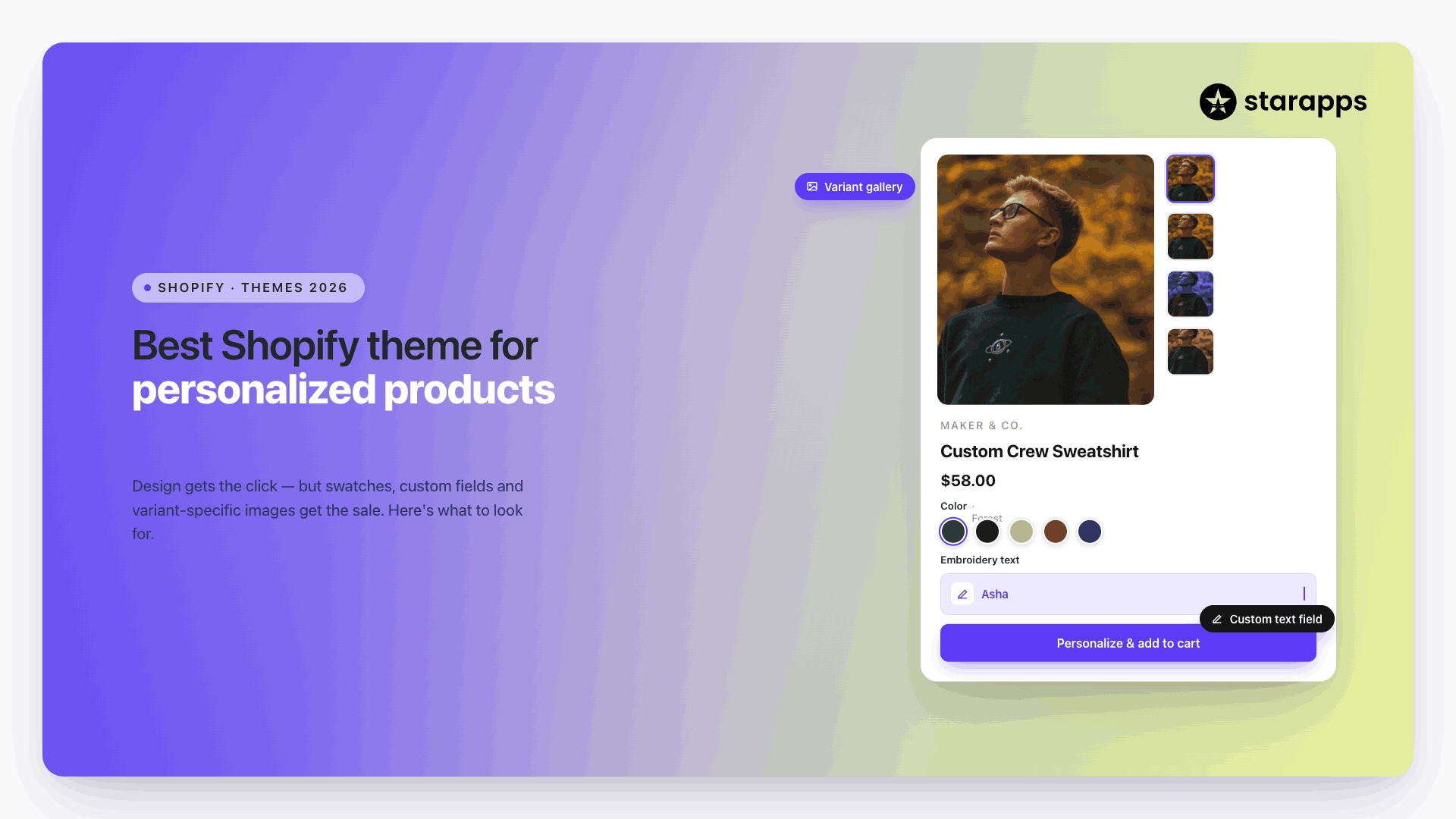

Discover the best Shopify theme for personalized products and learn which features improve customization, product display, and conversions.
Personalized products create a different set of challenges than standard ecommerce items. Customers are not simply choosing a product; they are often selecting colors, materials, sizes, engravings, or other custom options before making a purchase. If those options are difficult to navigate or visualize, shoppers may leave before completing their order.
Product-page usability has a significant impact on purchasing decisions, making product presentation a critical part of the buying journey. The Shopify theme you choose influences how customers browse products, interact with customization options, and move through your storefront.
Many merchants focus on design alone, but usability, variant management, and mobile experience are equally important. In this article, we'll explore the best Shopify themes for personalized products, the features that matter most, and how to create a smoother shopping experience for customers.
TL;DR
- The best Shopify theme for personalized products should balance design, usability, and customization support.
- Dawn, Prestige, Impact, Impulse, and Expanse are strong options for different personalization and catalog needs.
- Clear variant selection, swatches, and variant-specific images help customers customize products more confidently.
- Strong filtering, navigation, and product discovery features become essential as personalized-product catalogs grow.
- StarApps tools like Color Swatch King, Variant Image Automator, and Combined Listings help improve variant presentation and product discovery.
What Personalized Product Stores Need From a Shopify Theme
Selling personalized products is often more complex than selling standard inventory. Customers may need to choose colors, sizes, materials, engravings, monograms, or other customization options before completing a purchase.
As these options increase, so does the need for a storefront that presents them clearly and intuitively.
Why Personalized Products Create Additional Complexity
Unlike traditional ecommerce stores, personalized-product businesses must manage more variables within a single product experience.
Common challenges include:
- Multiple product options and customization choices.
- More complex product selection workflows.
- Larger variant catalogs with numerous combinations.
- Greater need for visual product representation.
If these options are difficult to navigate, customers may become overwhelmed or unsure about what they are ordering.
Features That Support Personalized Shopping Experiences
The best Shopify themes for personalized products prioritize usability alongside design.
- Flexible Product Pages: Product pages should provide enough space to display customization options, product details, sizing information, and supporting visuals without feeling cluttered. A flexible layout makes it easier to guide customers through the personalization process.
- Mobile-First Design: Many shoppers browse and purchase from mobile devices. Themes should ensure customization options remain easy to access and complete on smaller screens without excessive scrolling or complicated navigation.
- Strong Navigation and Filtering: As product catalogs expand, customers need efficient ways to find the right products. Clear navigation menus, collection structures, and filtering options help shoppers narrow their choices and discover relevant products more quickly.
Example: Custom Jewelry or Personalized Gift Store
Consider a jewelry store that offers personalized necklaces with multiple chain styles, metal finishes, and engraving options. A customer may need to make several selections before adding the product to their cart.
A theme with flexible product pages, mobile-friendly layouts, and intuitive navigation helps simplify this process. Instead of feeling overwhelmed by customization choices, customers can move through each step confidently and focus on creating the product they want.
For personalized-product stores, the best Shopify theme is one that balances visual appeal with a smooth and organized buying experience.
Also Read: Shopify Product Variants: How to Manage and Optimize Them
5 Best Shopify Themes for Personalized Products in 2026

The best Shopify theme for personalized products depends on your catalog size, customization requirements, and merchandising strategy.
While no theme is built exclusively for personalized products, several Shopify themes provide the flexibility and user experience needed to support customization-heavy stores.
1. Dawn
Dawn is Shopify's free flagship theme and is known for its speed, simplicity, and flexibility. It provides a clean foundation for personalized-product stores, though merchants with complex customization workflows will likely need additional apps to enhance the buying experience.
Best use case: New stores and merchants looking for a lightweight, free theme.
Strengths:
- Fast loading performance.
- Clean, minimalist design.
- Built on Shopify's Online Store 2.0 framework.
- Easy to customize and maintain.
Things to consider:
- Advanced personalization workflows may require additional apps.
- Design flexibility is more limited than some premium themes.
Choose Dawn if you want a fast, lightweight theme that is easy to customize and maintain. It is a practical option for merchants who want a solid foundation before investing in more advanced storefront functionality.
2. Prestige
Prestige focuses heavily on visual storytelling and product presentation. Its image-driven design helps showcase customized products effectively, making it a strong choice for brands where aesthetics play a major role in purchasing decisions.
Best use case: Premium brands selling personalized luxury products, jewelry, beauty products, or high-end gifts.
Strengths:
- Strong visual storytelling capabilities.
- Premium product presentation.
- High-quality image layouts.
- Suitable for brands focused on aesthetics.
Things to consider:
- Best suited for image-driven brands.
- Requires high-quality photography to maximize its impact.
Prestige works well for brands that rely on high-quality imagery to communicate product value. If customization is part of a premium shopping experience, this theme helps present products in a polished and professional way.
3. Impact
Impact combines modern design with strong merchandising features. It works well for stores that need to highlight product variants and customization choices while maintaining a visually engaging storefront.
Best use case: Brands that want to showcase product options and customization choices through rich visuals.
Strengths:
- Modern design elements.
- Strong merchandising features.
- Interactive product presentation.
- Excellent support for visually complex catalogs.
Things to consider: Additional customization tools may still be needed for advanced personalization workflows.
Choose Impact if your products have multiple options that customers need to compare before purchasing. Its merchandising-focused design helps guide shoppers through variant selection and product exploration.
4. Impulse
Impulse is known for its advanced navigation, filtering, and merchandising capabilities. For personalized-product stores with multiple categories and customization options, it helps customers browse products more efficiently and discover relevant items faster.
Best use case: Growing stores with large product catalogs and frequent promotions.
Strengths:
- Advanced filtering and navigation.
- Flexible collection-page layouts.
- Strong merchandising capabilities.
- Designed for larger inventories.
Things to consider: Merchants should carefully organize collections and product structures to take full advantage of its navigation features.
Impulse is a strong choice for stores that prioritize product discovery. Its filtering and navigation features can help reduce friction when customers are browsing large catalogs with numerous customization options.
5. Expanse
Expanse is built for scalability and offers strong search, filtering, and collection-page experiences. It is particularly useful for merchants who need to organize large inventories while maintaining a streamlined shopping journey.
Best use case: Stores managing extensive product catalogs across multiple categories.
Strengths:
- Built for scalability.
- Strong search and navigation tools.
- Supports large product inventories.
- Effective collection-page browsing experience.
Things to consider: Some personalization experiences may require additional variant and product-option enhancements.
Consider Expanse if your business manages a broad product range with many variants. Its catalog-management capabilities help shoppers find products quickly without feeling overwhelmed by the number of available options.
Important Note
A theme alone cannot solve every personalization challenge. Even the best Shopify themes rely on supporting apps and merchandising tools to manage complex variant options, display customization choices clearly, and create a seamless buying experience.
For stores selling personalized products, the combination of a strong theme and the right product presentation tools often delivers the best results.
Also Read: How to Create Multiple Shopify Stores Under One Account
Product Customization Features That Matter More Than Theme Design
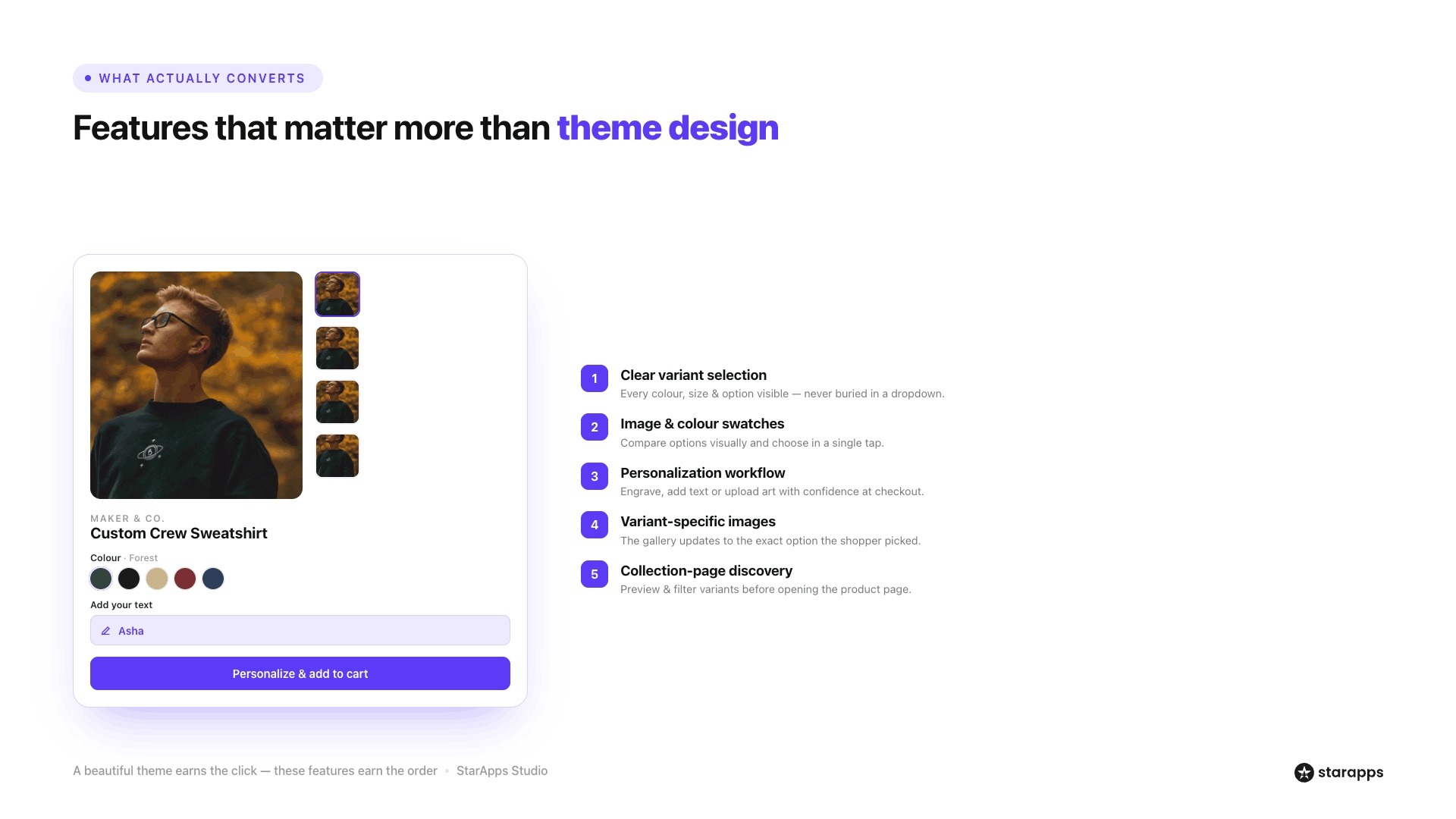
A visually appealing theme can help attract customers, but it is the product experience that often determines whether they complete a purchase.
For personalized-product stores, features that simplify customization and product selection typically have a greater impact on conversions than design alone.
1. Clear Variant Selection: Customers should be able to identify available colors, sizes, materials, and customization options without confusion. If shoppers struggle to understand their choices, they are more likely to abandon the product page before completing their order.
2. Image and Color Swatches: Visual selectors make product options easier to compare than traditional dropdown menus. Color swatches and image swatches allow customers to quickly browse available variations and understand what each option looks like before making a selection.
3. Product Personalization Workflows: Whether customers are adding an engraving, uploading an image, or selecting custom text, the personalization process should feel simple and intuitive. Clear workflows help reduce errors and improve customer confidence during checkout.
4. Variant-Specific Product Images: When a customer selects a specific color, style, or material, the product gallery should update to display the relevant images. Showing only variant-specific images creates a cleaner experience and helps customers visualize the exact product they are ordering.
5. Collection-Page Product Discovery: Many customers begin their shopping journey on collection pages. Features such as collection-page swatches, variant previews, and improved filtering make it easier for shoppers to discover products without opening multiple product pages.
Example: Personalized Apparel Brand
Consider a personalized apparel brand that allows customers to choose colors, sizes, print locations, and custom text. Even with a premium Shopify theme, customers may struggle if variant options are hidden in dropdown menus or product images do not update when selections change.
By combining clear variant selection, image swatches, variant-specific galleries, and strong product discovery features, the brand creates a smoother shopping experience that helps customers customize products with confidence.
Also Read: Key Strategies to Enhance Product Line Item Visibility
Common Mistakes Personalized Product Stores Make
Even the best Shopify theme cannot compensate for a poor product experience. Many personalized-product stores focus heavily on design while overlooking the features that help customers navigate customization options and find the right product.
Relying Solely on Theme Functionality
A theme provides the foundation for your storefront, but it is rarely enough to support advanced personalization requirements on its own. Merchants often need additional tools to manage variant presentation, customization workflows, and product discoverability as their catalogs grow.
Using Dropdown-Heavy Product Pages
Dropdown menus may work for simple products, but they can become difficult to navigate when customers must select multiple colors, sizes, materials, or customization options. Visual selectors such as swatches often create a more intuitive shopping experience.
Poor Variant Presentation
Showing all product images in a single gallery can make it difficult for customers to understand what they are ordering. Variant-specific images and organized product galleries help reduce confusion and improve product evaluation.
Overlooking Mobile Experience
Many personalized-product purchases begin on mobile devices. If customization options are difficult to access, galleries are hard to navigate, or product pages require excessive scrolling, customers may leave before completing their order.
Ignoring Product Discoverability
Customers cannot purchase products they cannot find. Weak navigation, limited filtering options, and poor variant visibility can make it harder for shoppers to discover relevant products, particularly in stores with large catalogs and numerous customization options.
Avoiding these common mistakes helps create a smoother buying journey and makes it easier for customers to personalize products with confidence.
Also Read: Key Strategies to Enhance Product Line Item Visibility
How StarApps Helps Personalized Product Stores Improve Product Presentation
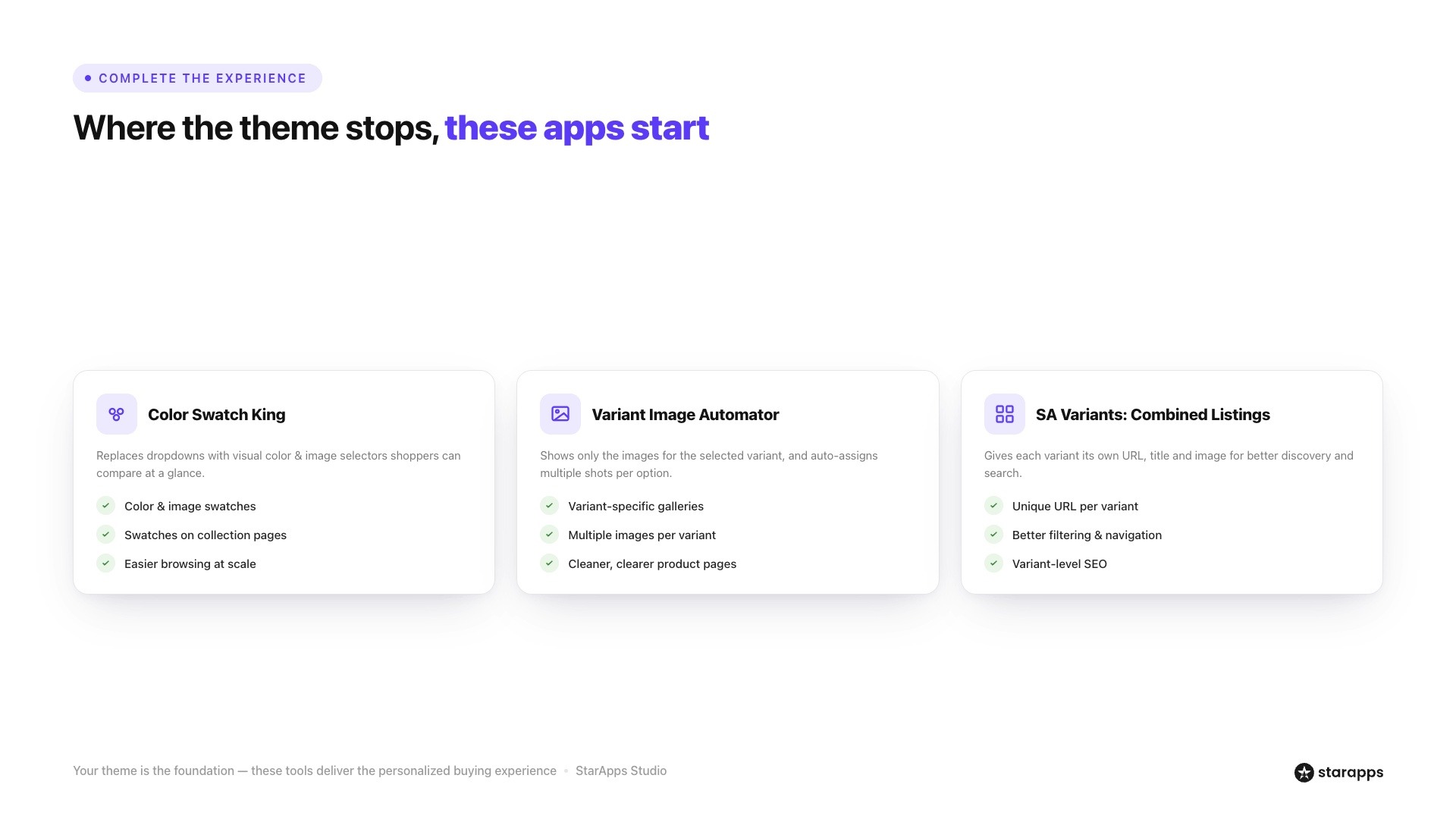
Personalized-product stores often manage more product options, variants, and customization choices than traditional ecommerce businesses. Presenting those options clearly is essential for helping customers find the right product and complete their purchase with confidence.
StarApps Studio offers Shopify apps designed to simplify variant management and improve the shopping experience.
Color Swatch King
Color Swatch King replaces traditional dropdown menus with visual selectors that make product options easier to browse and compare.
Key benefits include:
- Color swatches for faster variant selection.
- Image swatches for visually distinct product options.
- Collection-page swatches that improve product discovery.
- A more intuitive browsing experience across large catalogs.
For personalized-product stores, this makes it easier for customers to compare available options before beginning the customization process.
Variant Image Automator
Variant Image Automator helps merchants organize product galleries by displaying only the images relevant to the selected variant.
Key benefits include:
- Variant-specific image galleries.
- Multiple images per variant.
- Cleaner and more organized product pages.
- Better product visualization for customers.
This is particularly useful for stores offering personalized products in multiple colors, materials, or styles.
SA Variants: Combined Listings
SA Variants: Combined Listings helps improve product discoverability across large catalogs by creating a richer variant-browsing experience.
Key benefits include:
- Better product discovery.
- Improved filtering and navigation.
- Variant-focused SEO opportunities.
- Easier browsing across multiple product variations.
For stores with extensive personalization options, this can help customers find relevant products more quickly while improving catalog organization.
If your personalized product catalog includes multiple colors, styles, or customization options, consider using Shopify apps that improve how customers browse and compare product variants.
Book a demo to create a smoother shopping experience and make complex product catalogs easier to navigate.
Final Thoughts
The best Shopify theme for personalized products should do more than look good. It should support customization workflows, make variant selection easy, and help customers navigate your catalog without friction.
While themes provide the foundation for your storefront, product presentation and variant management often have a greater impact on the shopping experience. Features such as swatches, variant-specific images, and better product discovery can help customers customize products with more confidence.
If you're looking to improve how customers browse, compare, and personalize products, explore the StarApps app suite and find the tools that best support your store's growth.
FAQs
1. What is the best Shopify theme for personalized products?
There is no single best Shopify theme for every personalized-product store. The right choice depends on your catalog size, customization requirements, and customer experience goals. Themes such as Dawn, Prestige, Impact, Impulse, and Expanse are popular because they offer strong product presentation, mobile usability, and flexibility for growing stores.
2. Can Shopify themes handle product customization without apps?
Most Shopify themes can support basic customization options, but complex personalization workflows often require additional apps. Features such as advanced variant selection, image swatches, variant-specific galleries, and detailed customization experiences are typically easier to implement with dedicated Shopify apps.
3. Which Shopify themes work best for custom gifts and personalized products?
Prestige is often a good fit for premium gifts and personalized products because of its strong visual presentation. Dawn works well for merchants seeking a simple and cost-effective solution, while Impact and Impulse are strong options for stores with larger catalogs and multiple customization choices.
4. How do personalized-product stores manage large numbers of variants?
Many stores use a combination of organized product structures, filtering systems, swatches, and variant-management apps to handle large catalogs. These tools help customers navigate multiple colors, sizes, materials, and customization options without overwhelming the shopping experience.
5. Do personalized-product stores need color swatches and variant images?
While not mandatory, color swatches and variant-specific images can significantly improve the shopping experience. They allow customers to compare options visually, understand what they are ordering, and make purchasing decisions more confidently, especially for products available in multiple variations.
6. What features should I prioritize when choosing a Shopify theme for custom products?
Focus on features that support product discovery and customization rather than design alone. Mobile responsiveness, flexible product pages, strong navigation, filtering capabilities, and compatibility with variant-management tools are often more important than visual styling when selling personalized products.
Heading

End-to-end traceability
To ensure regulatory compliance, you must have a complete overview of your products from production to shipping. Book a demo to see how Katana can give you full visibility of your operations.
.png)

.svg)

.svg)

.svg)
.png)