
Shopline vs Shopify: Find the Best Fit for Your Online Store in 2025

Compare Shopline vs Shopify 2025 and explore features, pricing, and tools to find the best platform for your online store's growth.
US e-commerce sales reached a record $13.3 billion on Cyber Monday 2024, and projections indicate the market will reach $3.7 trillion by 2033. With online shopping showing no signs of slowing down, choosing the right platform has never been more critical for your business success.
The platform you select today determines how easily you can scale tomorrow. While hundreds of options exist, two platforms frequently appear in conversations: Shopify, the global leader with millions of active stores, and Shopline, an emerging contender with 350,000 merchants worldwide.
This guide walks you through everything you need to know about Shopline vs Shopify in 2025. You'll discover which platform aligns better with your business size, target market, and growth plans. By the end, you'll have a clear understanding of which solution fits your specific needs as a US-based business owner.
Key Takeaways
- Shopify and Shopline both offer strong ecommerce solutions, but Shopify provides greater flexibility, scalability, and a more mature app ecosystem.
- Shopline is a good fit for smaller or region-focused sellers looking for simplicity and built-in tools at a lower cost.
- Shopify stands out for global-ready features, advanced design options, and 24/7 support that help stores grow sustainably.
- Optimizing a Shopify store with specialized tools, such as those from StarApps Studio, can significantly improve overall store performance.
- The right platform choice, combined with smart app integrations, creates a more efficient, conversion-focused ecommerce setup.
Overview of Shopify and Shopline
Shopify and Shopline are two popular platforms that help businesses create and manage online stores. Both are designed to make ecommerce easier for sellers, but they have different backgrounds and areas of focus.
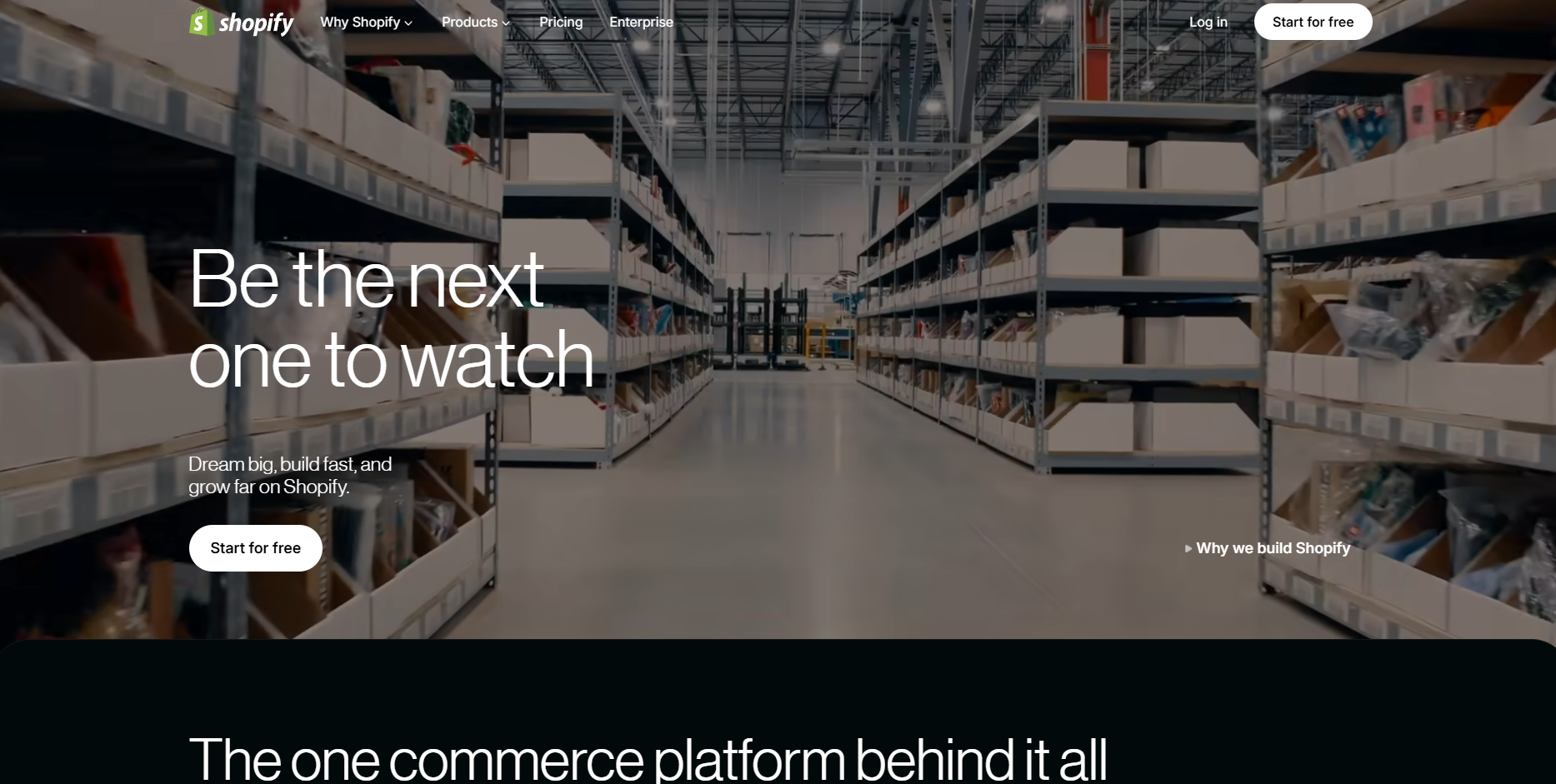
About Shopify
sourcelink
Founded in Canada in 2006, Shopify has become one of the most recognized ecommerce platforms worldwide. It powers millions of stores across 175+ countries and is known for its user-friendly setup, flexible customization, and reliable infrastructure. Shopify includes built-in tools for payments, marketing, analytics, and store management, as well as an extensive app marketplace that allows sellers to add advanced features as they grow. This balance of simplicity and scalability makes it a strong choice for businesses of all sizes.
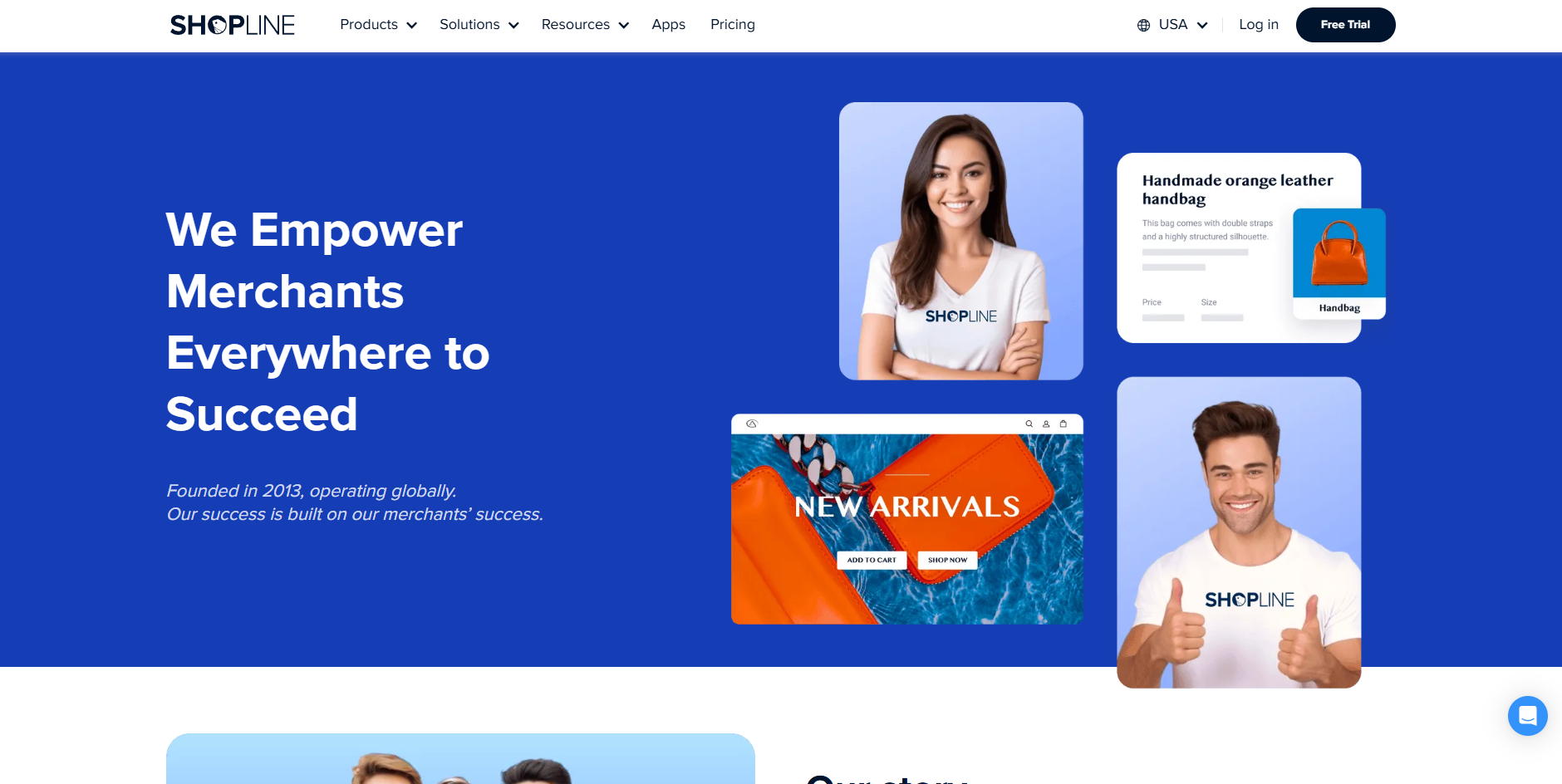
About Shopline
sourcelink
Shopline began as an ecommerce solution for Asian markets and now supports more than 350,000 merchants. The platform focuses on localization, offering multilingual storefronts, regional payment options, and logistics support that cater to cross-border sellers.
In recent years, Shopline has expanded globally, attracting merchants who seek an affordable, all-in-one platform with integrated tools and hands-on guidance for efficiently running their stores.
Shopline vs Shopify 2025: Key Features Comparisons
Shopify and Shopline are often mentioned in the same breath, but they’re built for slightly different needs. Both make it easy to set up and run an online store, but their strengths become apparent upon closer examination.
Let’s examine how the two platforms compare in 2025 across key areas.
This table provides an overview, but let's dive deeper into what truly matters for your business decisions.
1. Pricing & Plans Breakdown
Your budget plays a significant role in platform selection, but the cheapest option doesn't consistently deliver the best value. Both platforms offer tiered pricing structures designed to match different business stages and needs.
Shopify Pricing Structure
Shopline Pricing Structure
Shopline appears more affordable at entry levels, but there's an important catch. The platform charges transaction fees regardless of which payment processor you choose. These percentages add up quickly once you start processing significant orders.
2. Ease of Use & User Interface
A platform can offer powerful features, but if you can't figure out how to use them, those features become worthless.
Shopify Interface
Pros:
- Clean dashboard organized into logical sections.
- Guided setup walks you through domain connection, theme selection, and product uploads.
- Drag-and-drop theme editor with real-time preview
- Mobile app for complete store management
- Intuitive navigation (everything within a few clicks)
Cons:
- More features = slightly longer learning curve
- Requires 1-2 days to feel comfortable
Shopline Interface
Pros:
- Four straightforward setup steps
- Large fonts, ample spacing
- Faster initial setup
- Minimal button count
- Quick loading times
Cons:
- Advanced features require more digging.
- Assumes you'll use built-in tools rather than third-party apps
Both platforms work well for beginners. Shopify's extra features justify its slightly steeper learning curve, especially for US businesses that benefit from its polished interface and comprehensive guidance materials.
3. Themes & Store Design
Your store's visual appearance has a direct impact on customer trust and conversion rates. A professional design signals credibility, while a dated or confusing layout drives visitors away.
Shopify Theme Library
Shopify's theme library contains over 100 options, spanning every imaginable industry. Free themes, such as Dawn, Sense, and Craft, offer a solid foundation for most businesses. These templates come mobile-optimized and load quickly, even with extensive product catalogs.
Customization capabilities:
- Visual editor for no-code changes.
- Real-time preview before publishing.
- Each theme supports extensive customization.
- Third-party theme providers, such as Out of the Sandbox and Archetype Themes, offer additional premium options.
This competitive marketplace pushes constant innovation in design quality and functionality. You'll regularly see new themes that incorporate the latest design trends and best practices in user experience.
Shopline Theme Library
Shopline provides all themes free of charge, which sounds appealing until you examine the selection.
What you can customize:
- Adjust colors, fonts, and basic layouts.
- Modify standard sections and blocks.
- Change images and content placement.
Where it's limited:
- Achieving a truly unique design requires more effort.
- Fewer starting templates to choose from
- Less variety for brand differentiation
For businesses where visual differentiation matters less than functionality, this may not pose a problem. However, if you operate in fashion, beauty, or any category where aesthetics drive purchasing decisions, the limited options become a significant constraint.
4. Apps, Plugins & Integrations
Your ecommerce platform serves as the foundation, but apps and integrations add the functionality that makes your store truly effective. This category separates the two platforms most dramatically.
Shopify App Ecosystem
With over 8,000 approved apps, Shopify’s marketplace covers virtually every business need imaginable.
Popular app categories include:
- Email Marketing & Automation: Klaviyo for segmentation, Omnisend for multi-channel campaigns, Mailchimp for list management.
- Product Reviews & Social Proof: Yotpo for reviews and UGC, Judge.me for affordable review collection, Loox for photo reviews.
Shopify also benefits from a strong developer community that constantly builds tools to fill feature gaps and improve store performance. StarApps Studio, for instance, develops Shopify-exclusive apps that streamline variant management, enhance product presentation, and optimize SEO. These tools integrate smoothly with Shopify themes and highlight how third-party developers expand the platform’s flexibility.
Shopline App Ecosystem
Shopline’s ecosystem is smaller, but it is designed with built-in functionality in mind. Many essential tools, such as marketing automations and shipping integrations, are available directly within the platform rather than through external plugins. This setup offers convenience for smaller teams but may limit customization options compared to Shopify’s marketplace.
5. Payment Gateways & POS
Shopify supports over 100 payment gateways globally and offers Shopify Payments, its own integrated solution, available in multiple countries. It eliminates additional transaction fees when used as your primary processor and maintains competitive rates across all tiers.
Typical transaction rates:
- Basic plan: 2.9% + $0.30 per transaction.
- Advanced plan: 2.4% + $0.30 per transaction.
Common integrations include:
- Stripe and PayPal for secure card payments.
- Apple Pay and Google Pay for mobile checkout.
- Buy Now, Pay Later options such as Klarna, Afterpay, and Affirm.
- Cryptocurrency processors for select markets.
For brick-and-mortar retailers, Shopify POS unifies online and offline operations.
- POS Lite is included with every plan for a simple checkout experience.
- POS Pro (starting at $89 per month per location) adds advanced tools for inventory tracking, staff roles, loyalty programs, and analytics.
Shopify’s POS is available in multiple countries and supports various hardware setups, providing sellers with flexibility whether they operate a single boutique or multiple international outlets.
Shopline Payment Options
Shopline was built with multi-market commerce in mind and continues to strengthen its global payment network. It supports both local and international gateways, offering flexibility for cross-border sellers.
Regional and international payment options:
- Local gateways such as Alipay, WeChat Pay, PayNow, and FavePay are available across Asian markets.
- Global methods such as Visa, Mastercard, American Express, Apple Pay, Google Pay, Stripe, and PayPal.
Fee structure:
- Local card rates average around 2.9% + $0.25 per transaction.
- International cards may carry slightly higher fees depending on the region and plan.
Shopline also provides a built-in POS system that connects smoothly with its online stores.
Key features include:
- Real-time inventory synchronization across online and retail channels.
- Multi-store management and customer profiling.
- Compatibility with standard barcode scanners and receipt printers.
While Shopify’s POS ecosystem is broader and supported by a larger global hardware network, Shopline’s POS is powerful in omnichannel selling, especially for brands managing both online and offline sales in Asia or other multi-market regions.
6. Marketing & SEO Tools
Attracting customers takes more than a great product. Your ecommerce platform should make it easy to promote your brand, engage your audience, and improve visibility in search results.
Shopify Marketing Capabilities
Shopify provides built-in marketing tools across all plans, helping merchants manage promotions, emails, and social campaigns without leaving the dashboard. You can create discount codes, send automated email campaigns for abandoned carts, and connect directly with popular social channels like Facebook, Instagram, TikTok, and Google Shopping.
Marketing and email features:
- Ten thousand free emails per month with Shopify Email, then pay based on the volume of emails sent.
- Smooth integrations with Klaviyo, Omnisend, and Mailchimp for advanced automation.
- Additional tools, such as Shopify Inbox and Shopify Forms, for on-site engagement and lead capture.
SEO capabilities:
- Editable title tags, meta descriptions, and URLs.
- Image alt text fields on every product.
- Automatic XML sitemap generation.
- SSL certification for all stores.
- Support for structured data and rich snippets (pricing, reviews, availability).
To further strengthen SEO, StarApps Studio offers Variant Alt Text King, an app that automatically generates optimized alt text for every product variant image using product titles, types, and tags. It updates daily, helping stores stay fully optimized without manual effort.
Shopline Marketing Capabilities
Shopline covers essential marketing needs with built-in tools for email campaigns, promotions, and social selling. It integrates well with global and regional social platforms and includes native live-streaming features that make it effective for social commerce in Asia.
Key features:
- Email campaign builder for simple automations.
- Discount and voucher creation tools.
- Integrations with Facebook, Instagram, TikTok, and regional networks.
- Built-in live streaming for real-time selling.
SEO capabilities:
- Editable metadata (titles and descriptions).
- Automatic sitemap generation.
- Analytics integrations for performance tracking.
Shopify provides a strong foundation for multichannel marketing, but it offers fewer advanced SEO or automation features than Shopline. It works best for sellers focused on social commerce and region-specific engagement strategies.
7. Analytics & Reporting
Data drives smart business decisions. Your platform should provide clear insights into sales trends, customer behavior, and operational performance.
Shopify Analytics
Report quality improves with each plan tier, providing you with more detailed insights as your business grows, and you can utilize advanced data analysis tools.
Basic Plan Reports:
- Standard reports covering sales, orders, and traffic sources
- Answer fundamental questions about which products sell best.
- Show where customers find your store.
- Track basic performance metrics.
Grow Plan Reports:
- Professional reporting with detailed breakdowns
- Customer acquisition analysis
- Product performance metrics
- Financial reporting
- Marketing channel ROI
- Trend identification over time
Advanced Plan Reports:
- Custom report building through Advanced Report Builder
- Create specific reports matching your unique business questions.
- Segment data by customer type, product category, time period, or virtually any other variable
- Export and schedule automated reports
Additional features:
- Real-time analytics updates are constantly.
- Current visitor counts and active cart values
- Ongoing order processing status
- Mobile app provides access to key metrics anywhere
You can monitor performance without sitting at a computer, checking sales and orders while on the go.
Shopline Analytics
Shopline offers analytics across all plans with varying levels of detail. Basic reporting covers sales, orders, and inventory levels. Higher-tier plans unlock more sophisticated data visualization and trend analysis.
What you get:
- Clear analytics dashboard presentation
- Essential metric tracking (sales, orders, inventory)
- Visual charts and graphs
- Basic trend analysis
Where it's limited:
- Customization options remain more limited than Shopify's
- You can track essential metrics, but you may find creating specific custom reports more challenging.
- Fewer options for deep data segmentation
Good data helps you make informed decisions, but solid support is crucial when things go wrong.
8. Customer Support & Community
When your store runs into technical issues or configuration questions, responsive support can make all the difference. Both Shopify and Shopline provide assistance, but their approaches reflect their respective scales and regional focuses.
Shopify Support
Shopify offers 24/7 customer support through live chat, email, and phone on all paid plans. Response times are generally quick, and the support team can handle both technical and operational queries.
Resources available:
- A comprehensive Help Center with over 2,000 detailed articles.
- Video tutorials, webinars, and Shopify Academy courses covering marketing and store optimization.
- An active community forum where merchants share real-world experiences and solutions.
- Third-party learning channels, including YouTube creators, podcasts, and blogs, offer practical insights and troubleshooting tips.
Shopify’s large global user base has created one of the most vibrant ecommerce communities online. Merchants can easily find tested solutions, workflow advice, and plugin recommendations from peers.
Shopline Support
Shopline provides support that’s closely tied to regional needs, especially in Asian markets. Merchants benefit from multilingual assistance and a more consultative approach during the onboarding and store setup process.
Resources available:
- Regional language support (Chinese, Japanese, Thai, and others).
- One-on-one onboarding guidance for new merchants.
- A growing Help Center with core setup documentation.
- Account managers and support teams that guide users through configuration and marketing basics.
Areas where it lags:
- Limited 24/7 coverage outside Asian time zones.
- Smaller community for peer-to-peer discussions.
- Fewer advanced documentation and tutorials compared with Shopify.
Shopline’s support is strong for merchants within its key markets and for beginners who prefer guided onboarding. However, Shopify’s global infrastructure, vast resource library, and active user community make it better suited for businesses that need around-the-clock assistance and self-service learning.
9. Scalability & Growth
Your platform choice should support your future growth and development. Scalability determines whether you'll need to migrate platforms later as your business expands.
Shopify Scalability
Shopify is built for flexibility, supporting both small startups and large enterprises. Its cloud-based infrastructure scales automatically, maintaining stable performance even during seasonal peaks or flash-sale events.
Growth path:
- Upgrade from Basic to Shopify Advanced plans without data loss or redesign.
- Shopify Plus offers enterprise-grade features for high-volume stores.
- Includes dedicated account management, higher API limits, and advanced automation options.
Infrastructure advantages:
- Handles millions of daily transactions across its merchant base.
- Maintains 99.99% uptime, even during global shopping spikes.
- Delivers fast site speed regardless of catalog size.
- Built-in security and compliance for large-scale operations.
Shopline Scalability
Shopline supports steady growth for small and mid-sized businesses, offering essential tools to expand across multiple channels and regions. Its infrastructure accommodates larger product catalogs, order volumes, and omnichannel operations without steep learning curves.
Strengths:
- Handles increasing product and order volumes efficiently.
- Enables multichannel sales across web, mobile, and social platforms.
- Offers localized infrastructure optimized for key Asian markets.
Limitations:
- A smaller app ecosystem may limit advanced customization and automation.
- Enterprise-level scaling options remain more limited compared with Shopify Plus.
- It may feel restrictive for businesses expanding beyond the Asia-Pacific regions.
Shopline delivers reliable performance within its core markets, catering to brands focused on steady, regional growth. For global or high-volume scaling, Shopify’s proven infrastructure and extensive upgrade path offer more headroom for expansion.
Understanding all these features helps, but sometimes you just need a straightforward list of pros and cons.
How to Choose the Right Platform?
Selecting between Shopify and Shopline comes down to fit, not fame. Both are strong ecommerce platforms; the better choice depends on your target market, budget, and growth priorities. Below are practical considerations to help you decide which aligns best with your business model.
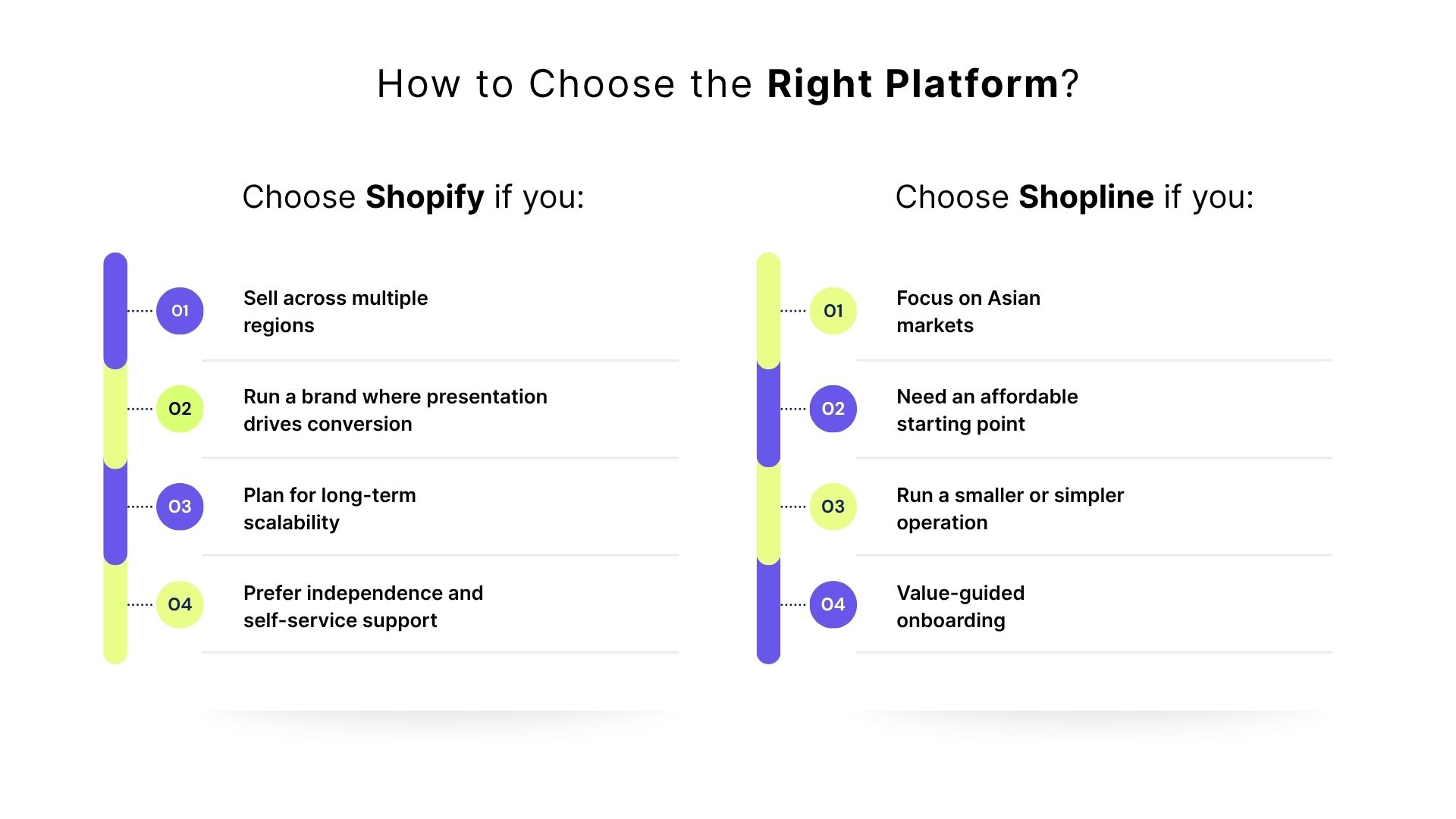
Choose Shopify if you:
- Sell across multiple regions: Shopify supports over 100 payment gateways, various currencies, and a wide range of shipping partners. It’s suited for merchants selling internationally or targeting audiences in multiple markets.
- Run a brand where presentation drives conversion: For DTC brands in categories like fashion, lifestyle, or beauty, Shopify’s design flexibility and app ecosystem make it easier to create immersive product experiences.
- Plan for long-term scalability: If you expect your business to grow in terms of product range, traffic, or channels, Shopify’s infrastructure and tiered plans make scaling smoother without requiring a switch to a different platform later.
- Prefer independence and self-service support: With a large help center, tutorials, and community, Shopify allows business owners to troubleshoot and learn at their own pace while still offering 24/7 support when needed.
Choose Shopline if you:
- Focus on Asian markets: Shopline’s strength lies in localized integrations, from payment gateways like Alipay and WeChat Pay to region-specific delivery options, making it a natural fit for merchants serving customers in Asia.
- Need an affordable starting point: With lower plan pricing, Shopline suits early-stage sellers testing product-market fit or managing limited budgets without compromising on essential ecommerce tools.
- Run a smaller or simpler operation: For compact product catalogs and single-channel selling, Shopline’s straightforward setup and built-in marketing tools keep store management efficient.
- Value-guided onboarding: Shopline takes a more consultative approach, helping first-time merchants configure stores, manage operations, and understand their data with direct support.
Shopify stands out for its flexibility, scalability, and the level of control it gives sellers as their business grows. However, choosing Shopify is not enough; you also need to maximize its potential, which is why it is essential to optimize your store with the right tools that enhance performance and increase visibility. The next section covers how you can do exactly that.
Enhancing Your Chosen Platform with Smart Apps
A great ecommerce platform sets the stage, but the right apps turn that foundation into a high-performing store. Most growing brands soon realize that default platform tools can only take them so far, especially when it comes to managing product variants, optimizing for search, or refining the customer experience.
That’s where StarApps Studio comes in. Explicitly designed for Shopify, its suite of apps helps merchants close the gap between standard features and real-world selling needs. From simplifying product variant management to automating SEO tasks, these tools enable you to scale efficiently while maintaining a fast and user-friendly store
Here is the list of apps that can help you optimize your store to suit your customers better:
Color Swatch King: Variants
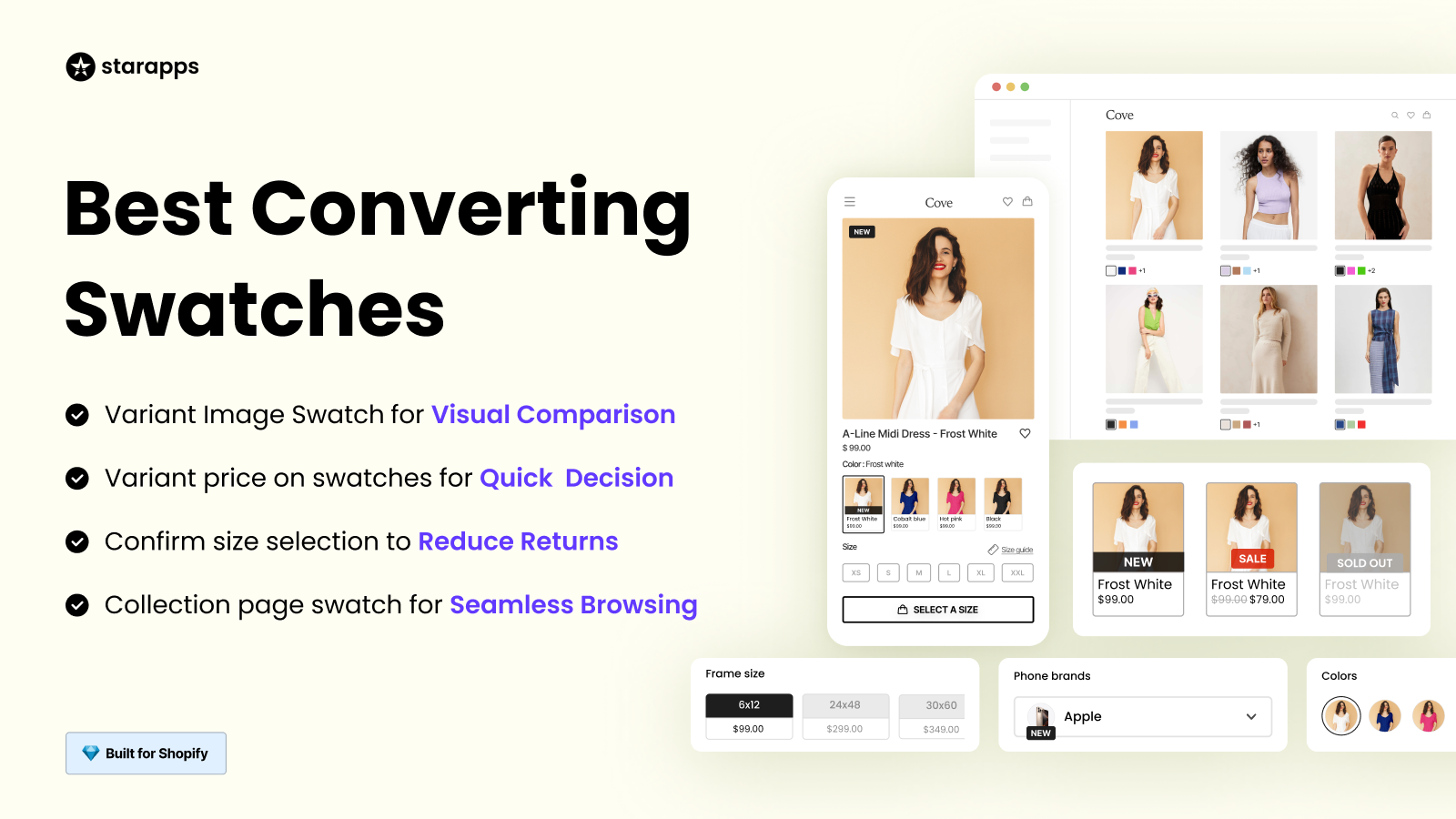
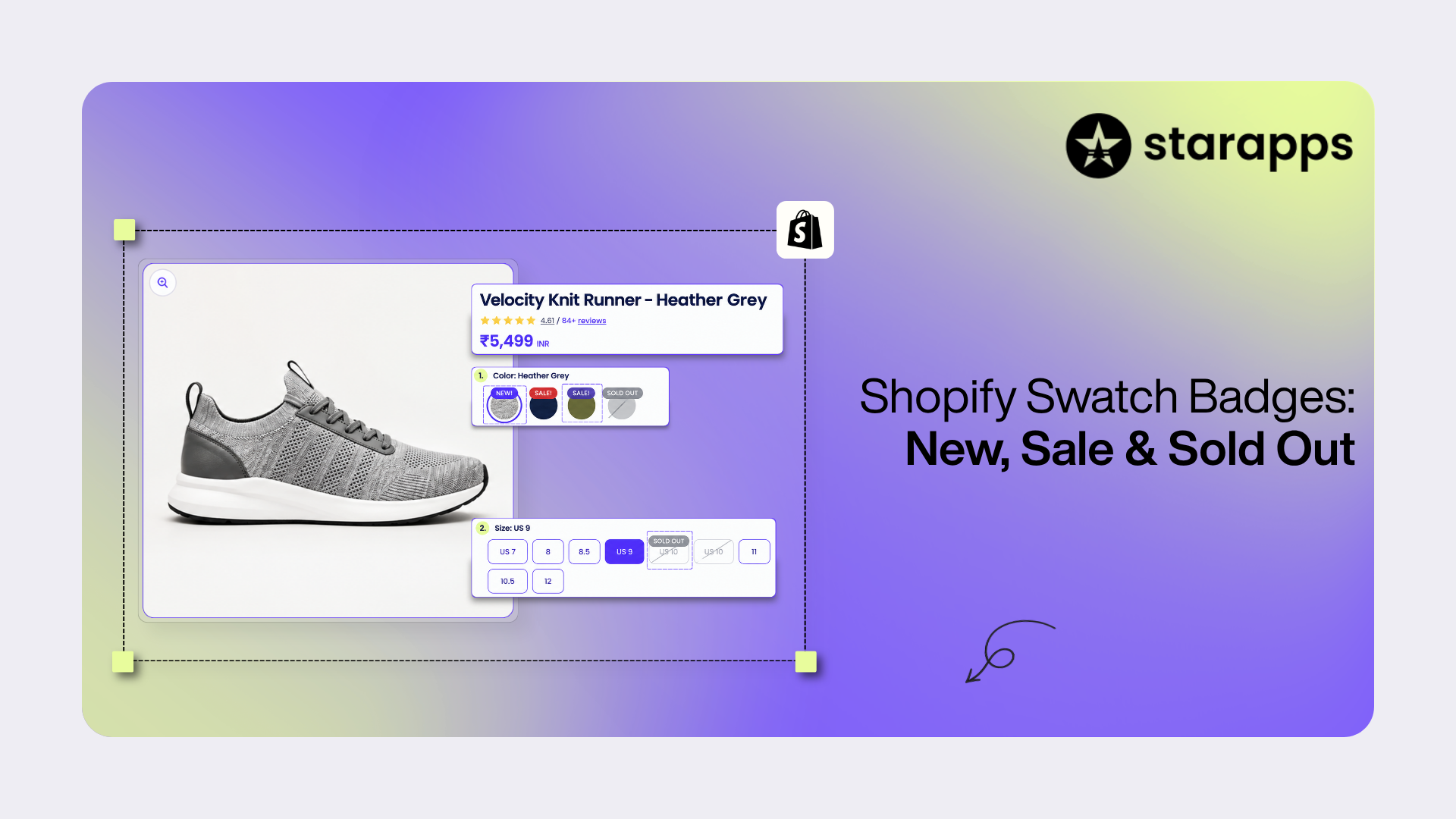
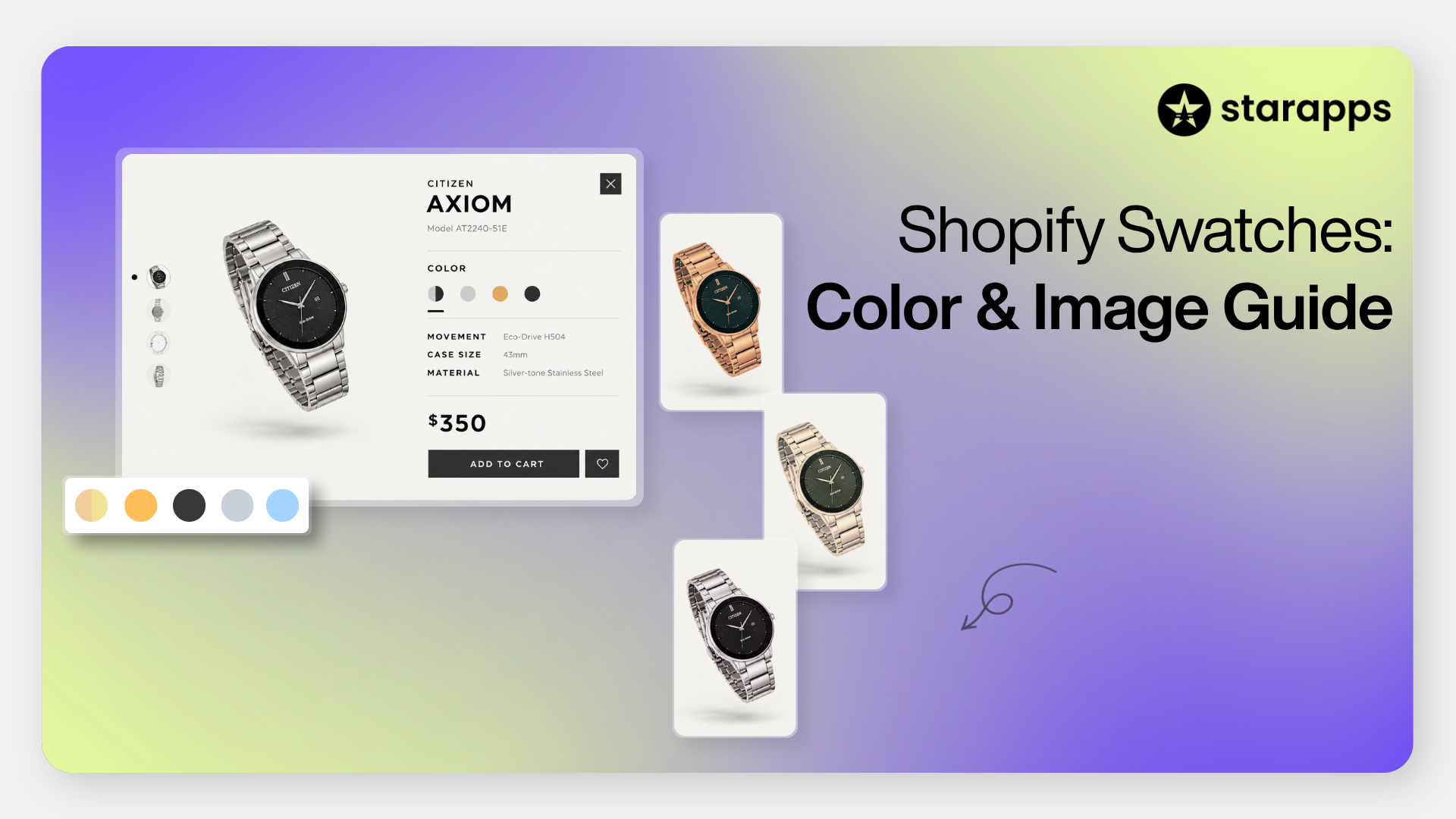
Color swatch king lets your customers view product options on both product pages and collection listings. Instead of dropdown menus, shoppers see visual color swatches or product images representing each variant.
Key capabilities:
- Instant variant previews without page loads.
- Collection page swatches for faster browsing.
- Automatic hiding of out-of-stock options.
- Bulk upload for managing extensive product catalogs.
- Integration with size charts, filters, and recommendations.
SA Variant Image Automator
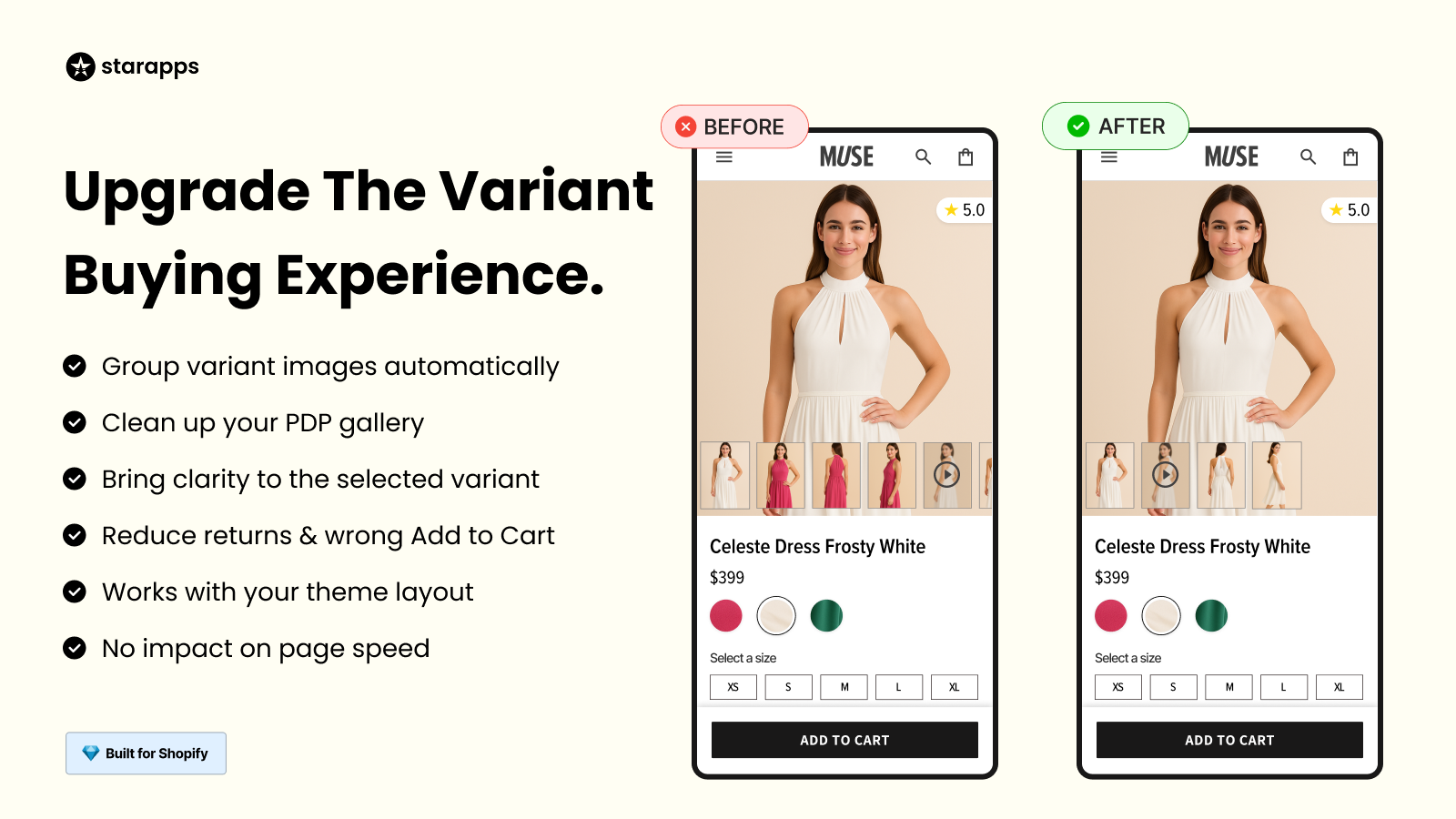
This app automatically displays the right set of images when a shopper selects a variant (such as color or size), keeping galleries clean and relevant without requiring manual image tagging.
How it helps with optimization:
- Delivers a cleaner product experience by showing only relevant images for each variant.
- Increases shopper confidence, customers see exactly what they’re buying.
- Improves site speed and user flow by eliminating unnecessary image loads.
- Supports media-rich stores, including video and 3D models, without compromising layout integrity.
- Minimizes setup time, integrating seamlessly with your existing Shopify theme.
Variant Descriptions King
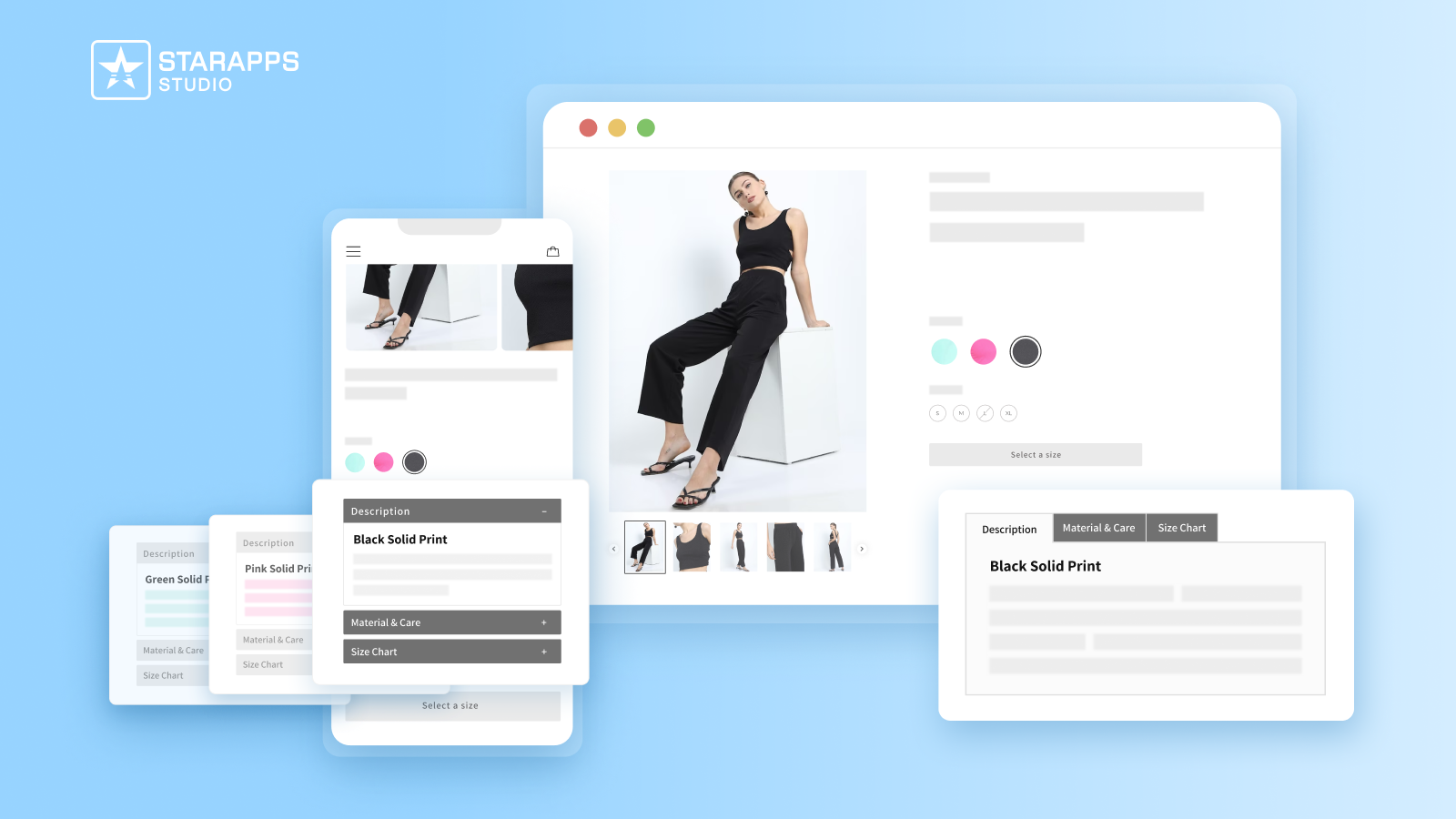
This app lets you assign unique descriptions, specifications, and care instructions to each product variant. It displays the right content dynamically as customers make selections.
How it helps with optimization:
- Provides context-specific information that helps customers make informed decisions more quickly.
- Reduces pre-purchase confusion by clearly specifying size, material, and fit details for each option.
- Keeps product pages organized and mobile-friendly with tabs or accordions.
- Enhances on-page engagement, resulting in improved time-on-site metrics.
- Can also be used for FAQs, shipping details, and other supporting content.
Variant Alt Text King: SEO
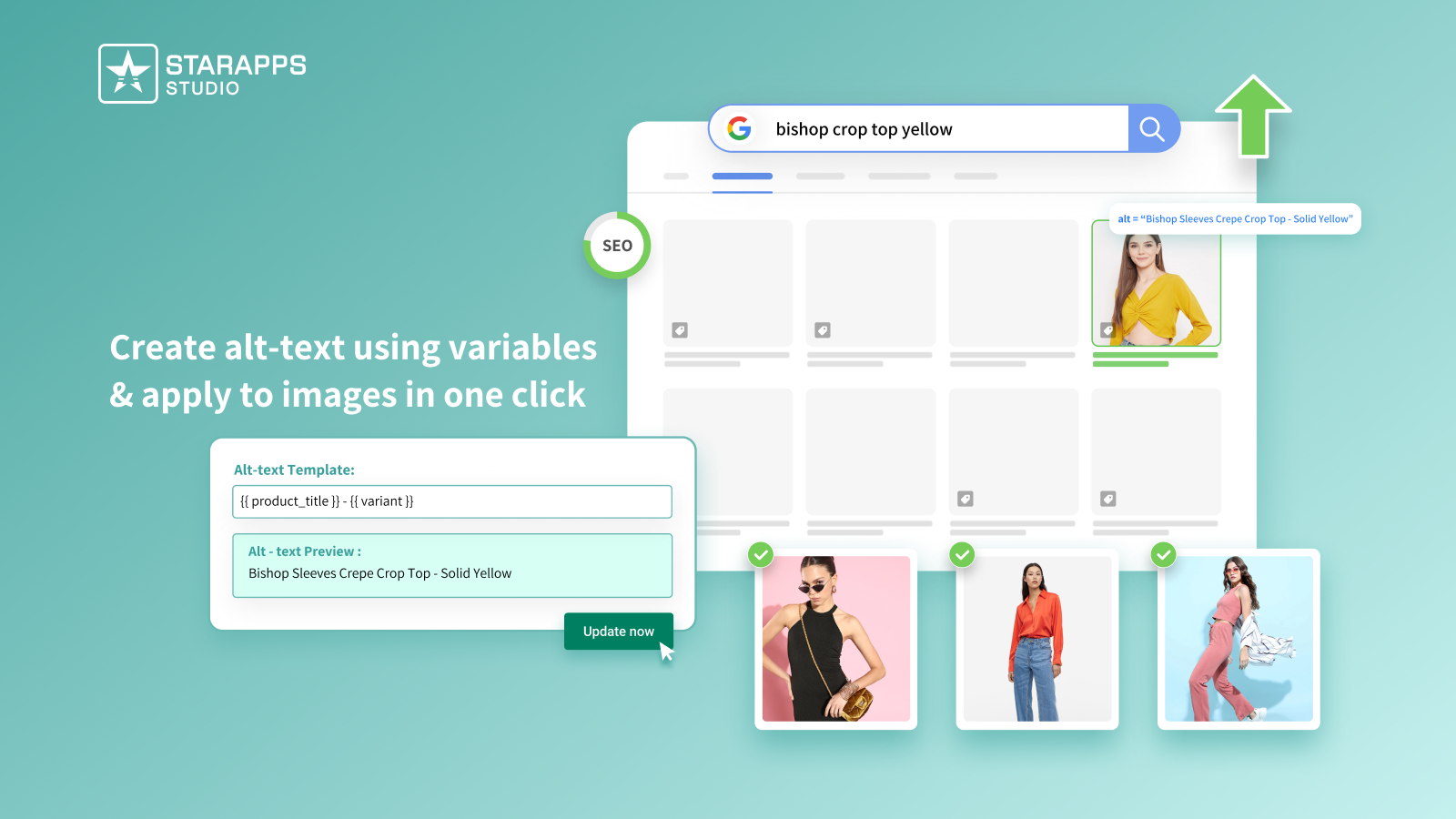
Variant Alt Text King automates the creation of SEO-friendly alt text for all product and variant images. It uses product titles, types, and tags to generate optimized descriptions.
How it helps with optimization:
- Improves search engine visibility, helping images rank in Google Image results.
- Enhances store accessibility for visually impaired users by providing descriptive alt text.
- Increases organic traffic without ongoing manual work.
- Updates automatically as you add or modify products, ensuring consistent SEO efforts.
- Supports ADA compliance and builds credibility with accessibility-conscious shoppers.
The app runs in the background without requiring ongoing attention. You set up your alt text template once using simple variables, and it handles everything automatically. This saves hours of manual work while improving both SEO and accessibility.
Conclusion
When it comes to Shopline vs Shopify, the right choice depends on how you plan to grow your business. Shopify offers flexibility, a wide app ecosystem, and the tools to scale as your store expands. Shopline keeps things simple and affordable for sellers who prefer an all-in-one setup with minimal complexity. Both can work well, but it really comes down to what aligns with your long-term goals.
After choosing your platform, the next step is making it more efficient and conversion-ready. StarApps Studio helps Shopify merchants achieve this with apps designed to manage product variants, enhance SEO, and streamline the customer experience. These tools save time, reduce manual work, and help your store run smoothly while maintaining a professional edge.
If you’re ready to get more out of your ecommerce setup, contact StarApps Studio and see how the right tools can help you turn your store into a steady growth engine.
FAQ’s
Q1. Which is easier for beginners, Shopify or Shopline?
Shopline offers guided onboarding and built-in tools for small businesses, making it a beginner-friendly option. Shopify requires more setup but provides flexibility, tutorials, and apps for growth and advanced customization.
Q2. Can Shopify handle large international stores better than Shopline?
Yes, Shopify supports multiple currencies, payment gateways, and shipping partners worldwide. Shopline focuses on Asia, so Shopify is better suited for brands selling across multiple regions or planning global expansion.
Q3. Are there hidden costs to consider with Shopify compared to Shopline?
As your business scales, Shopify may require paid apps, premium themes, or higher-tier plans. Shopline often includes more built-in features in its pricing, making costs more predictable initially.
Q4. How customizable are store designs on Shopify vs Shopline?
Shopify offers extensive design flexibility through themes and apps, making it ideal for branding. Shopline offers limited customization but sufficient templates for small stores or region-specific designs.
Heading

End-to-end traceability
To ensure regulatory compliance, you must have a complete overview of your products from production to shipping. Book a demo to see how Katana can give you full visibility of your operations.

.png)

.svg)

.svg)

.svg)
.png)