

Discover 2026's top free Shopify themes. Get full design freedom with Horizon, minimalism with Dawn, and storytelling with Craft. Optimize your store now!
Your Shopify theme can make or break your online revenue, even before your first marketing dollar is spent. Data shows that stores with faster, conversion-optimised themes see up to 2.5× higher conversions when pages load in 1 second versus 5 seconds.
In this guide, we’ll explore the 7 best free Shopify themes for 2026 that convert better, explain why each matters to your business, and help you choose the right foundation for growth.
Key Takeaways
- Free Shopify themes in 2026 deliver enterprise-grade speed, mobile optimisation, and modern UX without licensing costs.
- Choosing the right theme depends on your catalogue structure, media depth, and buying behaviour, not aesthetics alone.
- Performance-first themes like Dawn, Horizon, and Sense consistently outperform heavier designs in real-user metrics.
- Themes set structure, but they cannot solve variant complexity, discoverability, or merchandising depth on their own.
- Pairing a high-performing free theme with StarApps Studio transforms it into a scalable, conversion-focused storefront.
What are Shopify Themes?
Shopify themes are pre-built Liquid code templates that control your store's entire look, layout, and functionality, from product grids to checkout flows. Built for Online Store 2.0, they use drag-and-drop JSON sections (up to 16 per template) for no-code edits, auto-adjusting for mobile via responsive breakpoints.
At a technical level, a theme controls:
- Page layout and section architecture
- Mobile responsiveness and breakpoints
- Image loading behaviour and lazy loading
- Navigation flow between collections and products
- How apps integrate into product and collection pages
- Core Web Vitals such as LCP, CLS, and INP
A poorly built theme creates friction at every step. A well-optimised theme reduces decision fatigue, loads faster on mobile networks, and guides shoppers naturally toward purchase.
That is why choosing the right free theme is a revenue decision.
Once you see how deeply a theme influences speed, navigation, and buying behaviour, it becomes clear that the “default” experience is rarely the best one for a growing store.
Why Not Stick With the Default Theme?
Shopify’s default theme is designed to be safe, neutral, and broadly usable. It helps you launch quickly, but it is not built to optimise for your specific product model, catalogue size, or growth stage.
The default experience often creates hidden limitations:
- Generic layouts that do not adapt well to visual or variant-heavy products
- Basic collection pages with limited merchandising depth
- Minimal support for storytelling, comparisons, or guided buying
- Average mobile experience that does not prioritise thumb-first browsing
- Limited flexibility for scaling beyond a small catalogue
Default themes are built to “work.” High-performing themes are built to sell.
Upgrading your theme is about aligning your storefront with how modern shoppers browse, compare, and decide.
With the default out of the way, the real choice is about direction: whether to pay for design upfront, or build on a free theme.
Why Choose Free Themes in 2026? Free vs Premium Themes
Free Shopify themes in 2026 are no longer “starter templates.” They are built and maintained by Shopify, optimised for performance, and aligned with modern commerce patterns such as mobile-first browsing, app blocks, and dynamic sections.
For most growing DTC brands, a free theme now offers:
- Native optimisation for Core Web Vitals
- Clean, accessible markup that supports SEO
- Full compatibility with Shopify’s app ecosystem
- Regular platform updates without extra cost
- Lightweight codebases that outperform many paid themes
Here’s a real difference between free and premium themes:
Premium themes often sell aesthetics. Free themes focus on structure, speed, and reliability.
In 2026, a high-performing store is less about decorative layouts and more about frictionless browsing, fast load times, and scalable architecture. Free Shopify themes deliver that foundation, leaving you free to invest in merchandising, UX, and conversion optimisation.
With a clear understanding of why free themes can outperform defaults and premium templates in performance and stability, let’s explore the best ones you can use in 2026.
Best Free Shopify Themes for 2026
Below are seven free themes that combine modern design, Core Web Vitals optimisation, and merchant-friendly features, ideal for DTC brands in fashion, beauty, electronics, and home goods.
1. Dawn
Best for: Minimalist DTC
Dawn remains Shopify’s default free theme and a top choice for conversion-focused stores. It offers a minimal, media-forward layout that keeps product imagery crisp without unnecessary code bloat, and integrates fully with Shopify’s Online Store 2.0 features.
Main features: sticky header, product filtering, mega menu, enhanced search, quick buy
Recommended for: small to medium catalogues across niches
94.4 % of stores using Dawn achieve a “Good” Largest Contentful Paint score in real-user metrics. This indicates strong real-world performance across devices.
- Desktop speed score: 99 / 100
- Desktop load time (LCP): 2.1 seconds
- Mobile speed score: 93 / 100
- Mobile load time (LCP): 2.2 seconds
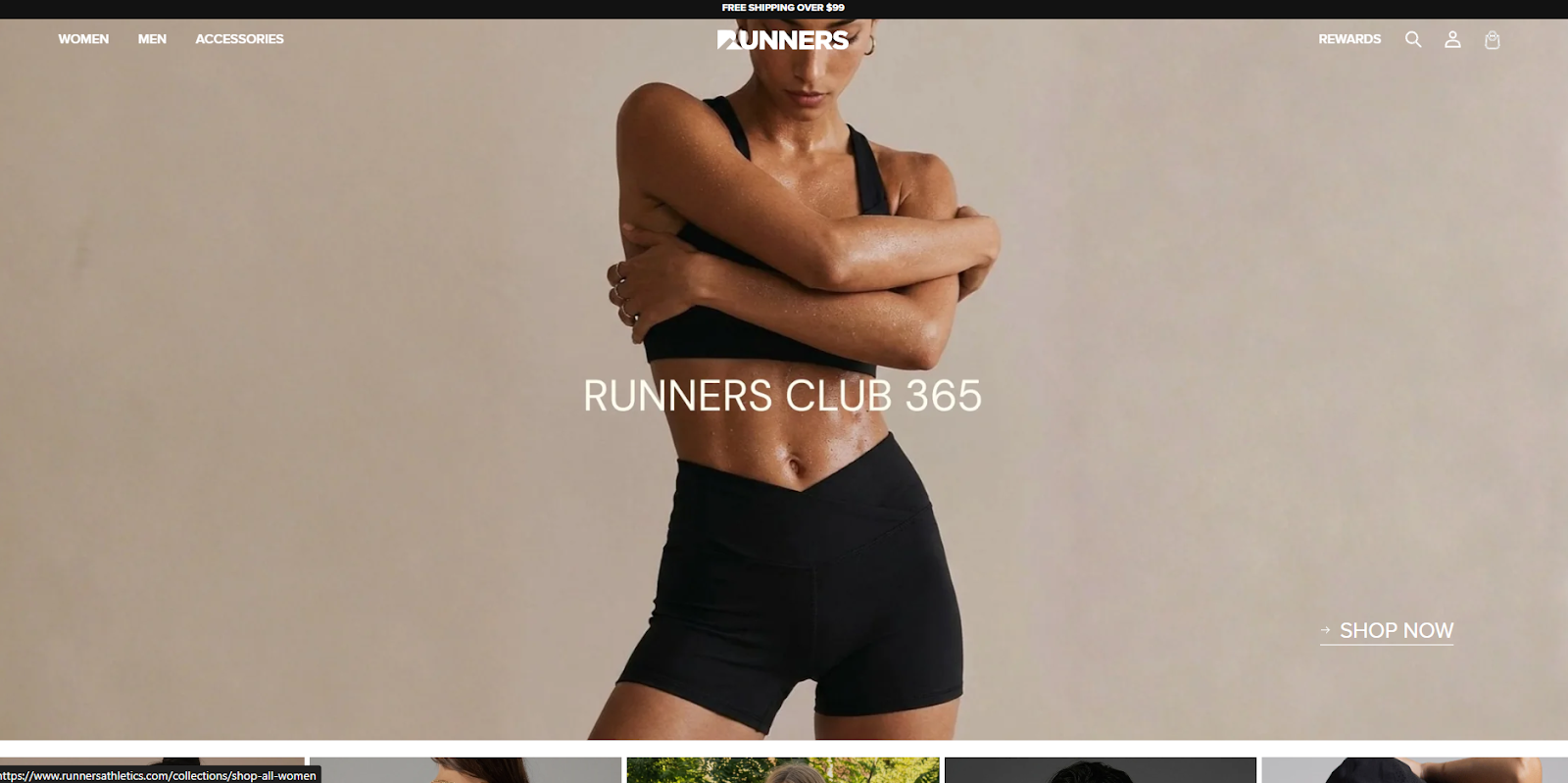
Real-world Dawn theme stores: Runners Athletics, MD Complete Skincare
2. Spotlight
Best for: Fast-launch single-product and small catalogs
Spotlight is built for merchants who want to launch quickly without sacrificing clarity or speed. Its structure prioritizes conversion flow, with strong visual hierarchy and distraction-free layouts that guide shoppers directly from discovery to checkout. The theme is intentionally lightweight, making it one of the fastest free options for early-stage and niche DTC brands.
Main features: one-page product focus, bold CTA sections, simplified navigation, announcement bar, quick buy
Recommended for: single-product brands, accessories, small curated stores
Performance highlight:
96.9% stores achieve “Good” LCP in real-user metrics.
- Desktop speed score: 97 / 100
- Desktop load time (LCP): 0.8 seconds
- Mobile speed score: 90 / 100
- Mobile load time (LCP): 2.1 seconds
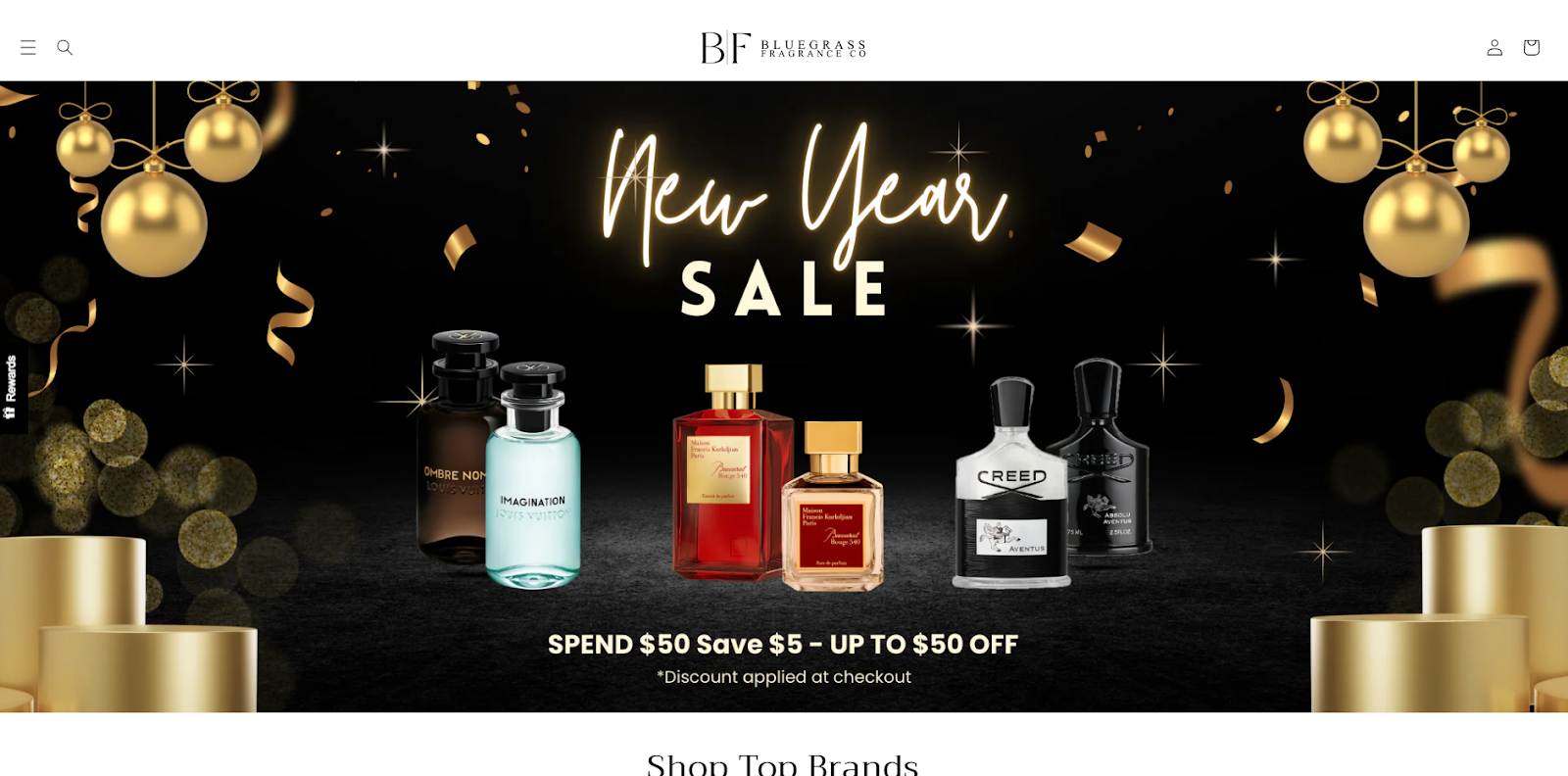
Real-world Spotlight theme stores: The Unique Bazar, Bluegrass Fragrance Co
3. Horizon
Best for: Fashion/Apparel
Horizon is built for brands that rely on visual merchandising and seasonal collections. Its layout supports lookbook-style browsing, large editorial imagery, and smooth collection transitions that mirror modern fashion storefronts.
Main features: full-width media sections, advanced collection filters, editorial product grids, quick add, sticky navigation
Recommended for: fashion, apparel, footwear brands with medium to large catalogs
92.7 % of Horizon stores achieve a “Good” LCP in real-user metrics.
- Desktop speed score: 96 / 100
- Desktop load time (LCP): 0.9 seconds
- Mobile speed score: 89 / 100
- Mobile load time (LCP): 2.2 seconds
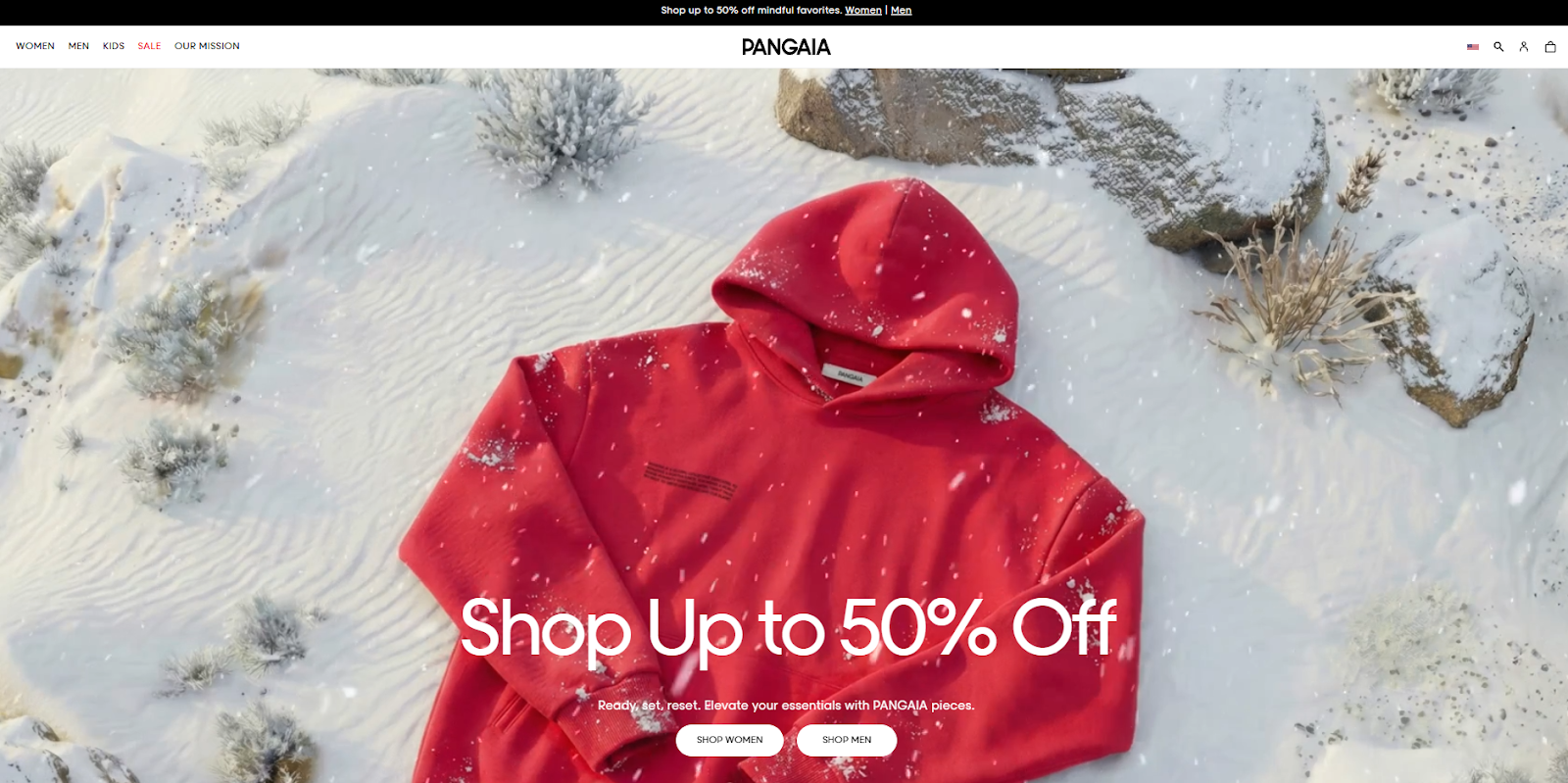
Real-world Horizon theme stores: Pangaia, Kotn
4.Sense
Best for: Image-heavy Beauty
Sense is designed for emotionally driven commerce. It uses layered visuals, soft transitions, and content blocks that help beauty brands communicate routines, benefits, and trust without cluttering the buying journey.
Main features: testimonial sections, rich media blocks, benefit-led layouts, mobile-first grids, quick buy
Recommended for: skincare, beauty, wellness brands
91.7% of Sense stores achieve a “Good” LCP in real-user metrics.
- Desktop speed score: 97 / 100
- Desktop load time (LCP): 2.5 seconds
- Mobile speed score: 77 / 100
- Mobile load time (LCP): 3.1 seconds
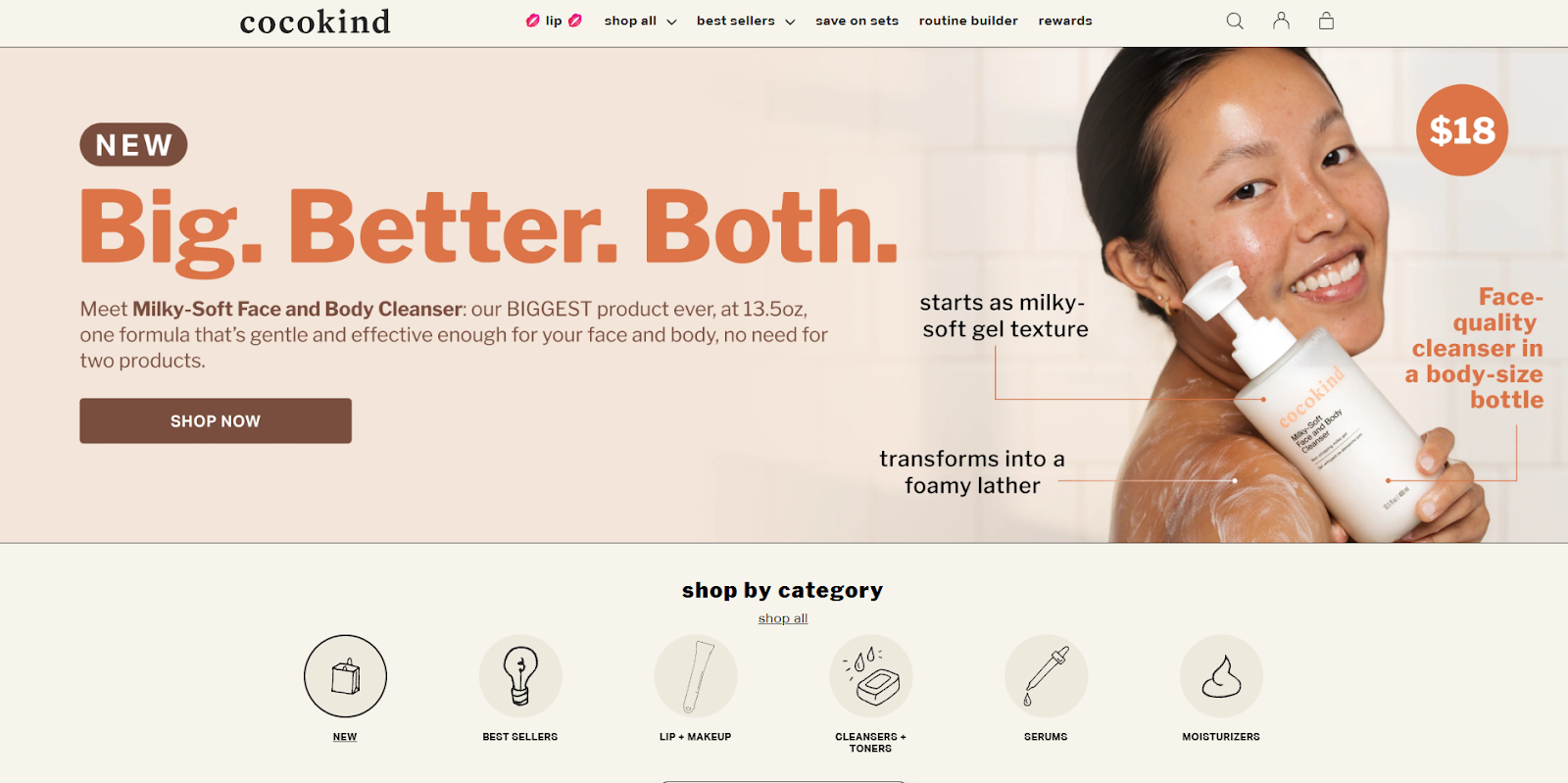
Real-world Sense theme stores: Cocokind, Blume
5. Ride
Best for: Sports/Electronics
Ride focuses on product clarity and technical storytelling. It supports spec-heavy layouts, comparison sections, and modular content blocks that help customers evaluate performance-driven products.
Main features: spec tables, comparison blocks, sticky add-to-cart, structured product sections, advanced filtering
Recommended for: electronics, fitness gear, sports equipment
Performance highlight:
97.5 % of Ride stores achieve a “Good” LCP in real-user metrics.
- Desktop speed score: 95 / 100
- Desktop load time (LCP): 0.9 seconds
- Mobile speed score: 88 / 100
- Mobile load time (LCP): 2.3 seconds
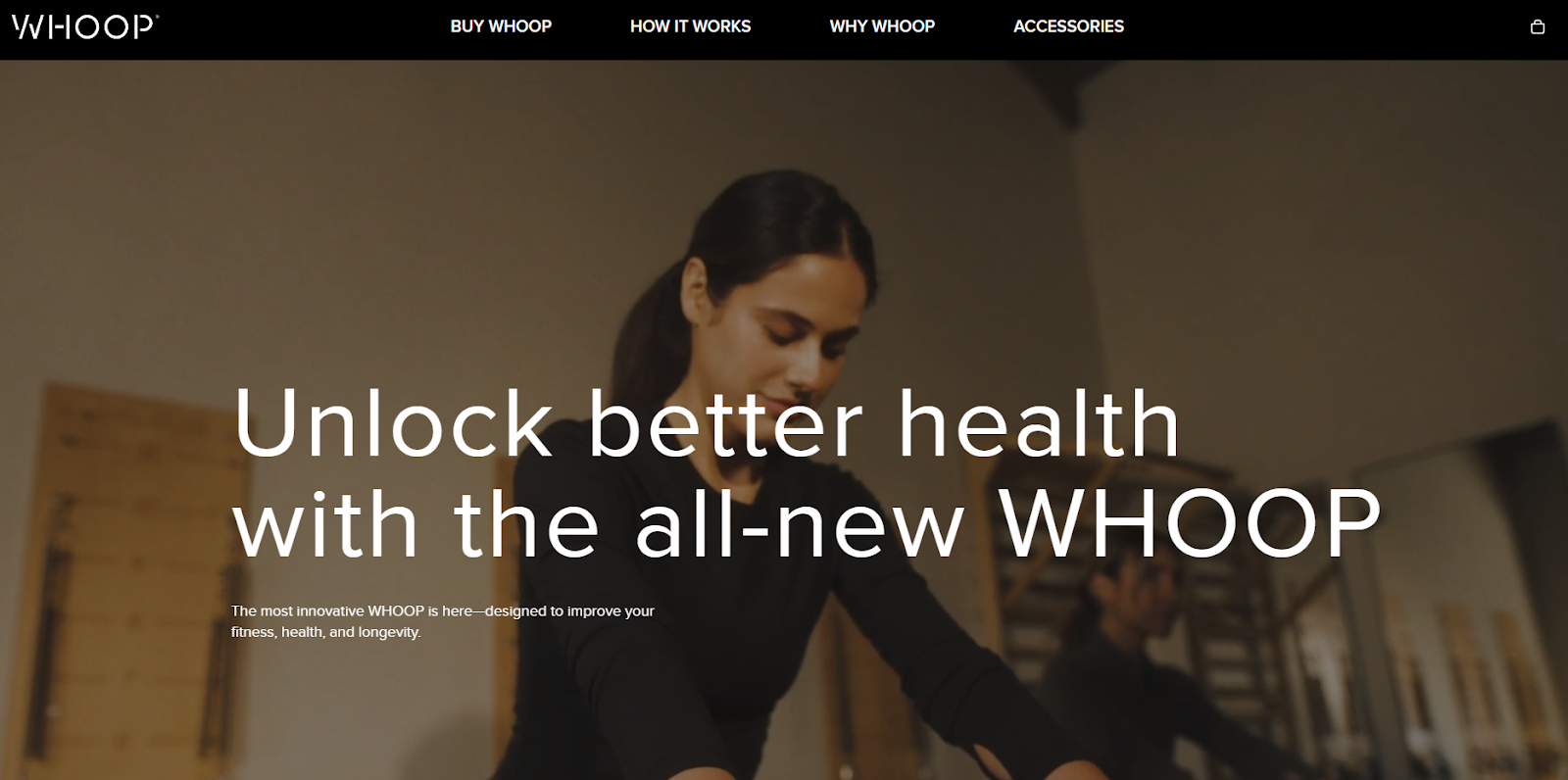
Real-world Ride theme stores: Peak Design, Whoop
6. Craft
Best for: Home Goods Makers
Craft is tailored for brands that sell through detail and story. It uses generous spacing and tactile layouts to elevate handmade and premium products while remaining performance-efficient.
Main features: immersive galleries, storytelling sections, refined typography, collection filtering, quick view
Recommended for: home decor, handmade goods, boutique brands
Performance highlight:
96.4% of Craft stores achieve a “Good” LCP in real-user metrics.
- Desktop speed score: 93 / 100
- Desktop load time (LCP): 1.1 seconds
- Mobile speed score: 86 / 100
- Mobile load time (LCP): 2.5 seconds
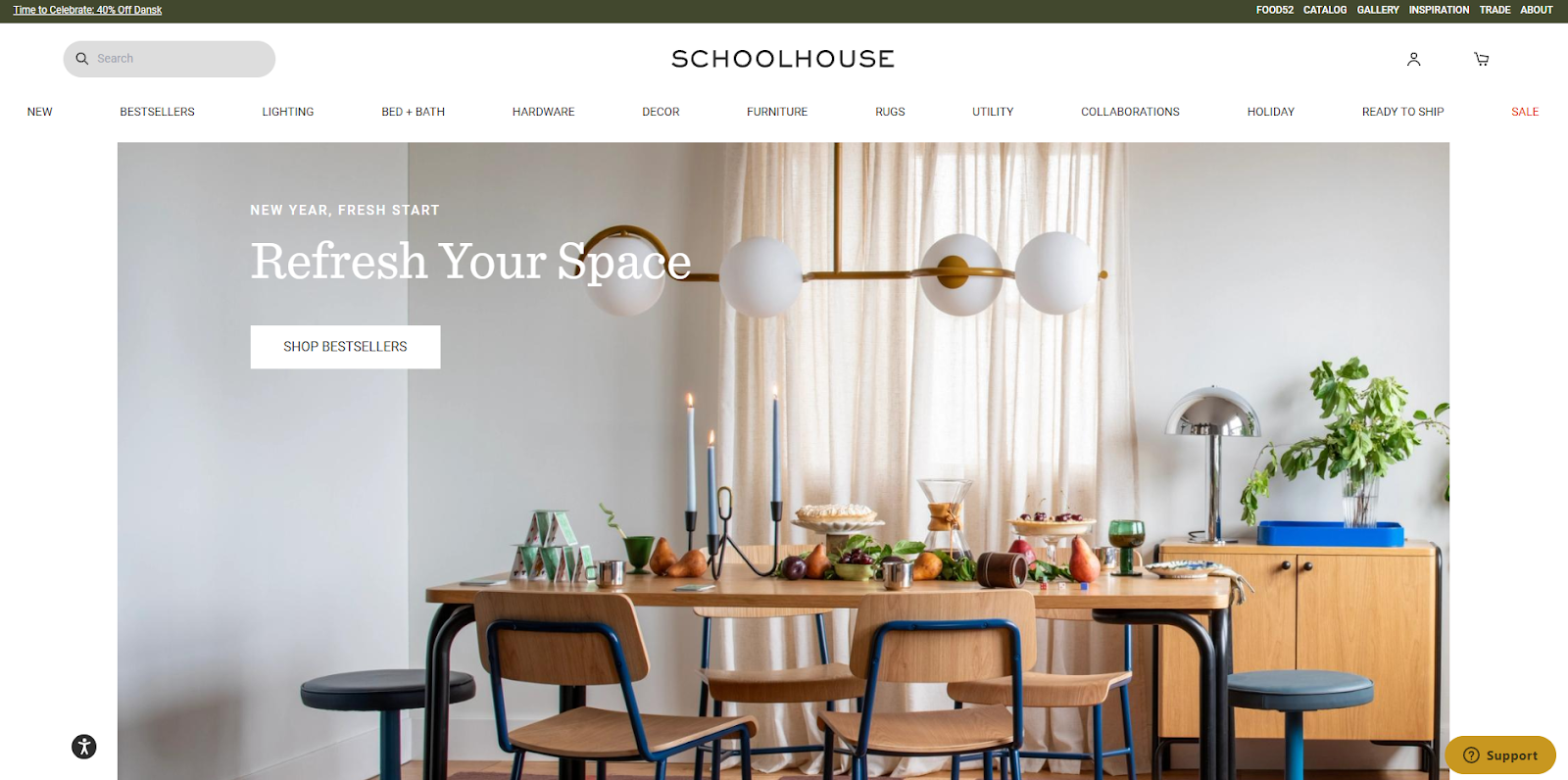
Real-world Craft theme stores: Schoolhouse, East Fork
7. Taste
Best for: Accessories, Bold Brands
Taste is built for high-impact branding. It uses strong color blocks, dynamic layouts, and expressive typography to help accessories and statement brands stand out while keeping navigation simple.
Main features: bold section styling, animated content blocks, mobile-optimized navigation, quick buy, featured collections
Recommended for: accessories, lifestyle products, bold DTC brands
97.9 % of Taste stores achieve a “Good” LCP in real-user metrics.
- Desktop speed score: 97 / 100
- Desktop load time (LCP): 2.4 seconds
- Mobile speed score: 79 / 100
- Mobile load time (LCP): 2.2 seconds
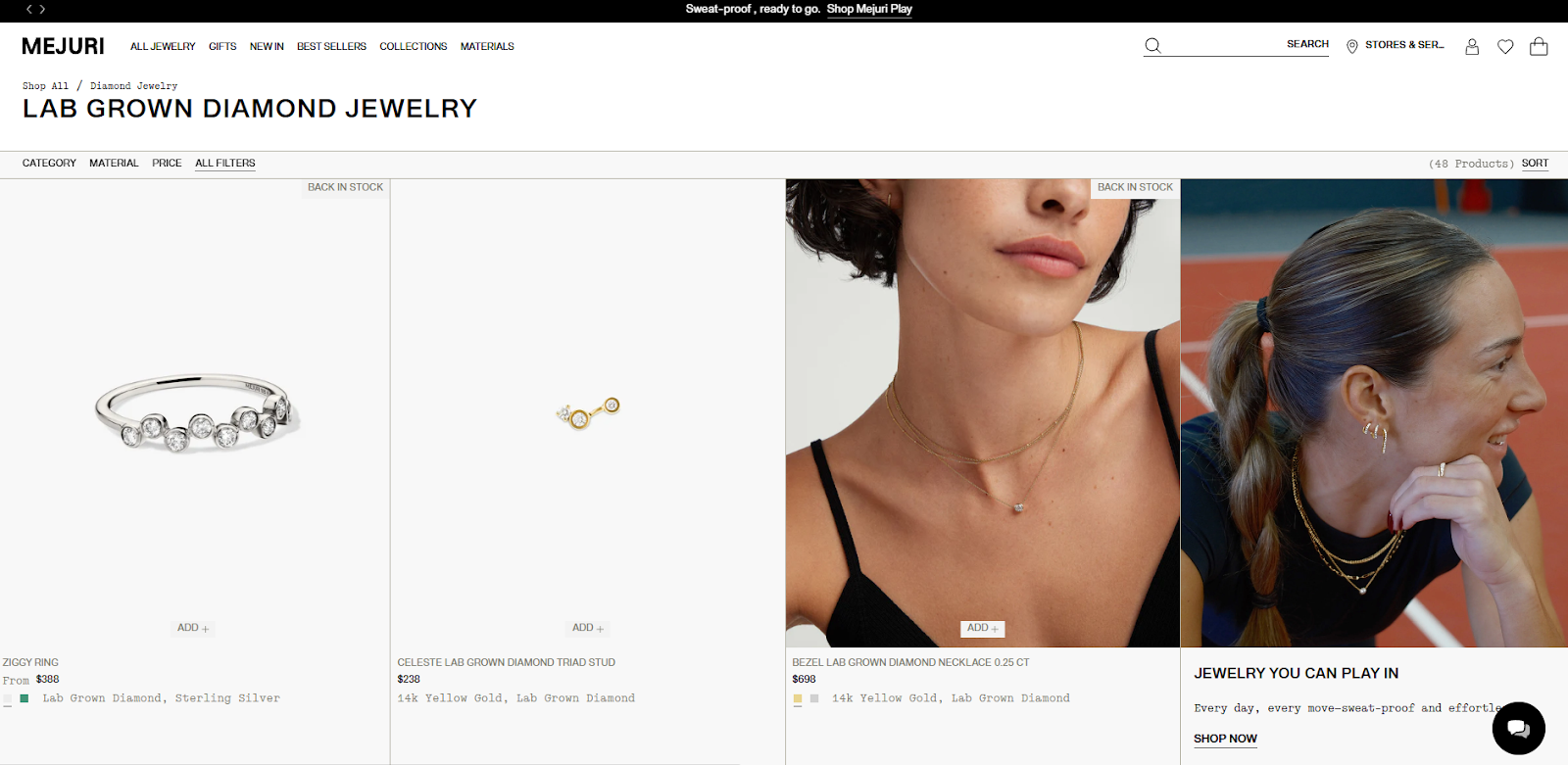
Real-world Taste theme stores: Baggu, Mejuri Labs
Choosing a theme often comes down to trade-offs. Seeing every option side by side makes it easier to spot what truly fits your business model, catalog size, and growth plans.
Feature Comparison Table
Each free Shopify theme is built with a different type of merchant in mind. This comparison highlights how the top themes perform across the areas that most directly affect conversion, scalability, and long-term usability.
A side-by-side comparison shows what each theme offers on paper. The next step is knowing how to judge whether a theme will actually support your store’s growth in the real world.
How To Evaluate the Best Free Shopify Themes
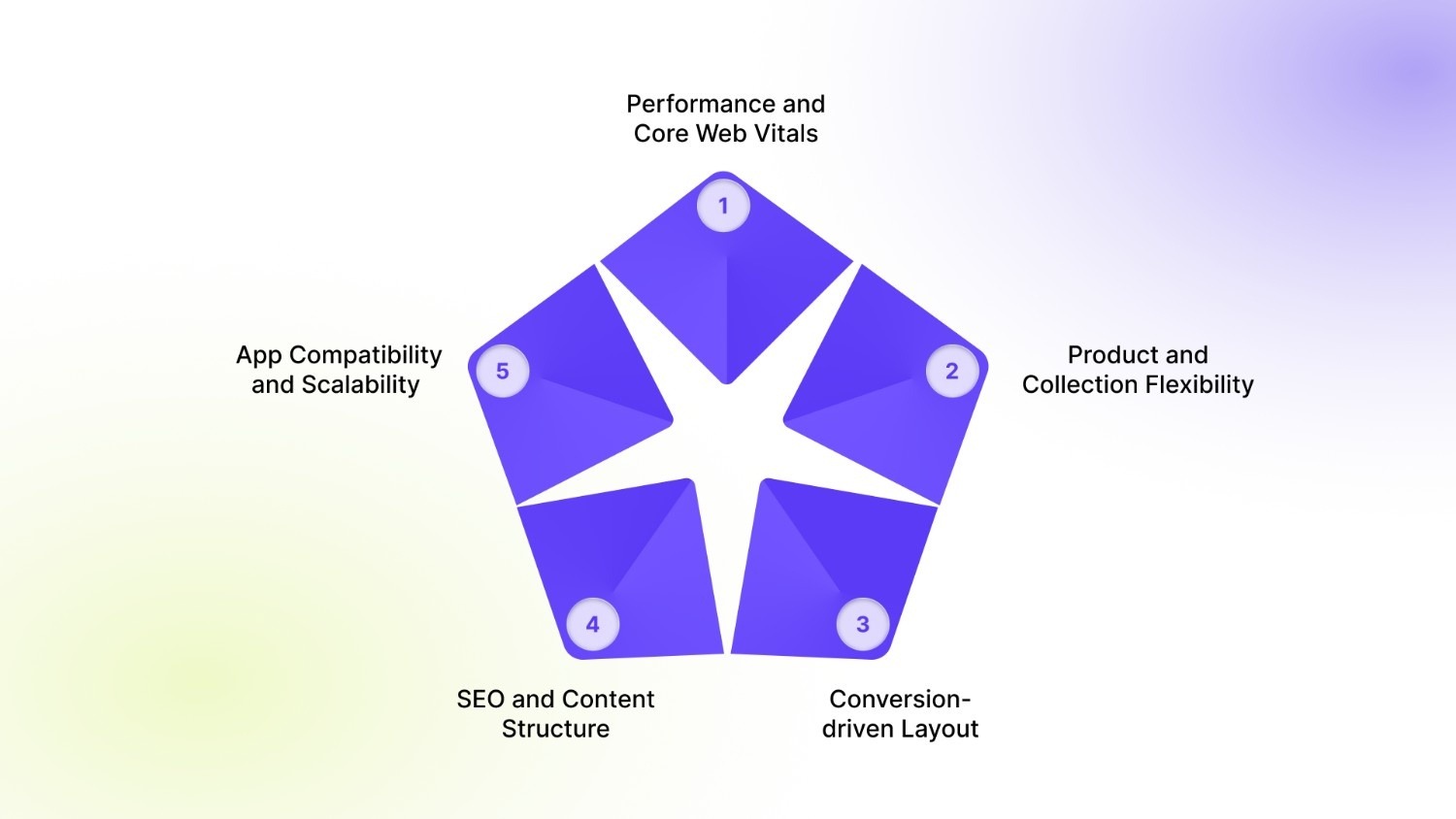
The right theme is not the one that looks the best in the demo. It is the one that protects speed, supports merchandising, and scales with your catalog.
Use these criteria to evaluate any free Shopify theme in 2026:
1. Performance and Core Web Vitals
Speed is no longer optional. Your theme must protect mobile performance by default. A good free theme keeps the Largest Contentful Paint under 2.5 seconds, avoids layout shifts during load, and limits heavy scripts that block rendering. Themes built on Online Store 2.0, such as Dawn and Horizon, inherit Shopify’s performance upgrades automatically, which keeps your store fast as the platform evolves.
2. Product and Collection Flexibility
A theme should adapt to how you actually sell. It must handle large collections without slowing down filters, present variants clearly on product pages, and allow content sections beyond the homepage. If a theme cannot scale from ten products to five hundred without structural changes, it will become a constraint rather than a foundation.
3. Conversion-driven Layout
Design should reduce effort for the buyer. High-performing themes guide attention with a clear media hierarchy, keep navigation accessible through sticky headers, and shorten the buying path with quick-buy actions and visible calls to action. Built-in trust areas for shipping, returns, and reviews matter because they answer hesitation at the exact moment it appears.
4. SEO and Content Structure
Themes shape how search engines read your store. The best ones use clean HTML, logical heading order, and flexible content blocks that let you add unique copy to collections and products. This gives your store room to rank organically without relying on custom development.
5. App Compatibility and Scalability
Your theme must work with the tools that drive growth. It should integrate smoothly with variant, swatch, and search apps, and remain stable as you layer functionality. A theme that conflicts with core apps becomes a ceiling long before design becomes a problem.
Once you have chosen a theme that can support speed and scale, the real gains come from how you shape it for buying behaviour.
Customization Tips for High Conversions
A free theme becomes a revenue engine only when it is tailored around how customers browse, compare, and decide. In 2026, conversion-focused customisation is less about visual flair and more about removing friction at every step of the journey.
The goal is simple: reduce effort, answer doubts early, and keep the path to purchase visible at all times.
With that in mind, focus on the changes that directly influence buying decisions:
- Prioritise above-the-fold clarity by placing product value, price, and primary call-to-action within the first screen on mobile.
- Enable sticky headers or add-to-cart bars so navigation and purchase actions remain accessible during scroll.
- Use large, high-resolution media blocks for hero products, but limit the number of images loaded initially to protect speed.
- Add trust signals near the buy button, such as shipping timelines, return policies, and payment badges.
- Configure collection pages with visible filters and sorting so customers can narrow choices in seconds.
- Surface variant options visually using swatches or buttons instead of dropdowns to reduce decision fatigue.
- Insert short benefit-led copy blocks within product pages to answer “why this” without forcing users to scroll.
- Optimise mobile spacing so buttons are easy to tap and text remains readable without zoom.
- Keep navigation shallow, ensuring no product is more than two clicks away from the homepage.
- Test homepage sections regularly and remove any block that does not drive clicks or scroll depth.
Even the best theme reaches its limits when your catalogue grows, variants multiply, and customers expect richer product experiences without slower pages.
Advanced Tip: Boost Your Store with StarApps Studio
A Shopify theme defines structure, but it cannot solve variant complexity, image sprawl, or merchandising depth on its own. This is where StarApps Studio becomes a strategic layer on top of any free theme.
StarApps Studio equips your theme with purpose-built tools that enhance how products are displayed, discovered, and understood, without adding weight or breaking compatibility.
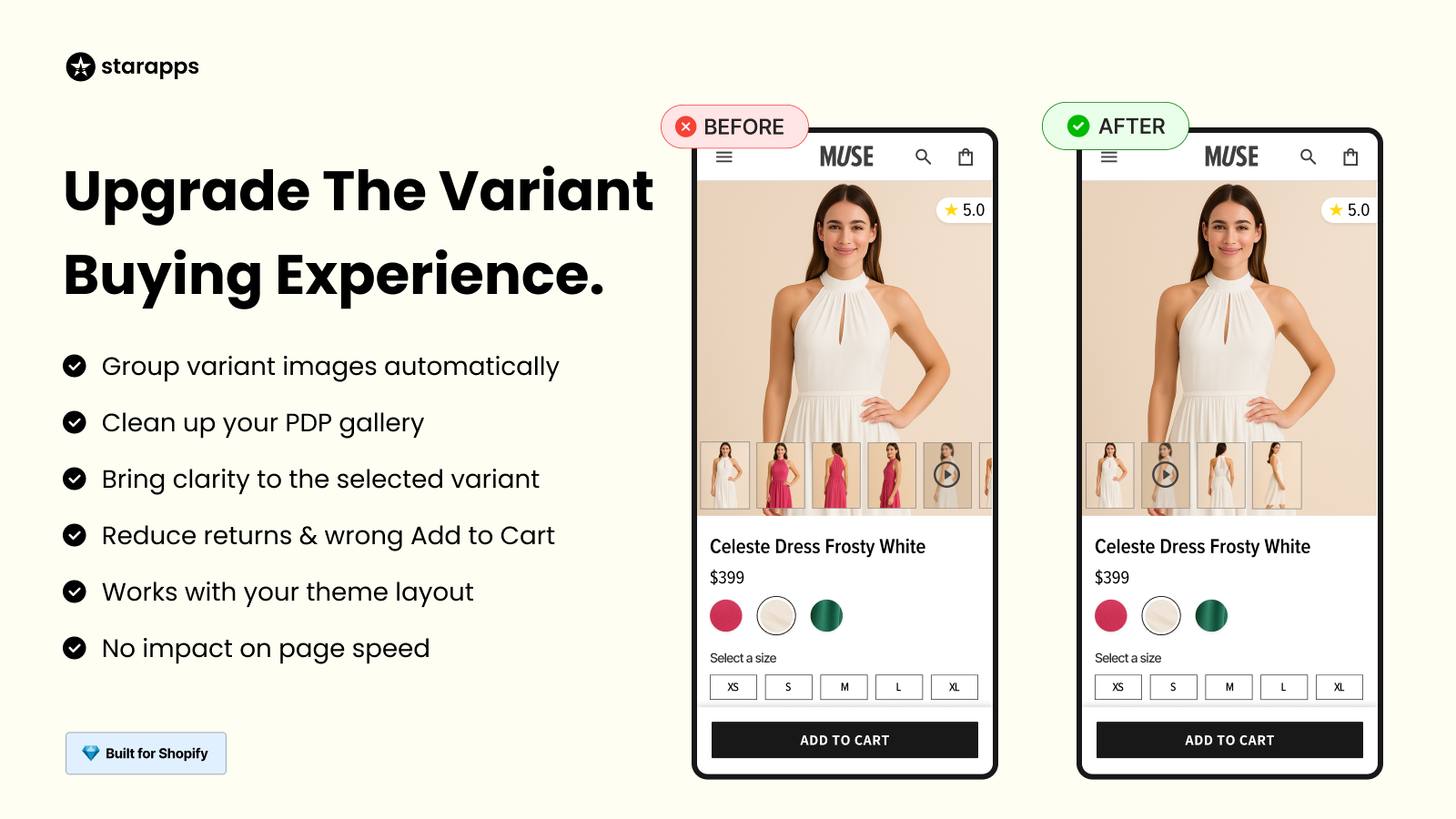
- Variant Image Automator keeps product galleries clean by showing only images relevant to the selected variant, improving clarity and reducing cognitive load.
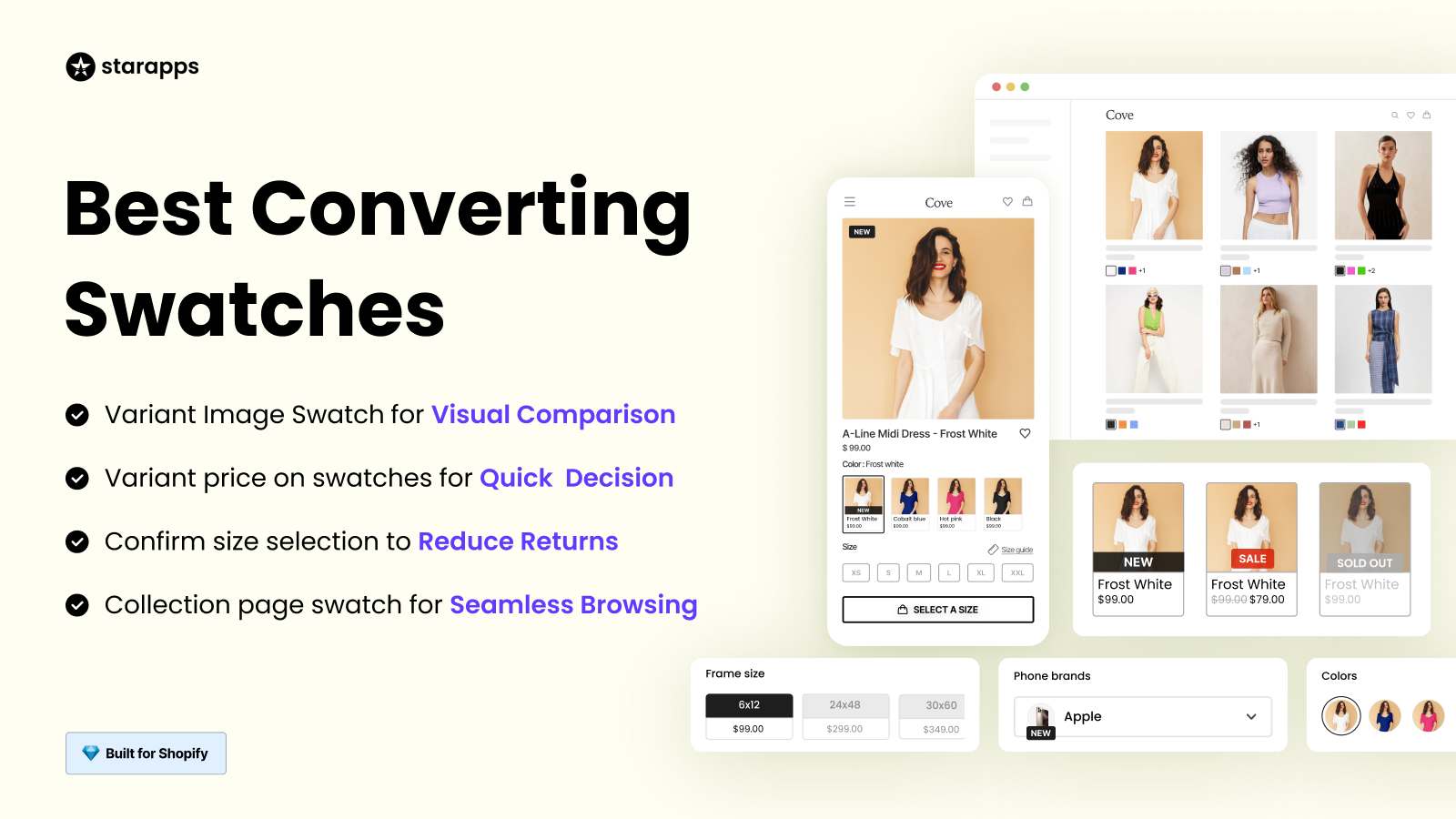
- Color Swatch King replaces dropdowns with visual swatches on product and collection pages, making comparison instant and intuitive.
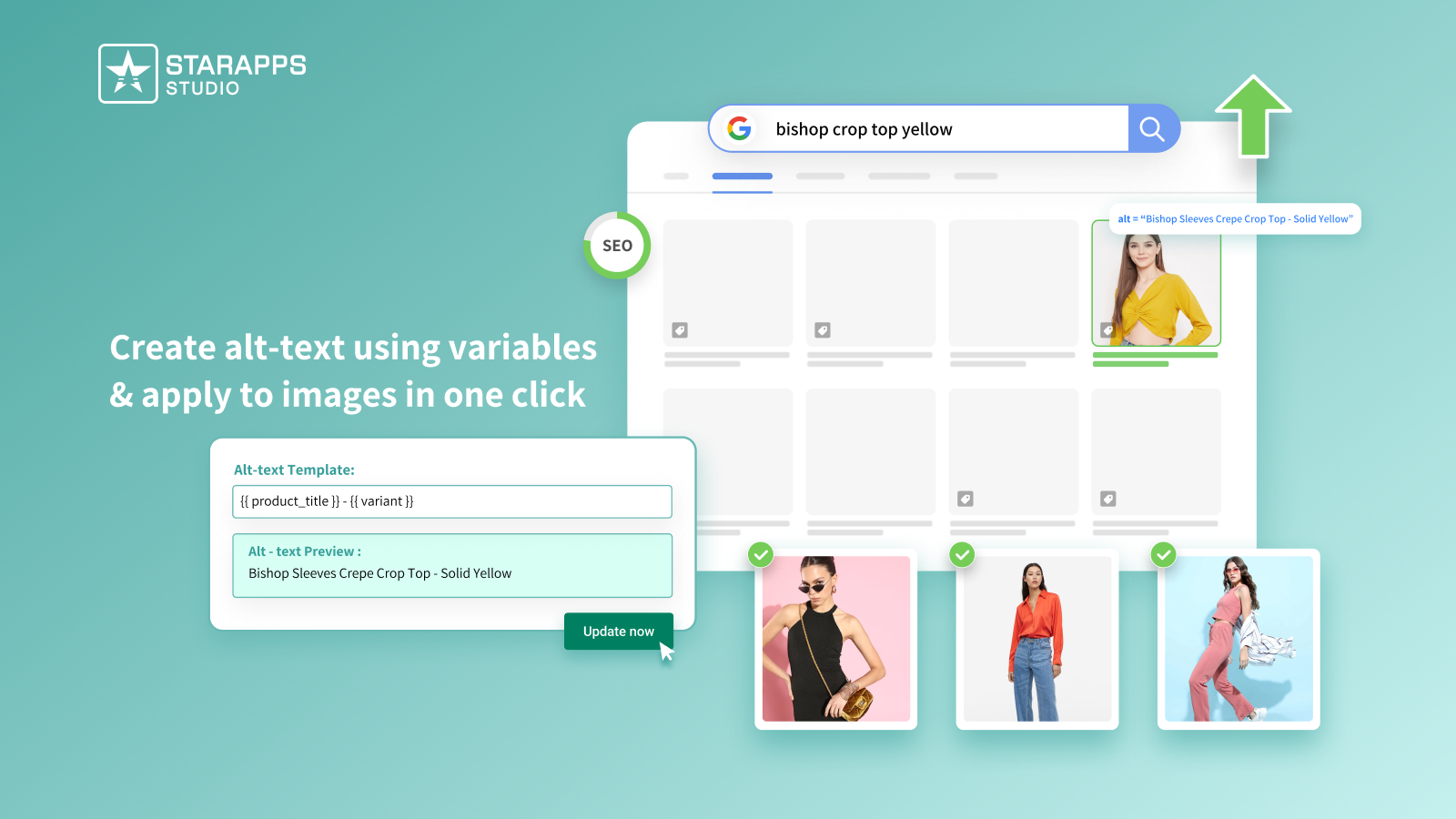
- Variant Alt Text King ensures every variant image is indexed correctly, strengthening accessibility and image search visibility.
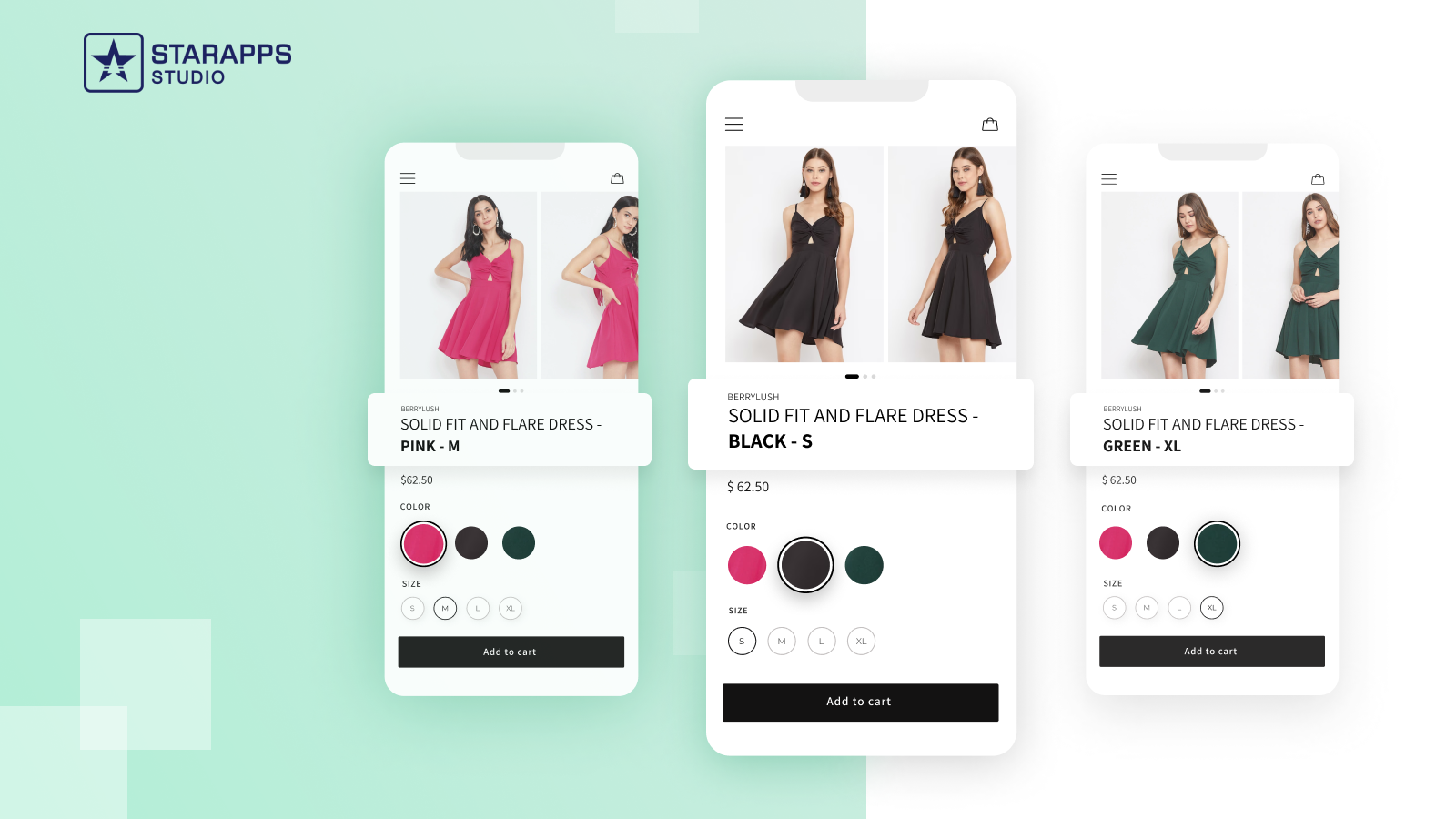
- Variant Title King updates product titles dynamically based on selection, removing ambiguity during checkout.
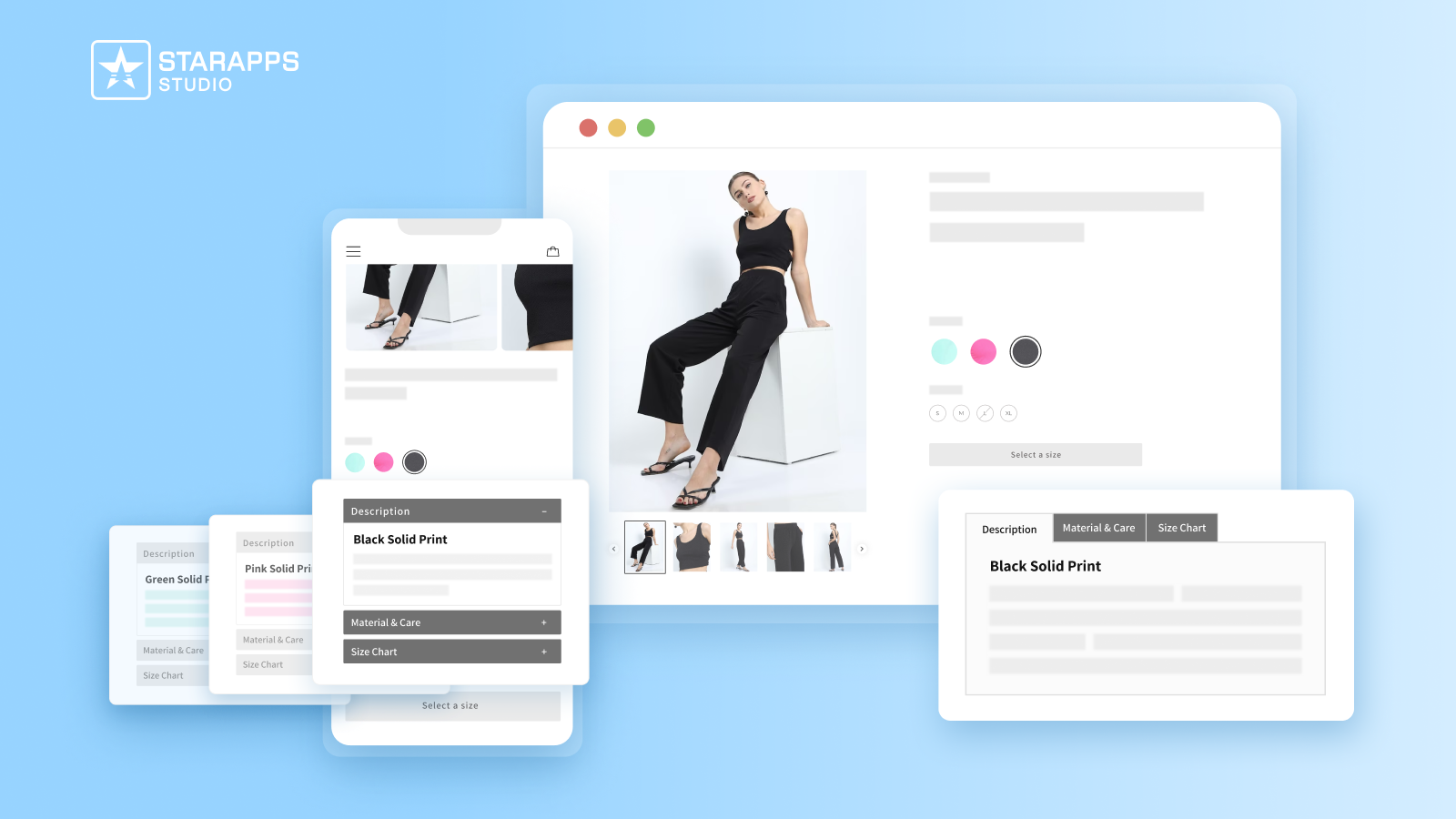
- Variant Descriptions King delivers variant-specific information in structured tabs, reducing returns and support queries.
Together, these tools allow you to choose any high-performing free theme for speed and layout, then layer advanced merchandising on top without rebuilding your storefront.
Your theme sets the foundation. StarApps Studio turns it into a conversion system.
Book a Demo and see how your chosen Shopify theme can perform like a premium storefront.
Summing Up
In 2026, free Shopify themes are no longer a compromise. They deliver modern design, strong performance, and native compatibility with Shopify’s latest features. When chosen thoughtfully, a free theme can support serious growth, fast load times, and a polished brand presence across devices.
The real advantage comes from how you extend that foundation. Pairing a high-performing free theme with StarApps Studio allows you to solve the problems themes cannot: variant complexity, cluttered galleries, weak discoverability, and unclear product context. You retain speed and simplicity while unlocking enterprise-grade merchandising.
You do not need a premium theme to build a premium experience.
Visit the website to see how StarApps Studio transforms any free Shopify theme into a conversion-focused storefront built for scale.
FAQs
1. Are free Shopify themes good enough for high-traffic stores?
Yes. Shopify’s free themes are built for scale, optimised for performance, and maintained by Shopify. Many mid to high-traffic DTC brands run successfully on them.
2. Do free themes limit customisation compared to premium themes?
Free themes offer fewer built-in layouts, but with Shopify’s section system and apps like StarApps Studio, you can achieve comparable flexibility without extra cost.
3. Which free Shopify theme is fastest?
Dawn consistently ranks among the fastest, with strong real-user performance metrics across desktop and mobile, making it ideal for conversion-focused stores.
4. Can free themes support large product catalogues?
They can, but catalogue complexity requires enhancement. Apps like SA Variants: Combined Listings and Color Swatch King ensure large inventories remain easy to browse.
5. Will changing my theme affect SEO?
A theme change does not harm SEO if URLs and content remain intact. In many cases, improved speed and structure can positively impact rankings.
Heading

End-to-end traceability
To ensure regulatory compliance, you must have a complete overview of your products from production to shipping. Book a demo to see how Katana can give you full visibility of your operations.
.png)

.svg)

.svg)

.svg)
.png)