
Cyber Monday vs Black Friday: 9 Expert Tips for Shopify Stores to Crush BFCM 2026

Discover key differences between Cyber Monday vs Black Friday and learn how to optimize your Shopify store for maximum sales this BFCM weekend.
The 2025 shopping season just closed the book on another record-breaking year. Cyber Monday and Black Friday brought in $14.6 billion in online sales. However, the day with higher overall sales isn’t necessarily the most profitable for your specific store.
Your product catalog, average order value, and customer base determine which day wins for you. Some stores crush it on Black Friday with impulse purchases and doorbuster deals. Others watch Cyber Monday deliver their highest revenue of the year through considered purchases and higher cart values.
This breakdown shows you exactly when to push hard, what to promote, and how to structure your 2026 BFCM strategy around real performance data instead of marketing hype.
Key Takeaways
- Black Friday is best for impulse buys, broad catalogs, and fast-moving products, while Cyber Monday works well for high-value, variant-heavy, and online-only items.
- Reviewing past sales data helps plan promotions, inventory, and marketing for each day’s shopper behavior.
- Fast, smooth mobile experiences and simplified checkout increase conversions during peak traffic.
- Clear product images, accurate variant selection, and detailed descriptions reduce confusion and returns.
- Using tools that automate variant management and improve product clarity can help your Shopify store convert more traffic during BFCM.
The Significance of Black Friday and Cyber Monday for Ecommerce Today
Black Friday and Cyber Monday have evolved far beyond their original 24-hour windows. The five-day period from Thanksgiving through Cyber Monday brought in $44.2 billion in online sales in 2025, up 7.7% year-over-year.
Understanding these two shopping events is crucial for ecommerce sellers for planning inventory, promotions, and customer experiences that match each day’s unique behavior.
Black Friday
- Origin: Started as an in-store shopping day the day after Thanksgiving to kick off the holiday season.
- Modern Reality: A hybrid event combining physical store visits with online surges.
- Key Characteristics:
- Early start times: Many sales begin Thanksgiving evening or at midnight on Friday.
- Doorbusters and flash deals: Limited-quantity offers create urgency.
- Broad appeal: Attracts bargain hunters across almost every product category.
- Mobile-heavy traffic: Shoppers browse and buy across devices throughout the day.
Cyber Monday
- Origin: Launched in 2005 as the online counterpart to Black Friday, targeting consumers returning to work with high-speed internet access.
- Modern Reality: The single biggest online shopping day of the year.
- Key Characteristics:
- Purely digital focus: Minimal in-store component.
- Extended hours: Deals often run past midnight into Tuesday morning.
- Higher engagement: 75.9 million consumers shopped online on Cyber Monday 2025, up from 64.4 million in 2024.
- Mobile dominance: Shoppers use smartphones for research, browsing, and checkout.
During this season, you must align marketing, inventory, and promotions to match each day’s shopper behavior. Now that we know why they matter, let’s break down what Black Friday looks like in today’s retail.
Cyber Monday vs Black Friday: Key Differences
When deciding where to focus your marketing and inventory efforts, it helps to understand how these two shopping days differ in shopper behavior and the types of products that sell best.
Recognizing these distinctions will help you target the right products to the right shoppers at the right time, optimizing revenue for each day. Armed with this understanding, let’s look at which day your Shopify store should focus on.
Which Day Should Shopify Merchants Bet On?
The answer depends on what you sell, how you sell it, and who buys from you. Rather than choosing one day, understand when your specific business model performs best.
When Black Friday Wins
Black Friday performs best for stores with these characteristics:
Large SKU Catalogs
- Friday's broad appeal benefits from a wide product variety.
- 202.9 million consumers shopped during the five days.
- More eyeballs on more products helps move diverse inventory.
Fast-Moving Inventory
- Products with limited shelf life or seasonal relevance.
- Scarcity messaging aligns with Friday's urgency.
- Fashion, holiday decor, perishables, and trendy products.
Impulse-Buy Categories
- Lower-priced items under $50.
- Accessories, consumables, small electronics, toys.
- Quick decisions on smaller purchases.
- Higher conversion rates for AOV between $25-$75.
When Cyber Monday Wins
Cyber Monday's pure digital environment benefits different store types:
High-AOV Items
- Products priced above $150.
- Consumers want time to research and justify larger expenses.
- Strong BNPL adoption for higher-value purchases.
Variant-Heavy Products
- Multiple size, color, or configuration options.
- Fashion with extensive size charts.
- Furniture with customization options.
- Monday's focused shopping environment increases confidence.
To optimize variants, some tools can be used that will make the job easier. For example, StarApps’ Variant Image Automator ensures each size, color, or style displays the correct images, helping shoppers choose confidently and reducing purchase hesitation.
Online-Exclusive Brands
- Digital-native brands without physical locations.
- DTC companies and online-only merchants.
- Level playing field on a purely digital shopping day.
- Social commerce reached 3.6% of revenue, up 54.5% from 2024.
When a Dual Strategy Works Best
Most successful Shopify stores run coordinated campaigns leveraging each day's strengths:
Black Friday: Sitewide Discounts
- Broadest appeal offers.
- Percentage off everything or tiered discounts.
- Simple, clear deals for Friday's impulse shoppers.
Weekend: Bundle and Cross-Sell Focus
- Product bundles and gift sets.
- Curated collections.
- Increase AOV while providing clear value.
Cyber Monday: Variant-Level Promotions
- Tactical promotions on specific products.
- Special discounts on select colorways.
- Category-specific offers.
- Clear inventory based on weekend performance.
Rather than choosing one day over the other, aligning your strategy to your product type and audience behavior ensures you capture both impulse and considered purchases effectively.
However, to execute this approach successfully, you must employ a range of methodologies to make your sales season a hit.
Top Tactics for Shopify Stores to Win the 2026 Holiday Shopping Season
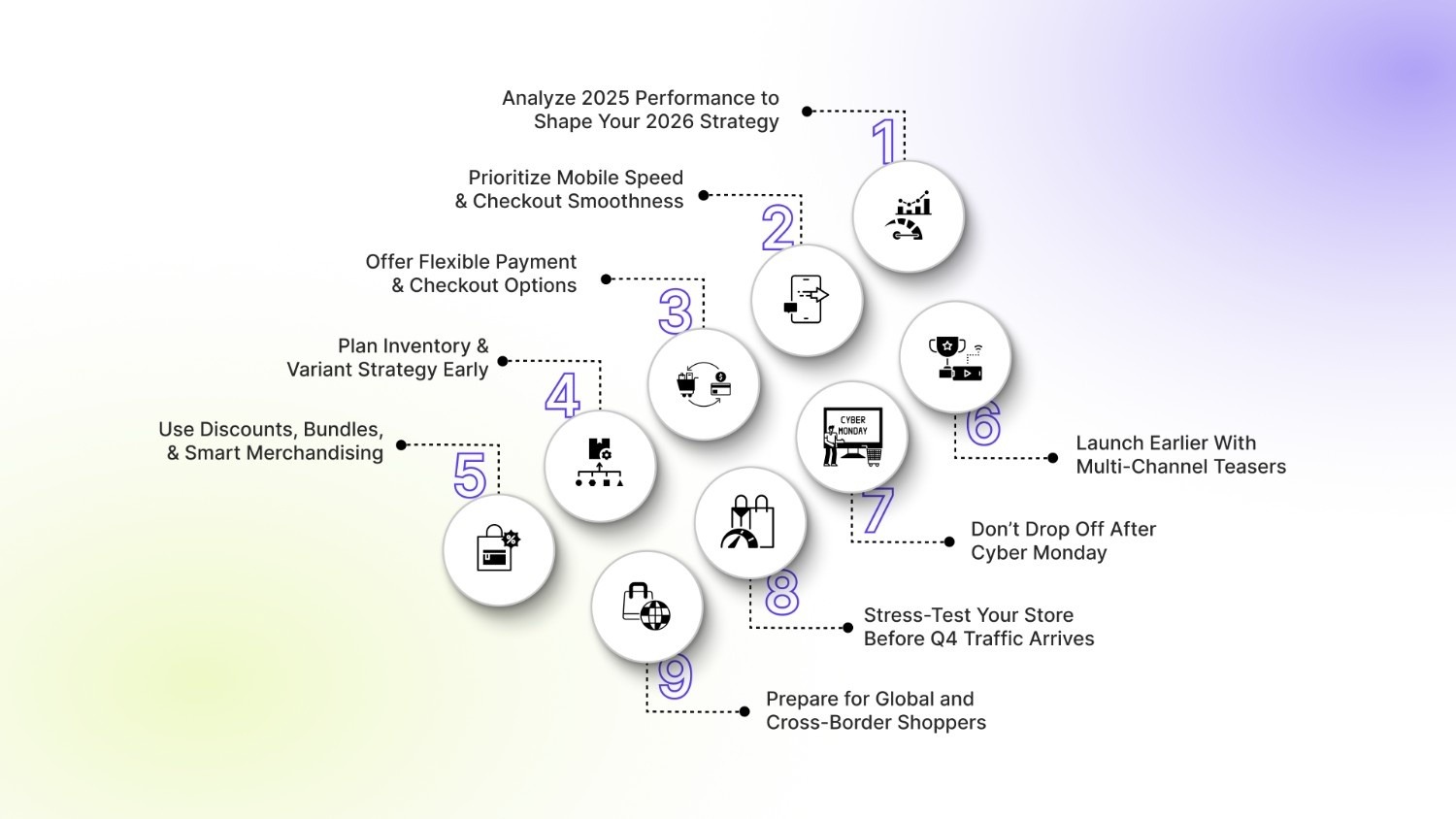
Success during the 2026 holiday season requires methodical preparation across multiple areas of your business, from technical infrastructure to inventory planning to customer experience optimization.
Let’s look at proven tactics that work:
1. Analyze 2025 Performance to Shape Your 2026 Strategy
Your 2025 data is your most accurate blueprint for 2026. Before planning campaigns or discounts, understand what actually worked and what created friction.
Action Steps:
- Identify peak sales days/hours and plan staffing + campaigns around them.
- Review SKU/variant sell-through to decide which products to scale or cut.
- Compare channel performance (email, paid, social, SMS).
- Audit cart abandonment patterns and identify friction points.
- Review support tickets/returns to find recurring UX or product clarity issues.
2. Prioritize Mobile Speed and Checkout Smoothness
Mobile drove the majority of BFCM conversions in 2025, and that share will only grow. Faster experiences = more revenue, especially on high-traffic days.
Action Steps:
- Test checkout on multiple devices and remove unnecessary steps.
- Compress images and remove heavy apps to improve page speed.
- Simplify mobile navigation and strengthen search visibility.
- Enable one-tap payment methods (Shop Pay, Apple Pay, Google Pay).
- Run pre-season load tests to ensure you can handle traffic spikes.
3. Offer Flexible Payment and Checkout Options
BNPL and digital wallets surged across the 2025 Cyber Week. Shoppers expect frictionless, flexible payment options, especially for higher-AOV items.
Action Steps:
- Add BNPL providers (Shop Pay Installments, Klarna, Affirm, Afterpay).
- Highlight BNPL availability on PDPs and carts.
- Support international currencies and local payment methods.
- Keep guest checkout friction-free while encouraging account creation post-purchase.
4. Plan Inventory and Variant Strategy Early
Variant clarity and inventory accuracy directly impacted conversion and return rates in 2025. Clean structure = fewer errors and faster decisions.
Action Steps:
- Standardize variant naming, sizing, and color logic.
- Ensure accurate variant-to-image mapping for every SKU.
- Remove underperforming variants to reduce complexity.
- Forecast inventory based on 2025 demand patterns.
- Use low-stock alerts or hide unavailable variants to minimize frustration.
5. Use Tiered Discounts, Bundles, and Smart Merchandising
Deep discounts aren’t the only way to win BFCM. Successful brands increased AOV through strategic merchandising.
Action Steps:
- Create product bundles that increase value and raise AOV.
- Use tiered offers (e.g., spend thresholds) to increase cart size.
- Personalize upsells and cross-sells based on buying data.
- Highlight bestsellers with badges, reviews, and social proof.
- Place promotional messaging at natural decision points (PDP, cart, checkout).
6. Launch Earlier With Multi-Channel Teasers and VIP Access
2025 holiday shopping began weeks before BFCM. Capturing early demand is now a must.
Action Steps:
- Start teasing offers 2–3 weeks before BFCM.
- Offer VIP/loyalty early access to reduce peak traffic stress.
- Coordinate messaging across email, SMS, paid social, and onsite banners.
- Use a multi-email sequence instead of one-off announcements.
- Activate influencers and affiliates early with exclusive codes.
7. Don’t Drop Off After Cyber Monday
The week after BFCM remains one of the strongest shopping windows. Brands that kept pushing saw higher December revenue.
Action Steps:
- Run “extended holiday” sales through early December.
- Retarget BFCM abandoners with strong incentives.
- Trigger post-purchase flows for new customers (recommendations, reviews, tracking).
- Track real-time product performance and shift promotions accordingly.
- Capture emails from non-buyers using exit-intent popups.
8. Stress-Test Your Store Before Q4 Traffic Arrives
Technical failures during BFCM 2025 cost some brands their biggest sales hours. Avoid repetition with early infrastructure testing.
Action Steps:
- Run load tests simulating 5–10× traffic.
- Test all payment methods, carts, and checkout flows.
- Update or remove outdated apps/themes that slow performance.
- Set monitoring alerts for site speed and checkout errors.
- Create a clear incident-response plan for peak season.
9. Prepare for Global and Cross-Border Shoppers
Cross-border orders grew significantly in 2025, mainly from English-speaking markets. Winning stores will internationalize early.
Action Steps:
- Enable shipping to top international regions (CA, UK, AU, EU).
- Display local currencies and duties upfront.
- Offer international-friendly payment options.
- Communicate shipping cutoff dates clearly.
- Provide transparent return policies to build trust.
Applying these proven strategies transforms your BFCM preparation from a last-minute scramble into a structured, high-conversion plan. But even with the best planning, you need the right tools to optimize your store.
Optimize Your Store to Win BFCM 2026 with StarApps
High-performing Shopify stores don’t leave BFCM success to chance. The difference between crushing sales and lost revenue often comes down to product page execution. When traffic spikes, shoppers make split-second decisions. Variant clarity, accurate images, and clear product information can make or break conversions.
StarApps Studio builds Shopify apps specifically to eliminate friction points that cost merchants revenue during high-stakes shopping events. These tools give your store the infrastructure it needs to scale confidently during Black Friday and Cyber Monday.
Here’s how StarApps can make your store friction-free:
1. Variant Image Automator
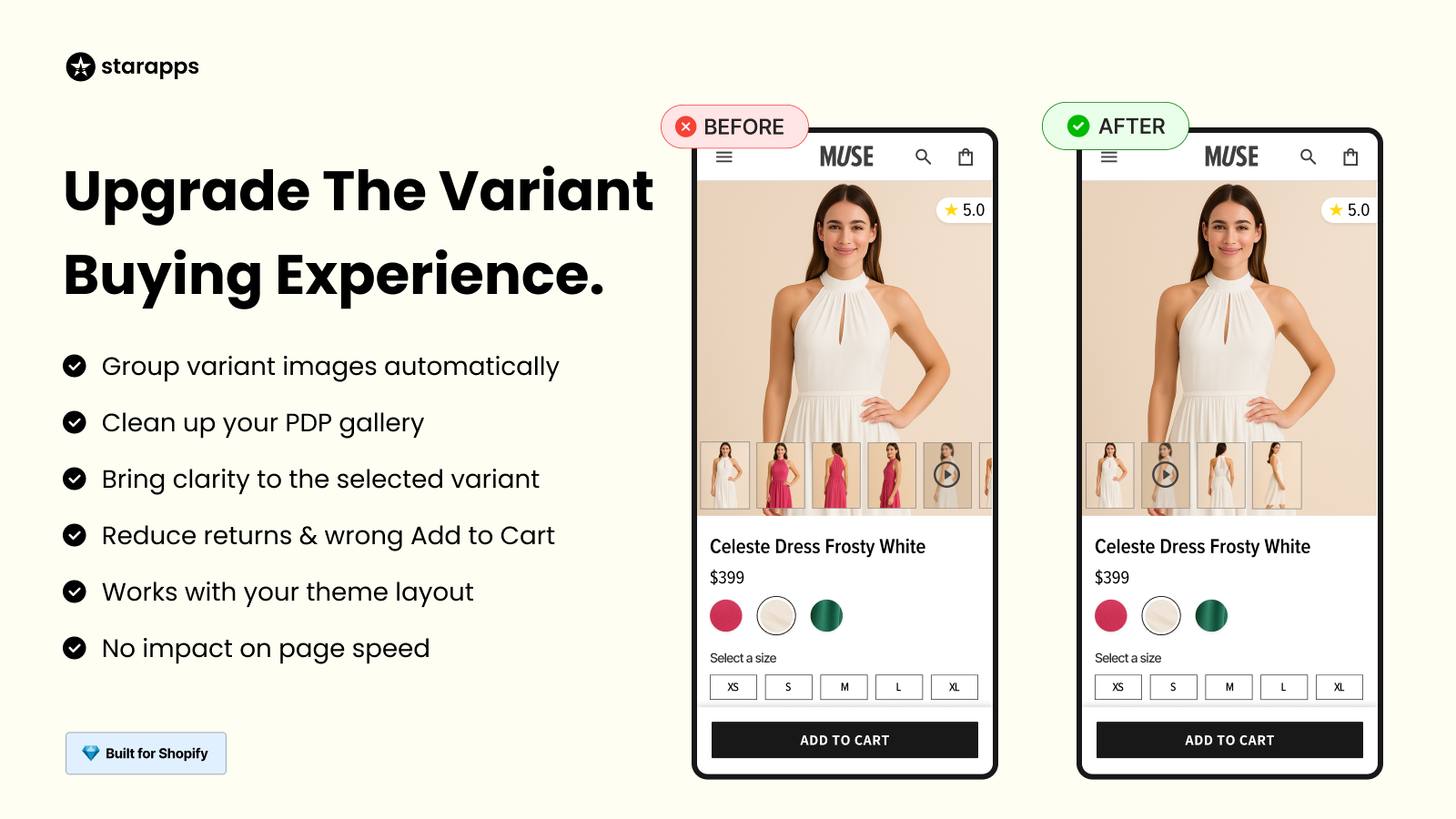
Automatically assigns the correct images to every product variant, eliminating manual tagging errors.
Key features:
- Instant image switching when customers select different options.
- Organized variant galleries that only show relevant images.
- Supports color swatches, 3D views, and videos.
- Seamless theme integration without slowing down your site.
- Reduces purchase hesitation and increases shopper confidence.
2. Swatch King
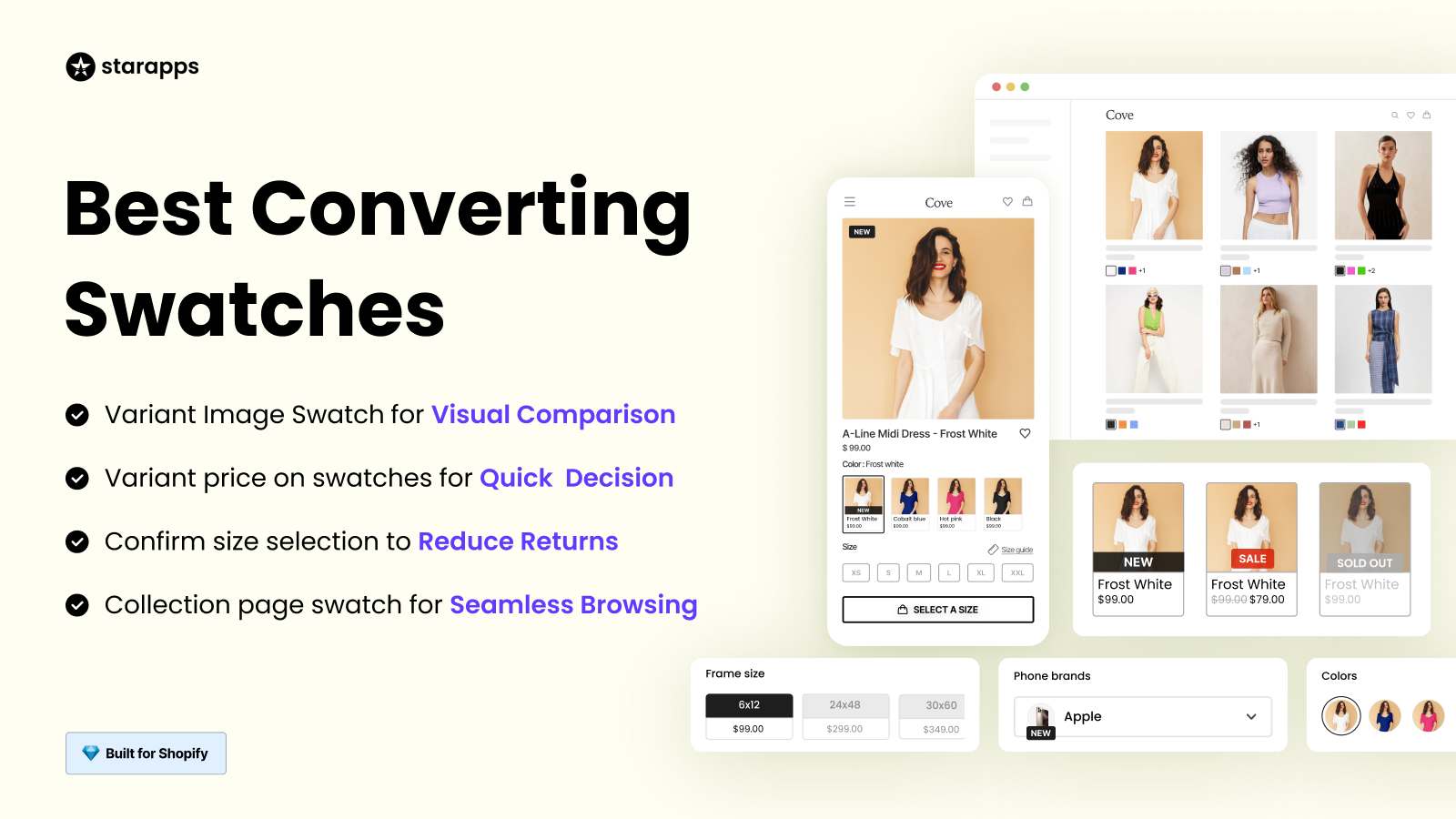
Transforms collection pages with visual swatches and variant selectors for faster, clearer browsing.
How it helps:
- Shows color, size, and style options directly on collection pages.
- Out-of-stock variants are automatically hidden.
- Bulk upload support for multiple product swatches.
- Speeds up variant evaluation, keeping shoppers engaged and moving toward checkout.
- Integration with Shopify Markets for global selling.
3. Variant Descriptions King
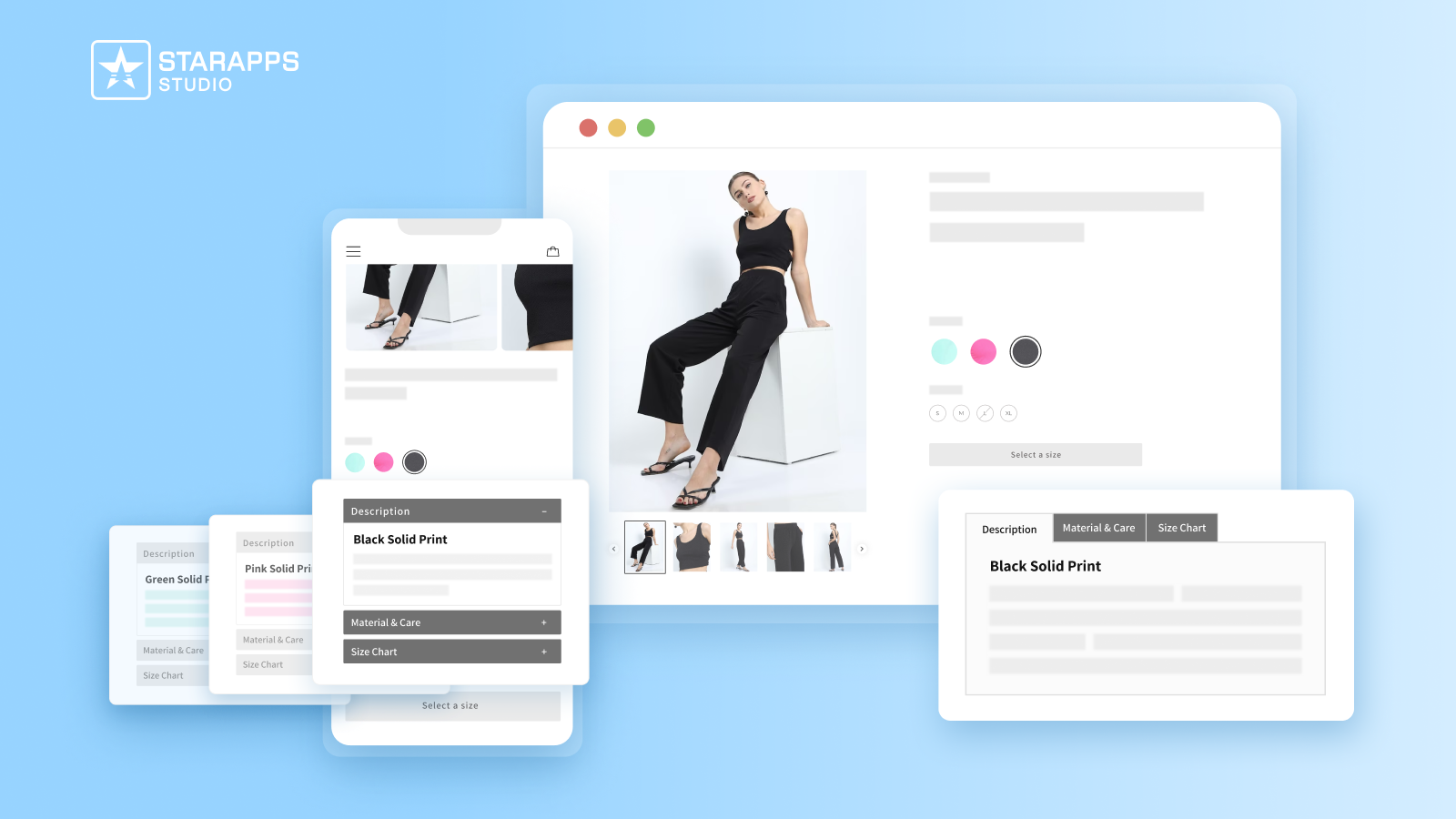
Displays unique descriptions, size charts, and specifications for each variant, keeping product pages accurate and informative.
What it does:
- Reduces customer confusion with clear, variant-specific information.
- Collapsible layouts optimize mobile experience.
- Custom tabs for shipping, care, and specifications.
- Minimizes returns by setting accurate expectations.
- Supports product pages, FAQs, and policy sections.
4. SA Variants: Combined Listings

Splits product variants into individual listings while keeping logical grouping for SEO and discoverability.
How it helps:
- Each variant gets its own URL, images, and description.
- Improves search visibility both on-site and via Google.
- Better filtering and sorting for shoppers.
- Reduces friction for customers searching for specific options.
- Boosts organic traffic and conversion potential.
5. Variant Alt Text King
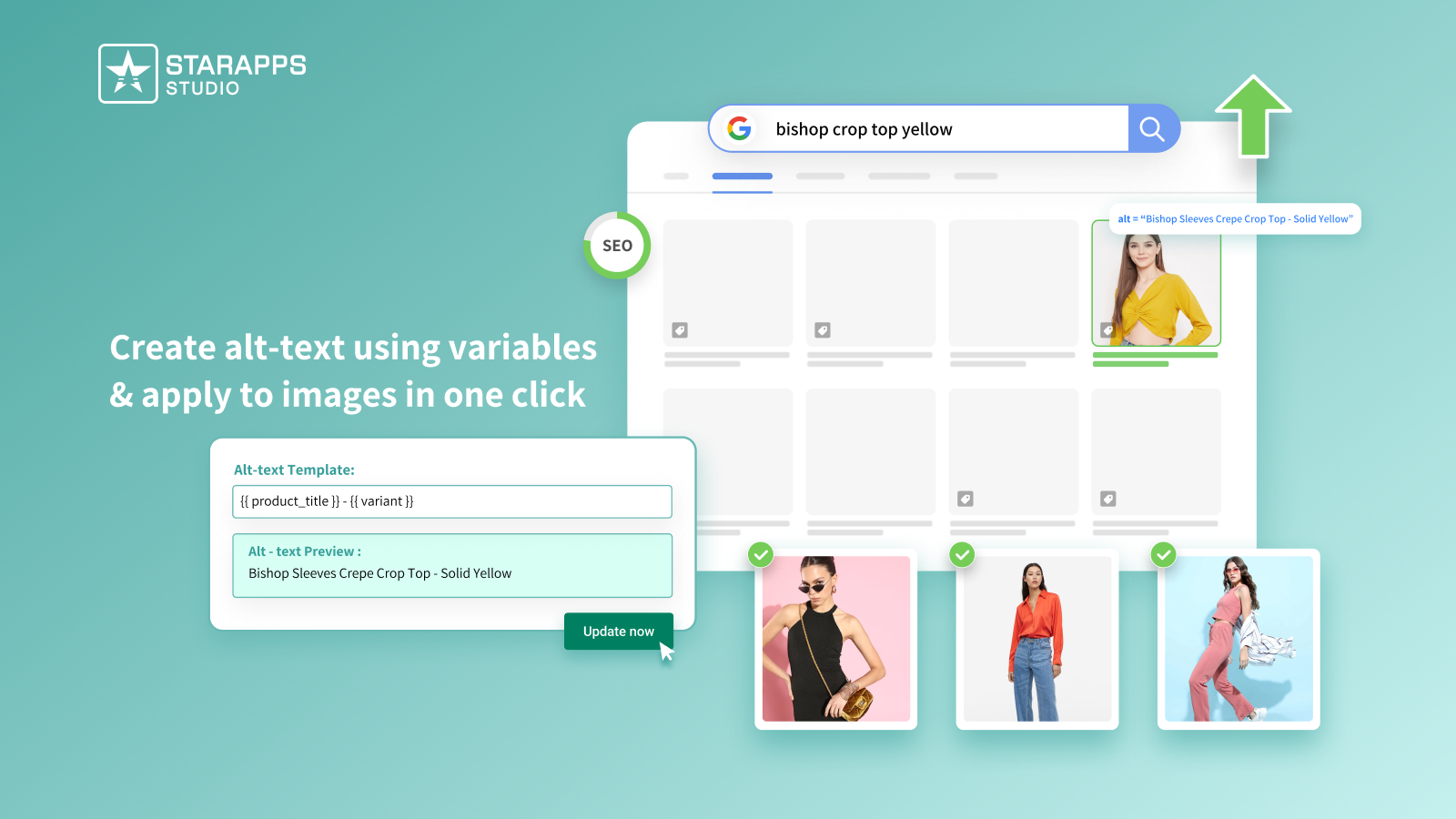
Automatically generates SEO-optimized alt text for all product variant images.
What it does:
- Daily sync ensures new products are optimized immediately.
- ADA and WCAG compliant for accessibility.
- Enhances Google Image Search visibility.
- Integrates with Variant Image Automator for complete coverage.
- Captures additional organic traffic leading into BFCM.
6. Variant Title King
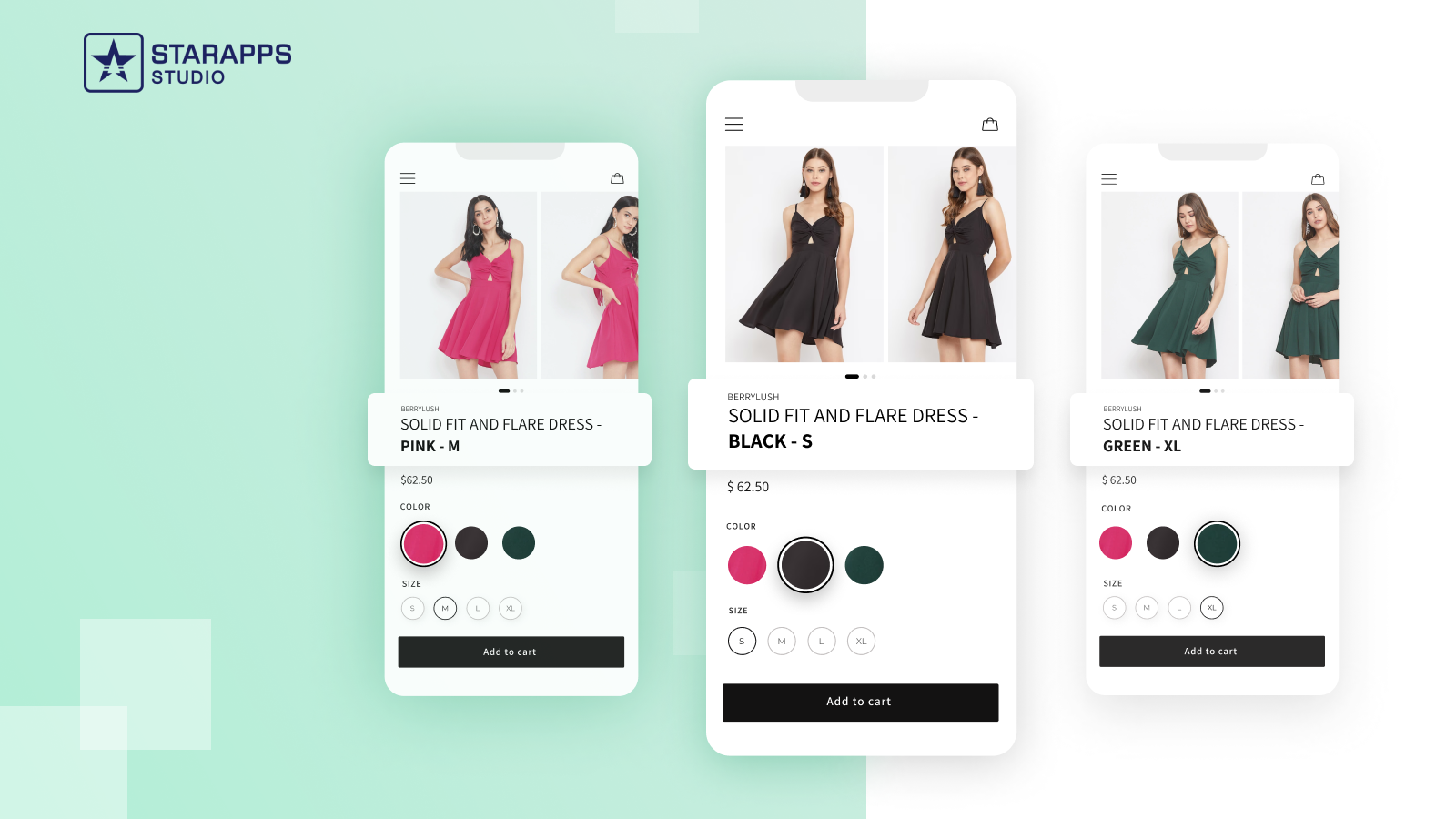
Dynamically updates product titles based on the selected variant to reflect color, size, SKU, and more.
How it helps:
- Reduces customer confusion and prevents cart abandonment.
- Ensures accurate inventory tracking and order management.
- Works seamlessly with any Shopify theme.
- Integrates with other StarApps variant tools for end-to-end product accuracy.
- Builds shoppers' confidence when making split-second decisions.
StarApps equips Shopify merchants with tools to eliminate friction, increase conversion rates, and scale confidently during BFCM’s high-traffic weekend. Preparing your product pages with accurate variants, visuals, and descriptions now ensures your store converts more of the massive traffic you’ll drive in 2026.
Final Takeaway
When deciding between Cyber Monday vs Black Friday, the difference comes down to how well your store delivers a smooth shopping experience. Preparing early and optimizing product presentation, variant clarity, and checkout flow ensures high traffic converts into sales.
StarApps Studio gives you the tools to make variant selection clear, product images accurate, and shopping experiences smooth, even under peak load. When you're converting 3.2% instead of 2.1% during BFCM's massive traffic surge, those apps pay for themselves hundreds of times over.
Start preparing now. Explore StarApps Studio tools today and test everything before the big time of the year comes around again.
FAQ’s
1. Is Cyber Monday the biggest shopping day?
Cyber Monday is one of the biggest online shopping days of the year, often surpassing Black Friday's single-day online sales, especially for digital-first and high-value products.
2. Is Cyber Monday busier than Black Friday?
Cyber Monday is busier for online-only shopping, but Black Friday attracts larger overall traffic when combining in-store and online shoppers, making each day strong in different ways.
3. How long does Cyber Monday last?
Cyber Monday typically runs for 24 hours on the Monday after Thanksgiving, but many retailers extend deals through the week, often creating a multi-day online shopping window.
4. Why do they call it Cyber Monday?
The term Cyber Monday was created in 2005 to describe the surge in online shopping that occurs the Monday after Thanksgiving when people return to work.
Heading

End-to-end traceability
To ensure regulatory compliance, you must have a complete overview of your products from production to shipping. Book a demo to see how Katana can give you full visibility of your operations.
.png)

.svg)

.svg)

.svg)
.png)