

Boost BFCM 2026 sales with strategic planning. Set goals, analyze data, and enhance AOV. Act now and excel this shopping season!
Black Friday and Cyber Monday 2025 set new records for Shopify merchants with $14.6 billion in sales across four days. Shoppers were faster, savvier, and more selective than ever before.
If your store struggled with slow page load times, unclear variant selection, or inventory issues, you likely saw abandoned carts and lost revenue. On the other hand, brands that prepared early and focused on speed, clarity, and mobile-first experiences achieved the highest conversion rates.
In this blog, we break down exactly what happened during BFCM 2025, reveal what customers now expect, and share actionable strategies to optimize your Shopify store for BFCM 2026. By the end, you will know how to close gaps in your store, improve conversions, and turn peak-season traffic into loyal customers.
Key Takeaways
- Preparation Beats Discounts: BFCM 2026 success depends on months of planning, speed optimization, and frictionless UX, not just deep discounts.
- Mobile and Variant Clarity Are Critical: Most shoppers are mobile-first, and clear variant presentation directly impacts conversions, reduces returns, and boosts shopper confidence.
- Automation and Tech Stack Drive Efficiency: Inventory sync, variant automation, dynamic content, and analytics ensure your store can scale under high traffic without errors.
- Marketing and Personalization Win Loyalty: Early access, segmented campaigns, post-purchase flows, and cross-channel consistency turn one-time BFCM buyers into repeat customers.
What is BFCM and Why It Matters for Your Store
Black Friday and Cyber Monday (BFCM) mark the biggest shopping weekend of the year, kicking off the holiday season with record-breaking sales. For online merchants, especially Shopify stores, it’s an opportunity to capture new customers, increase average order values, and showcase your brand at scale.
In 2025, BFCM ran from Black Friday, November 28, to Cyber Monday, December 1, with Shopify merchants generating billions in sales across four days. Shoppers were more mobile-focused, deal-savvy, and selective than ever, making execution, speed, and clarity the differentiators between top performers and those left behind.
Before we dive into the lessons and strategies for 2026, let’s take a closer look at what actually happened during BFCM 2025 and why it matters for your store.
BFCM 2025 Recap: Key Stats and Trends
BFCM 2025 was a record-breaking weekend that highlighted the evolving behavior of online shoppers and the critical importance of preparation.
Some key trends emerged that set the stage for what brands need to focus on in 2026:
- Mobile is dominant: 63% of all purchases happened on mobile devices, proving that mobile-first design is essential.
- Execution matters more than depth of discounts: Stores that struggled with slow pages, confusing variants, or unclear stock visibility saw abandoned carts, while prepared stores converted consistently.
- Customers are deal-savvy, not discount-driven: Shoppers researched deals in advance and favored tiered bundles, early access, and curated offers over generic percentage discounts.
- Inventory transparency drives trust: Real-time stock indicators, “only a few left” alerts, and accurate variant availability improved conversion and reduced post-purchase frustration.
These numbers and trends reveal that the gap between BFCM winners and others came down to preparation, speed, and clarity rather than just price cuts. In the next section, we’ll explore the critical lessons from BFCM 2025 that every Shopify store should carry into 2026.
What BFCM 2025 Taught Us About Customer Expectations for 2026
BFCM 2025 highlighted one key truth: customers now expect zero friction. They move smoothly between social, email, search, and your store, but only brands that deliver speed, clarity, and relevance keep them from dropping off. Understanding these expectations is crucial for shaping your 2026 strategy.
1. Speed Is Non-Negotiable
- Pages that take longer than 3 seconds to load see sharp conversion declines.
- Key factors affecting speed include heavy themes, oversized images, and app bloat.
- Faster stores capture intent; slower stores lose it instantly.
2. Variant Clarity Directly Affects Conversion
- Customers want to see colors, sizes, and styles immediately.
- Clear variant presentation improves navigation and conversion confidence and reduces returns.
- Shoppers won’t click through multiple pages just to understand options.
3. Transparent Stock Builds Trust
- Hidden or inaccurate stock information frustrates buyers.
- Effective tactics include visible stock counts, automatic hiding of sold-out variants, and honest restock dates.
- Transparency reduces support tickets and abandoned carts.
4. Bundles Increase Perceived Value
- Pre-curated sets simplify decisions and remove comparison fatigue.
- Bundles drive faster movement of slower SKUs and higher conversion rates for gift-ready products.
5. Personalization Is Necessary
- Generic messaging blends into the BFCM noise.
- Brands that personalize based on behavior see higher engagement via tailored email segments, returning-customer offers, and dynamic product recommendations.
6. Cross-Channel Consistency Determines Trust
- Shoppers jump between Instagram, email, ads, and your storefront, expecting predictable experiences.
- Breaks in consistency cause drop-off, while synced inventory, pricing, and messaging across channels strengthen customer trust.
In short, meeting these expectations with speed, clarity, personalized experiences, and consistent cross-channel execution will be the key to winning and retaining customers during BFCM 2026.
Steps to Prepare Your Online Store for BFCM 2026
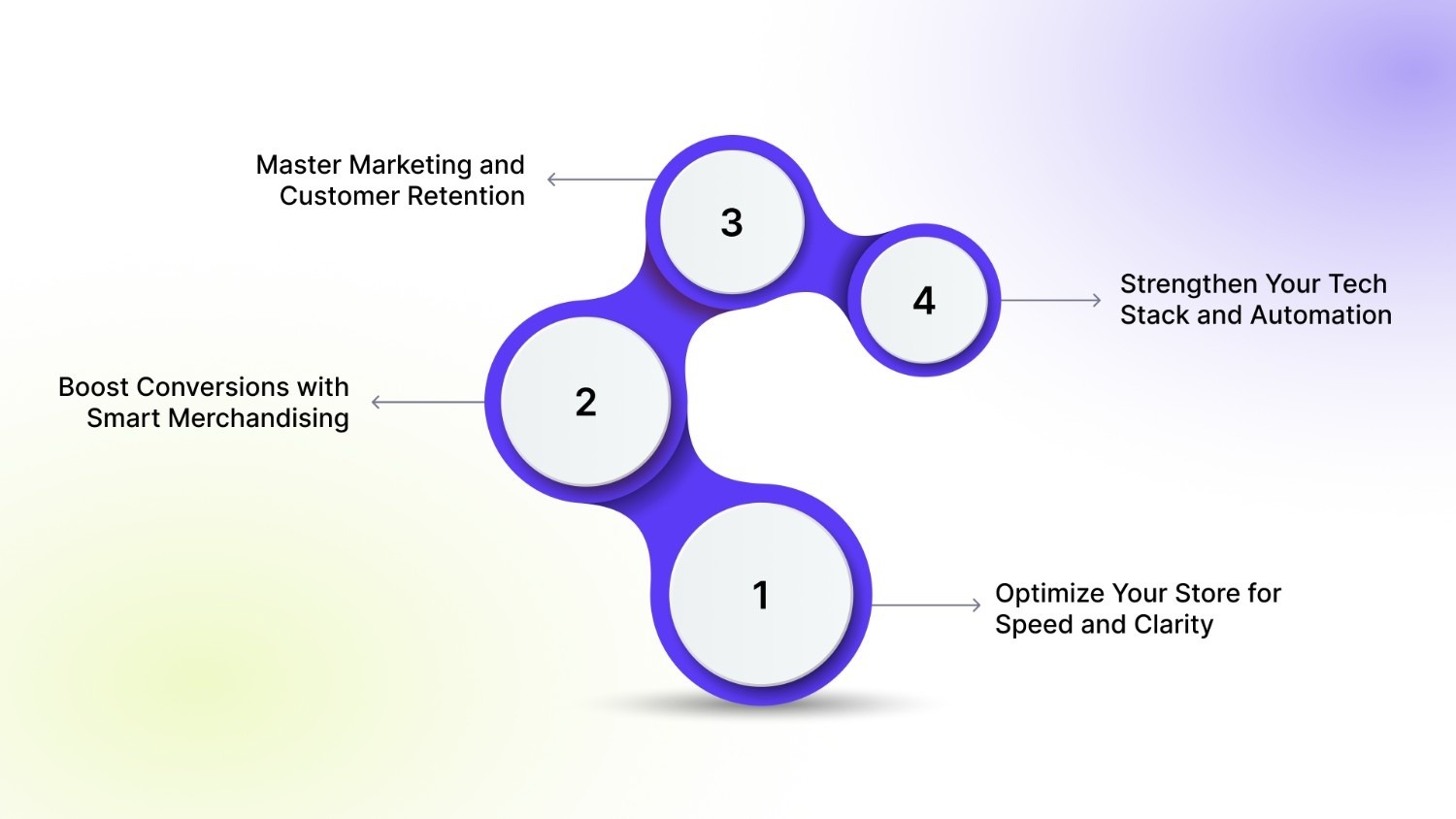
Preparing early ensures your store can handle peak traffic, convert efficiently, and retain new customers. Here’s a step-by-step guide to getting your store ready.
Step 1: Optimize Your Store for Speed and Clarity
A fast, intuitive store is the foundation of every successful BFCM campaign. Shoppers won’t wait for slow pages, struggle with unclear variants, or hunt for products that are difficult to find.
Key areas to optimize:
- Page Speed: Compress images, reduce heavy scripts, and streamline theme code. Even small speed gains can dramatically increase conversions.
- Mobile-First Design: Ensure thumb-friendly navigation, one-tap payments, and scrollable layouts. Test your store across devices to eliminate friction.
- Variant Clarity: Present color, size, and style options visually rather than relying solely on dropdowns. Use swatches, automatic variant images, and clear labeling.
- Search & Filtering: Improve product discovery with predictive search, smart filters, autocomplete, and ranking improvements to reduce bounce.
- Accessibility & UX: Ensure your store meets accessibility standards, allowing more shoppers to navigate easily and reducing barriers for all users.
Optimizing these elements creates a faster, clearer, and more confident shopping experience, which directly improves conversions. You can also use tools like StarApps Studio for variant automation, swatch management, and clear visual options, which save time and reduce errors during high-traffic BFCM periods.
Step 2: Boost Conversions with Smart Merchandising
Once your store is fast and easy to navigate, your merchandising strategy should guide shoppers toward larger, confident purchases.
Actionable strategies:
- Bundles & Pre-Curated Sets: Offer gift-ready bundles or product combinations that reduce decision fatigue and increase average order value.
- Threshold Incentives: Implement “Spend $X, get $Y” deals to encourage bigger carts without deep blanket discounts.
- Flexible Payment Options: Add BNPL, installment plans, or multiple payment gateways, especially for higher-ticket items.
- Upsells & Cross-Sells: Show relevant recommendations on product pages, carts, and post-purchase screens to increase revenue per customer.
- Clear Promotions: Avoid complicated deals; shoppers must understand precisely what they’re getting to prevent confusion and abandoned carts.
A thoughtful merchandising strategy ensures shoppers move through the funnel smoothly, boosting both conversion rate and order value.
Step 3: Master Marketing and Customer Retention
Marketing during BFCM is all about relevance, timing, and loyalty. Engaging customers before, during, and after the event builds long-term value.
Essential tactics:
- Early Access for VIPs: Reward loyal customers with early-bird offers to secure revenue before peak traffic hits.
- Segmentation: Tailor messaging for first-time visitors, returning customers, and high-value shoppers to maximize engagement.
- SMS & Email Automation: Send targeted cart reminders, flash deals, and personalized offers that match customer behavior and intent.
- User-Generated Content: Highlight reviews, photos, or social proof to build trust and reinforce purchase decisions.
- Post-Purchase Flows: Encourage repeat purchases with thank-you emails, loyalty rewards, and cross-sell recommendations.
- Cross-Channel Consistency: Sync messaging, promotions, and inventory across email, social, ads, and your store for a seamless customer journey.
These marketing and retention strategies turn one-time BFCM buyers into repeat customers, ensuring growth beyond the holiday weekend.
Step 4: Strengthen Your Tech Stack and Automation
Manual work becomes impossible during peak traffic, making the right tech stack essential. Automation ensures accuracy, speed, and scalability.
Key tech upgrades to implement:
- Inventory Synchronization: Keep stock accurate across all channels to prevent overselling and missed revenue.
- Variant Automation: Use tools to automatically assign images, titles, and descriptions to variants, reducing errors and improving clarity.
- Dynamic Product Content: Update product details, pricing, or promotions in real-time based on variant selection or customer segment.
- Speed Optimization Tools: Install apps that compress media, defer scripts, and improve load times during high-traffic periods.
- Bundles & Upsell Systems: Automate bundle creation and recommendation rules based on cart content or shopper behavior.
- Analytics & Heatmaps: Monitor how shoppers interact with your store to identify friction points and optimize continuously.
By investing in tech and automation now, your store can scale efficiently during BFCM 2026, delivering a smooth and reliable experience even under heavy load.
Common Mistakes to Avoid During BFCM 2026
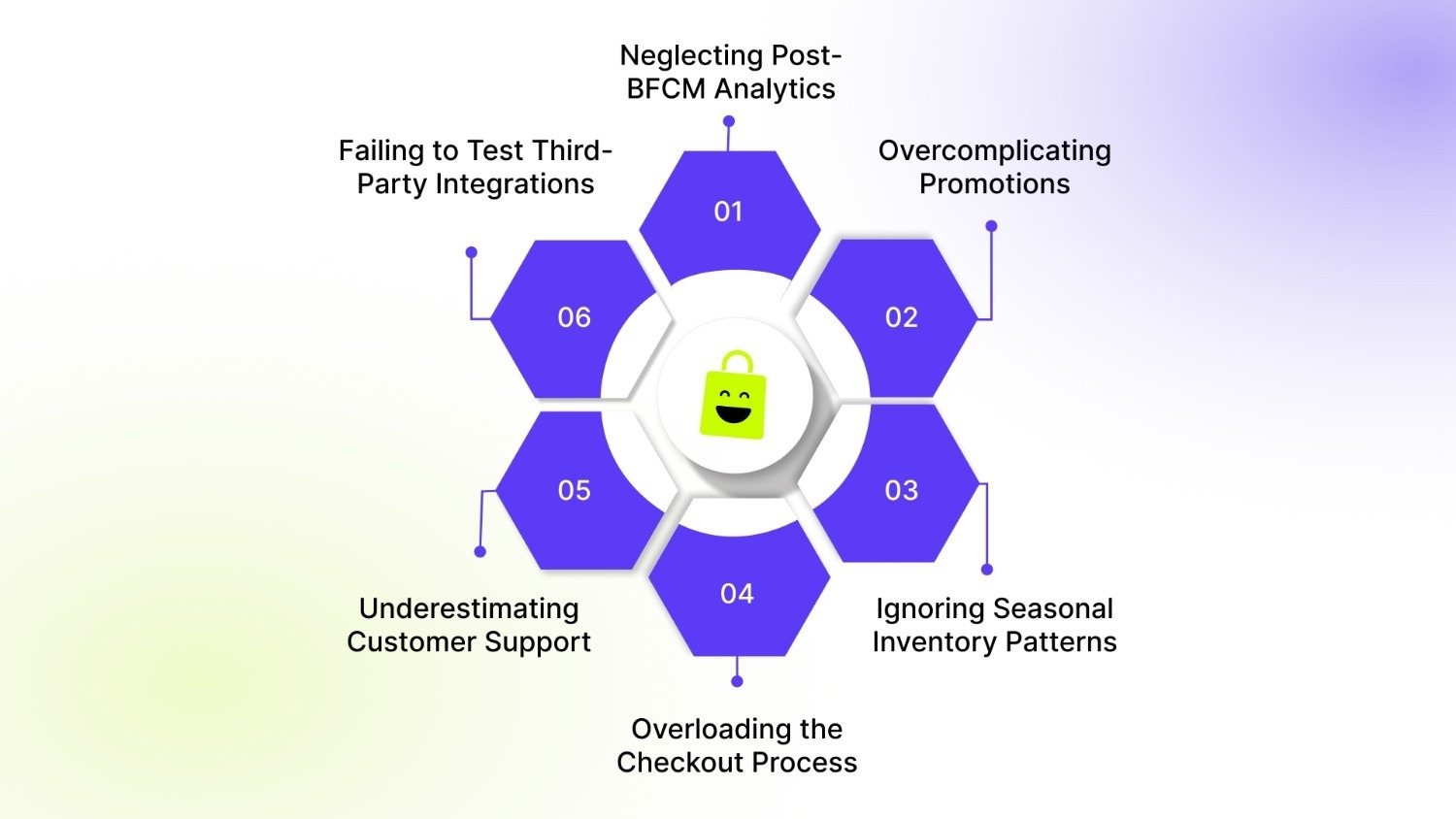
Even with careful planning, Shopify merchants can stumble in ways that aren’t obvious until it’s too late. Avoid these pitfalls to ensure your store maximizes revenue and maintains customer trust.
1. Neglecting Post-BFCM Analytics
Many stores celebrate sales success but fail to analyze the data beyond revenue. Without insights into product performance, traffic sources, and conversion bottlenecks, you’ll miss opportunities to improve for the next season.
- Track metrics like bounce rates on product pages, variant performance, and checkout abandonment.
- Identify which promotions and bundles drove the highest engagement.
- Use these insights to refine merchandising, personalization, and inventory planning for 2026.
2. Overcomplicating Promotions
While creative campaigns can stand out, overly complex offers confuse customers and reduce conversion.
- Avoid multiple overlapping discounts that require math to understand.
- Steer clear of hard-to-track coupon codes or limited-time offers with confusing rules.
- Focus on clear, simple deals that are instantly understandable at a glance.
3. Ignoring Seasonal Inventory Patterns
Running out of stock on hot items or overstocking slow movers are common errors. Even with forecasting, many stores misjudge demand spikes for BFCM-adjacent holidays like Small Business Saturday or Green Monday.
- Analyze past seasonal trends, not just BFCM weekend sales.
- Consider split inventory strategies to prevent stockouts across channels.
- Communicate inventory scarcity clearly without frustrating shoppers.
4. Overloading the Checkout Process
Adding unnecessary fields, unclear shipping options, or surprise fees can derail even the most engaged shoppers.
- Limit required form fields to essentials only.
- Clearly display shipping costs and estimated delivery dates upfront.
- Offer guest checkout options alongside account creation prompts.
5. Underestimating Customer Support Needs
High traffic can generate spikes in questions that automated flows might not handle. Stores that underprepare for customer inquiries risk abandoned carts and negative reviews.
- Ensure your support team is scaled for BFCM weekend traffic.
- Implement temporary chatbots or AI responders to answer common questions.
- Provide clear self-service options, such as FAQs, sizing guides, or order-tracking links.
6. Failing to Test Third-Party Integrations
Many stores rely on apps for email, payments, and product recommendations. However, even minor glitches in these systems during peak traffic can result in lost sales or frustrated customers.
- Test every app integration under high traffic conditions.
- Confirm payment gateways, variant automation tools, and discount logic function correctly.
- Monitor performance live during BFCM to address issues immediately.
Avoiding these mistakes ensures your store doesn’t just survive BFCM, it thrives. By planning for data analysis, clarity, inventory management, frictionless checkout, support readiness, and integration reliability, you can convert more visitors into loyal customers.
How StarApps Studio Can Help You Win BFCM 2026?
When traffic spikes and customer expectations are high, manual efforts often fail. StarApps Studio builds tools specifically to eliminate the most common pain points, variant confusion, slow product pages, broken UX, and fragmented inventory, so your store performs smoothly when it matters most.
Here’s a breakdown of each StarApps tool, what it does, and how it addresses 2025‑tested challenges for a smoother 2026 BFCM.
Swatch King
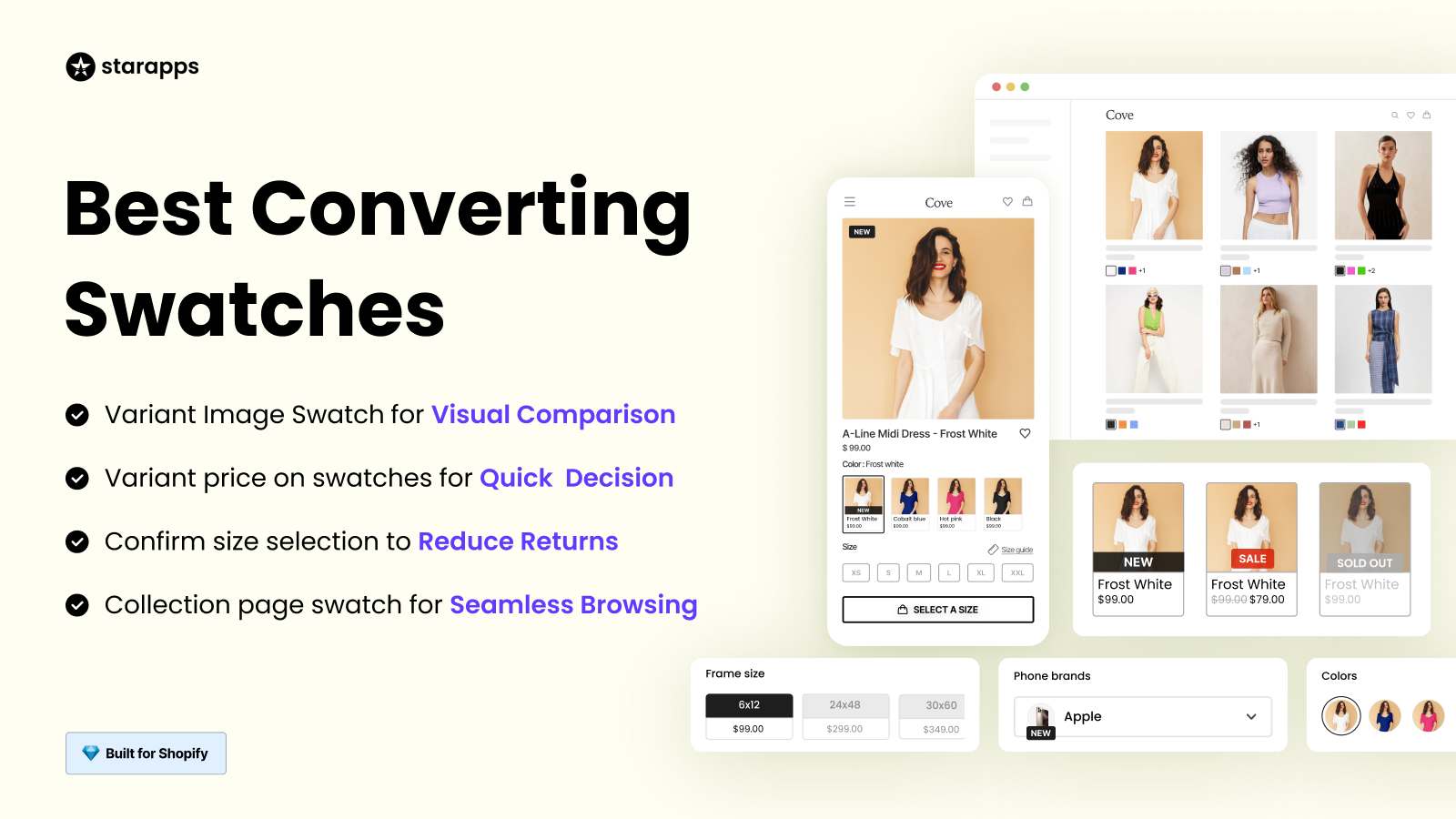
- Replace boring dropdowns with visual swatches, letting customers quickly see colors, styles, or patterns before they even open a product page.
- Display swatches on collection or category pages so shoppers can compare variants at a glance.
- Automatically hide out-of-stock variants so customers don’t waste time clicking unavailable options.
- Bulk upload swatches via CSV, useful for large catalogs and drastically reducing manual work.
Why it matters: During BFCM 2025, many shoppers abandoned carts because variants were confusing, unclear, or unavailable. Swatch King improves clarity and checkout speed, reducing bounce rates, boosting conversions, and minimizing returns or cancellations.
Variant Image Automator
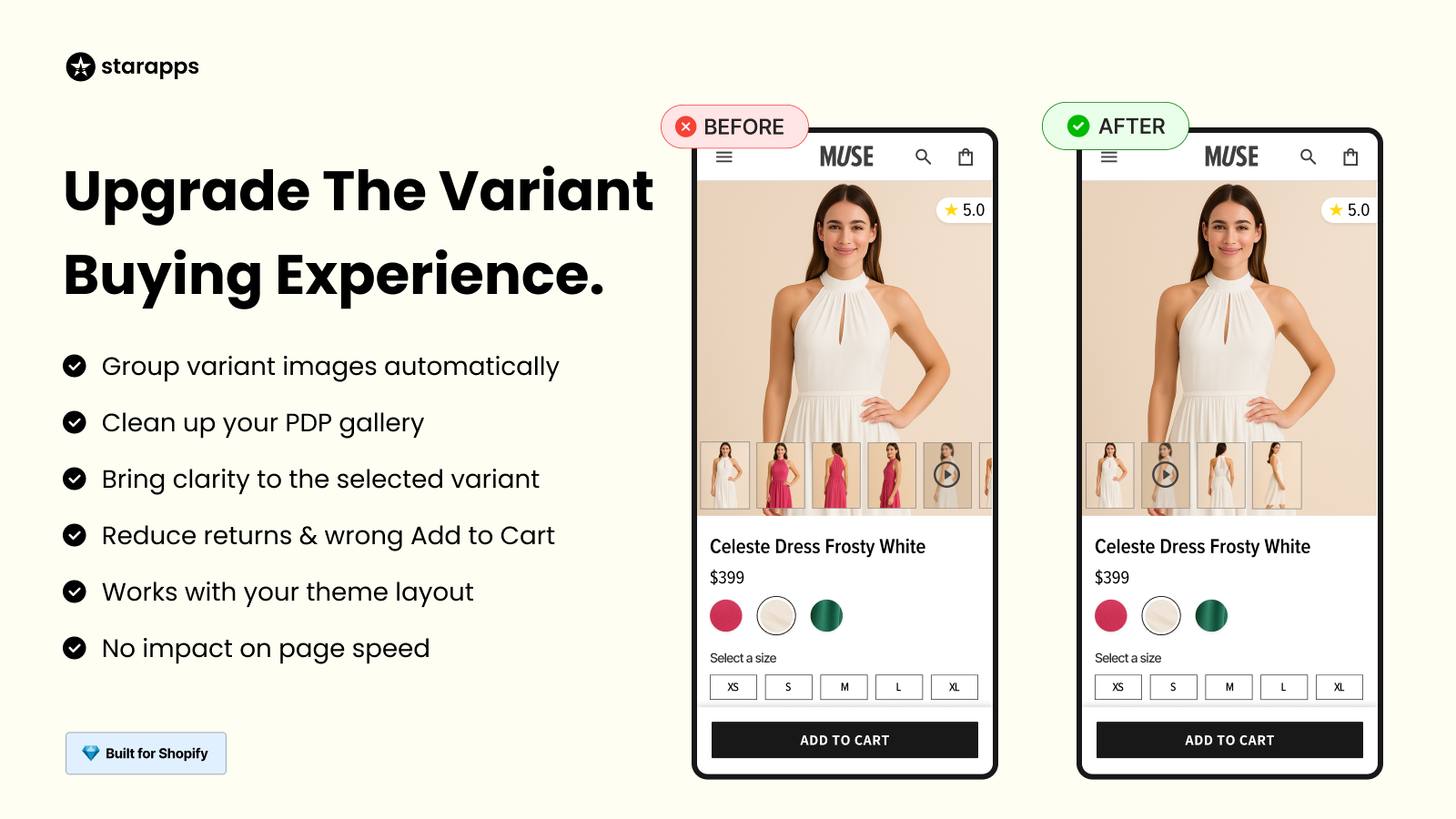
- Automatically assign the correct images to each variant (color, size, style), ensuring galleries remain clean and relevant.
- Maintain consistent, organized galleries: only show photos relevant to the selected variant.
- Support zoom, 3D views, or even video content per variant for high-end or detail-oriented products.
Why it matters: Poor or inconsistent variant images cause confusion and hesitation. Automated variant image assignment speeds up catalog management and ensures quality presentation, increasing shopper confidence and reducing friction under traffic spikes.
SA Variants: Combined Listings
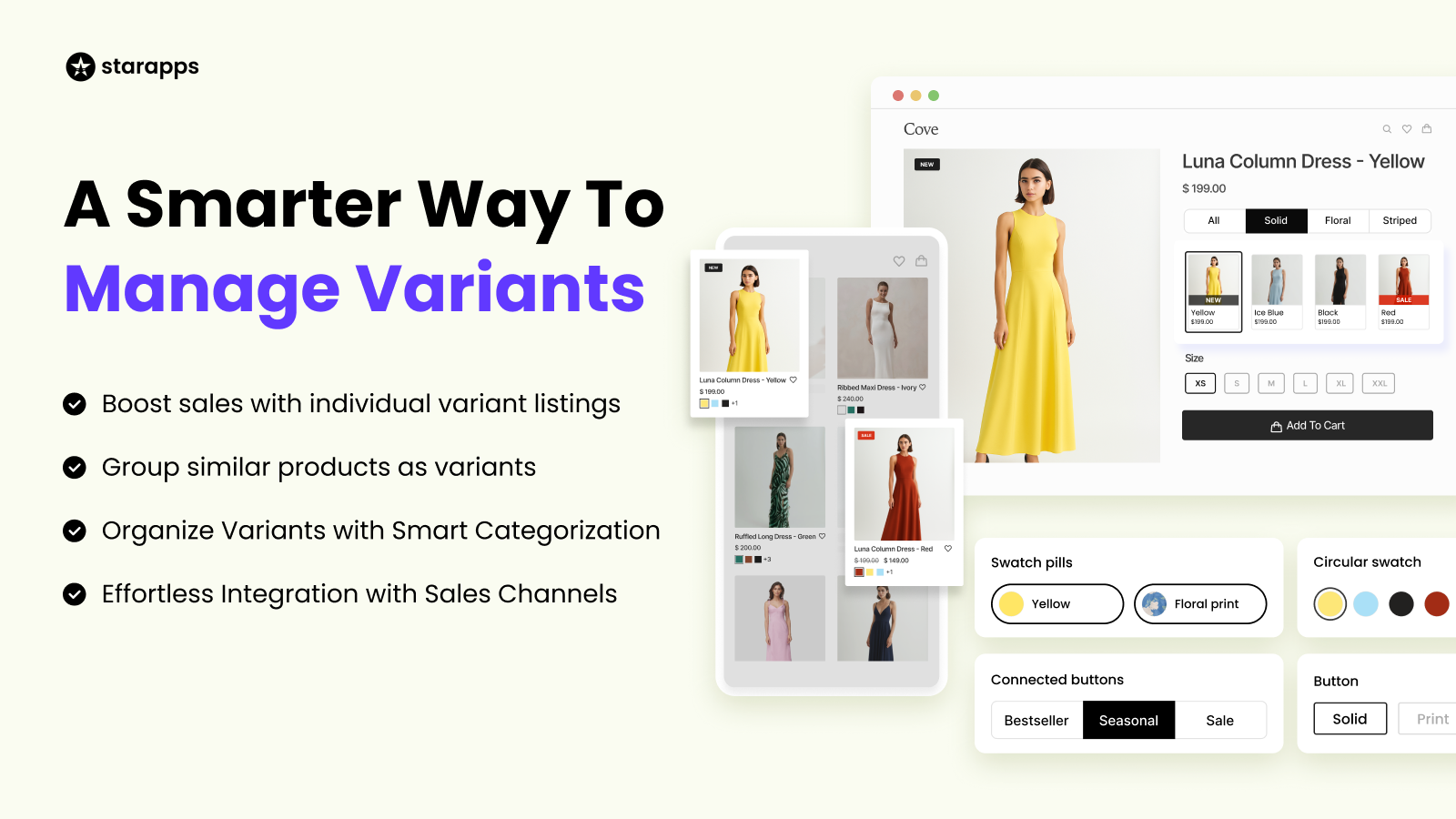
- Automatically generate separate listings for each variant (color, style, size) with unique titles, descriptions, and URLs.
- Improve discoverability on collection pages so customers can find exactly what they want faster.
- Boost SEO by providing search engines with more indexable pages, increasing the likelihood that each variant ranks individually.
Why it matters: When shoppers use search or filtering, showing all variants individually helps them find their desired product quickly, improving conversion and reducing bounce rates. It also drives more organic traffic in the run-up to BFCM.
Variant Alt Text King
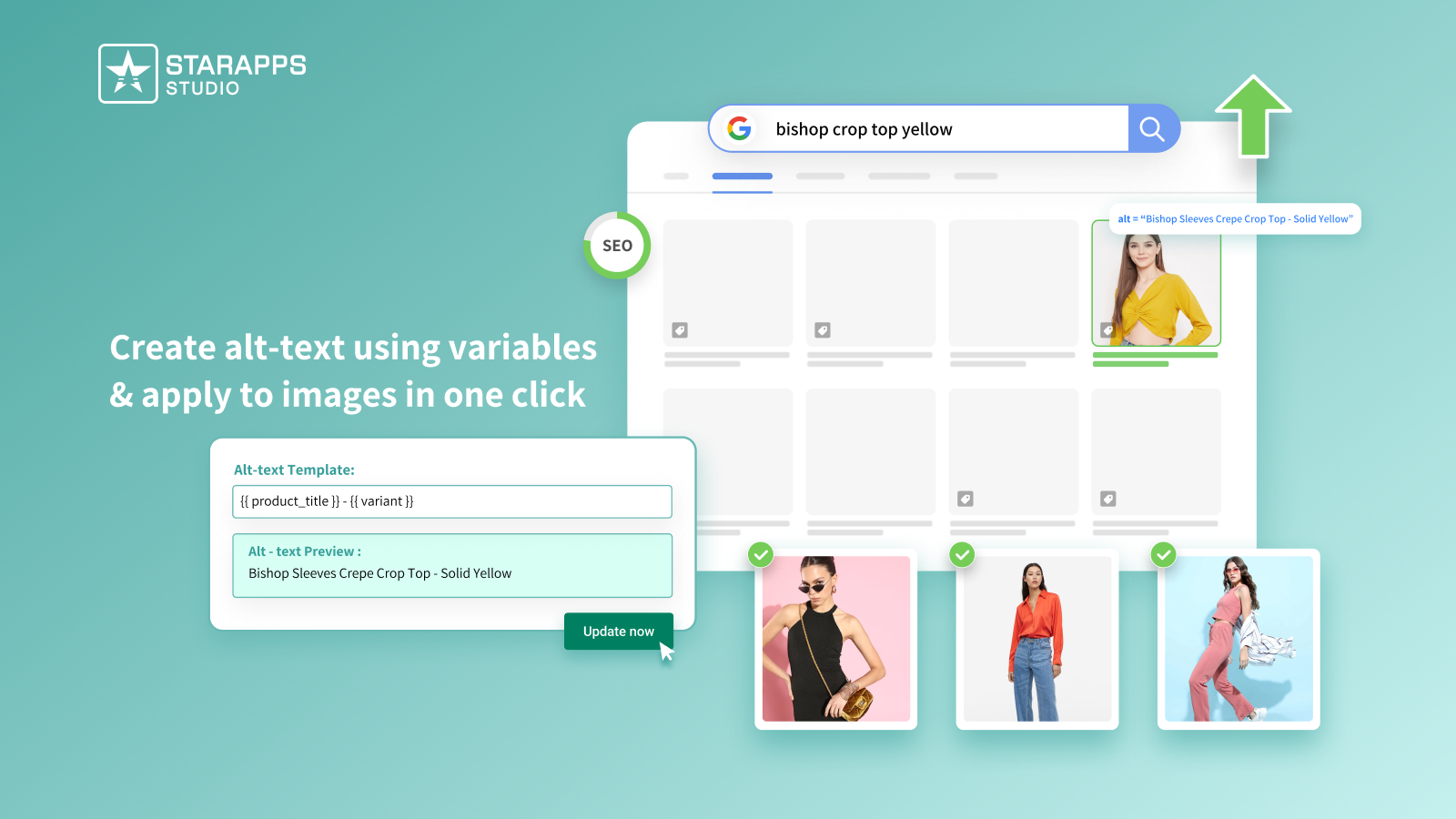
- Auto-generate descriptive alt text for variant images, including relevant details (color, material, size), helpful for SEO and accessibility.
- Ensure all product images are optimized to reduce manual workload, especially for large catalogs.
- Keep alt text synchronized whenever new variants or images are added.
Why it matters: During high‑traffic events, SEO visibility and accessibility matter more than ever. Proper alt text helps capture organic traffic, supports image search, and ensures accessibility for all users, contributing to overall store performance.
Variant Title King
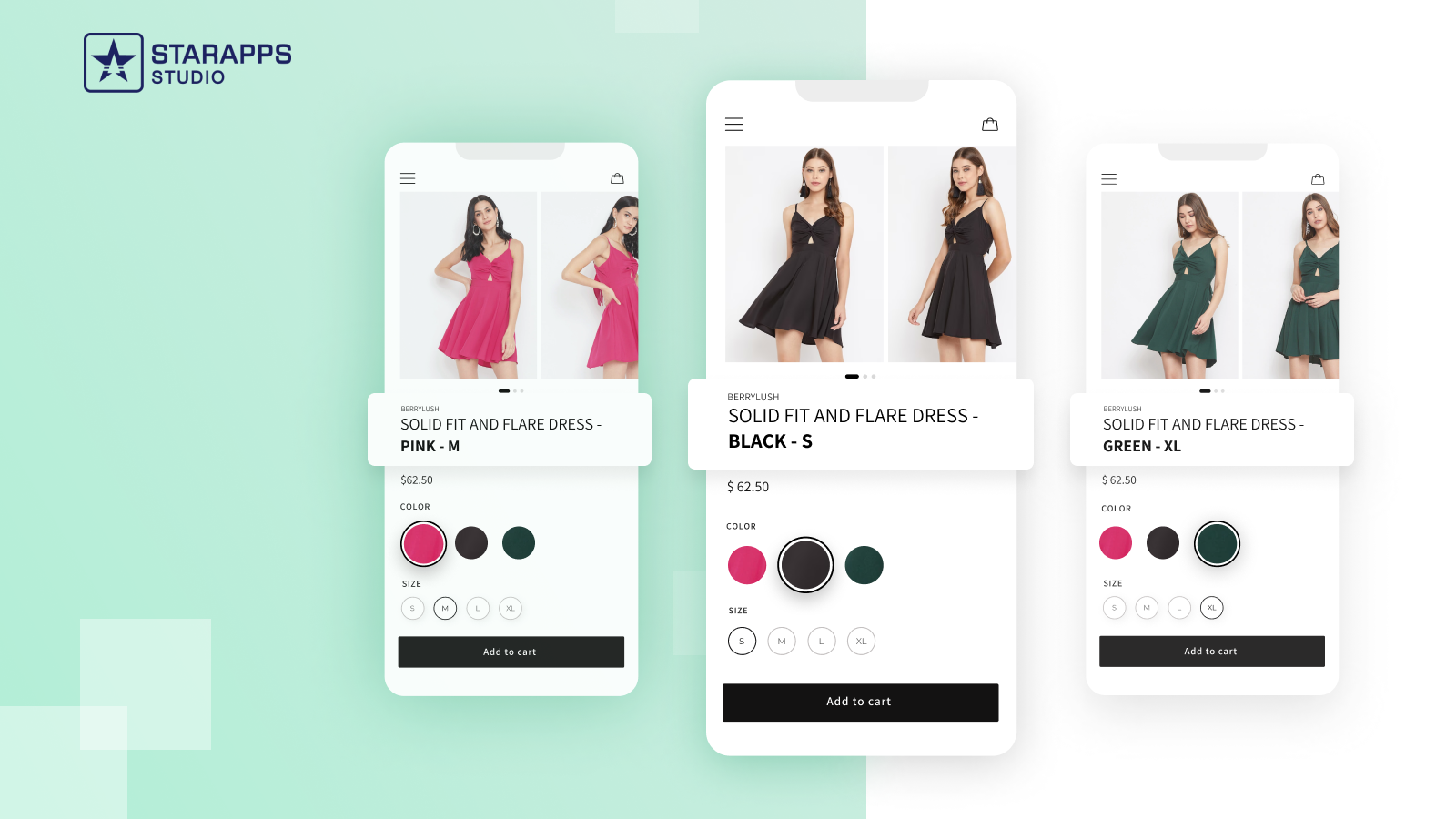
- Dynamically update product titles based on selected variants (e.g., “T‑Shirt – Navy / Large”) to keep clarity during browsing and checkout.
- Make sure titles show relevant details (color, size, SKU), so customers always know exactly what they are ordering.
- Ensure compatibility across themes and integrate seamlessly with other StarApps tools.
Why it matters: Clear titles reduce wrong orders, returns, and customer confusion, especially when sales volume is high. This leads to better conversion rates and fewer support tickets during chaotic sale periods.
Variant Description King
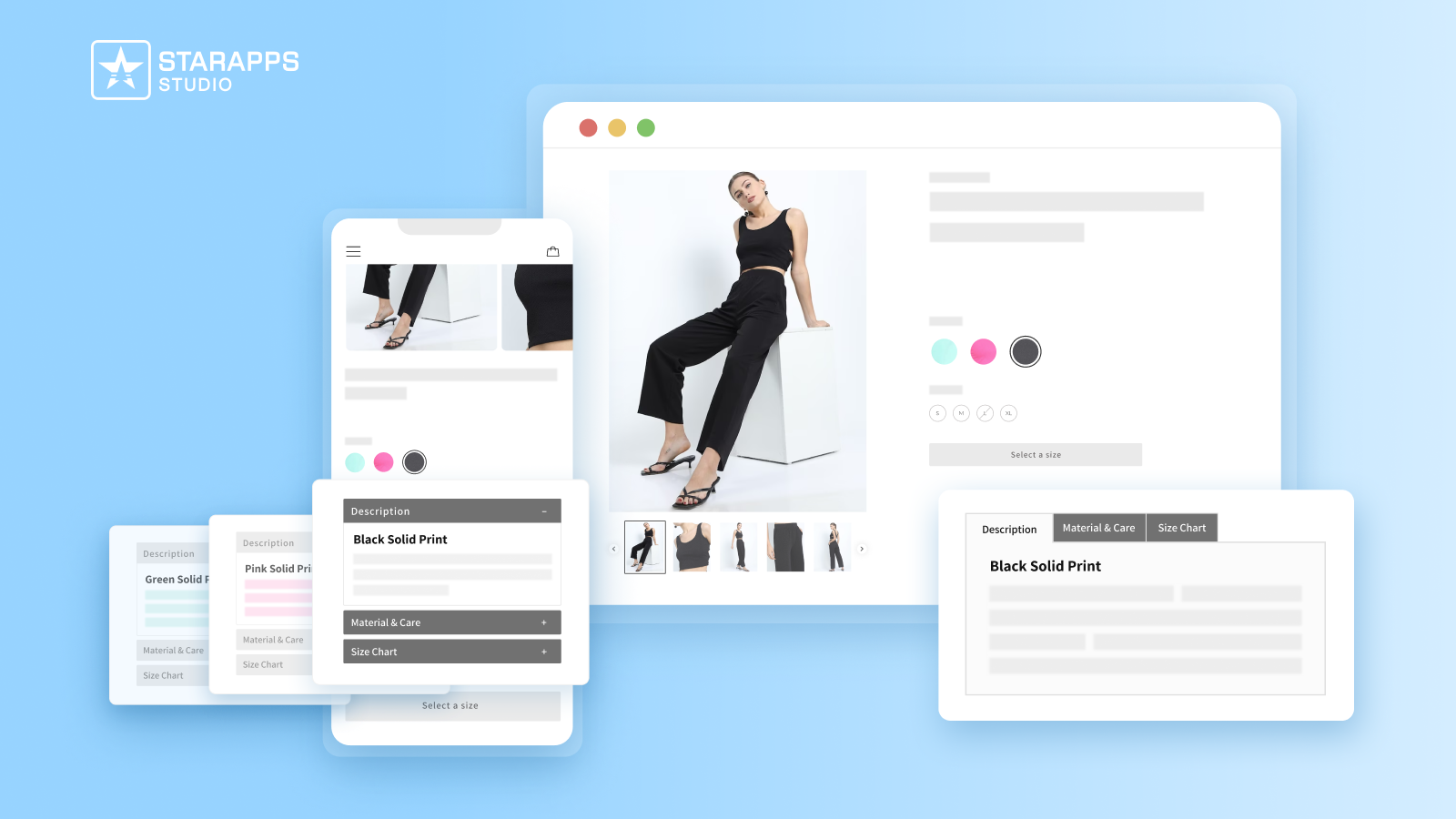
- Provide unique, variant-specific descriptions (material, size chart, care instructions) organized in tabs or accordions for a clean layout.
- On mobile, collapsible accordions improve readability and enhance UX.
- Ensure customers get the correct information before purchase, reducing returns and support queries.
Why it matters: When shoppers know what they're getting, the right size, fabric, and fit details, they make confident purchases. This clarity reduces returns and buyer hesitation.
If you implement these tools well before BFCM 2026, you’re setting your store up to convert like one of last year's winners.
Final Thoughts
BFCM 2026 won't reward the stores with the biggest discounts. It will reward the stores that prepared months in advance, eliminated friction at every customer touchpoint, and made buying effortless across devices.
The data from 2025 shows exactly where the opportunities lie: speed, variant clarity, mobile optimization, smart inventory management, and conversion-focused marketing. Stores that address these areas systematically will capture more of the record traffic generated by BFCM.
Start implementing these strategies now. Test your changes, gather data, and refine your approach throughout the year. The brands that dominate next Black Friday are building their advantage today.
StarApps Studio provides the variant management and UX tools that eliminate the technical barriers between traffic and conversions. Our apps solve the specific problems that cost stores revenue during peak season.
Explore StarApps Solutions and start optimizing your store for BFCM 2026 success.
FAQ’s
1. What is BFCM week?
BFCM week refers to the annual shopping period around Black Friday and Cyber Monday when online retailers offer major promotions, discounts, and marketing campaigns to drive peak holiday sales.
2. What date is BFCM?
BFCM occurs annually, with Black Friday on the fourth Friday of November and Cyber Monday on the following Monday. Exact dates change each year according to the calendar.
3. What does BFCM mean on Black Friday?
BFCM stands for Black Friday and Cyber Monday, representing the combined shopping weekend where retailers launch discounts, bundles, and campaigns to maximize sales during the peak holiday season.
4. What is BFCM on Shopify?
On Shopify, BFCM refers to the platform’s peak sales period during Black Friday and Cyber Monday, when merchants optimize their stores, launch promotions, and handle record traffic to drive maximum revenue.
Heading

End-to-end traceability
To ensure regulatory compliance, you must have a complete overview of your products from production to shipping. Book a demo to see how Katana can give you full visibility of your operations.
.png)

.svg)

.svg)

.svg)
.png)