
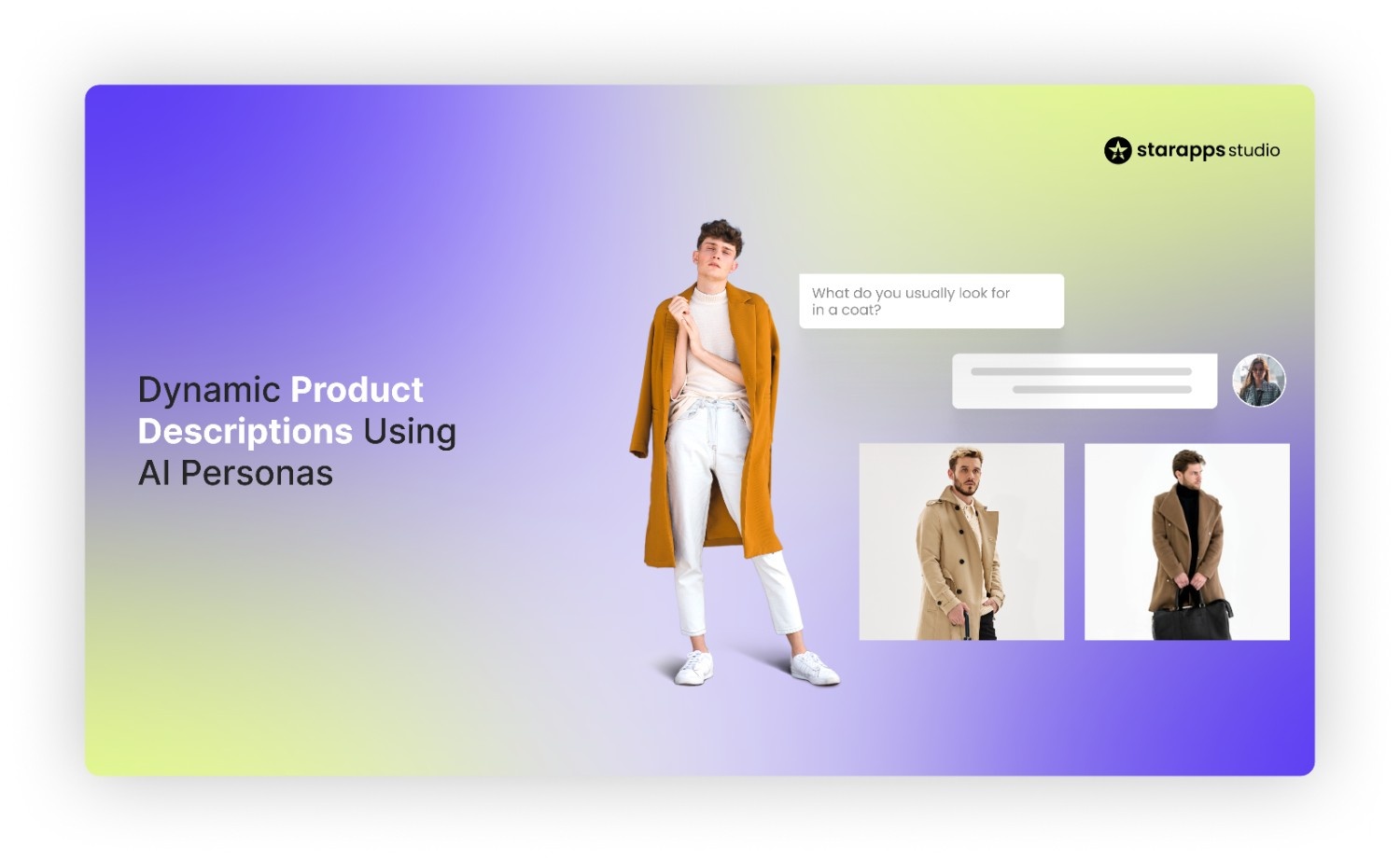

Learn how dynamic product description strategies using AI personas help Shopify stores personalize product pages, improve SEO, and scale faster.
As Shopify stores scale, product pages become bottlenecks due to growing catalogs, multiplying variants, and diversifying traffic sources.
We understand how overwhelming it can be for busy Shopify merchants to keep product descriptions up to date and relevant.
Shopify notes that precise and detailed product descriptions help shoppers understand products and make purchases.
For busy merchants, the importance of product pages creates tension because rewriting for every buyer type is time-consuming.
This is where dynamic product descriptions using AI personas start to make sense, not as a trend but as a practical response to scale, complexity, and performance pressure on Shopify.
Key Takeaways
- Static product descriptions struggle once catalogs, variants, and audiences grow.
- AI personas help tailor product messaging to different shopper needs.
- Dynamic product descriptions adapt content without duplicating pages.
- Shopify merchants must balance tailored product messaging with maintaining fast page loads and stable design.
- Native tools help, but scaling stores often need performance-focused support.
Why Static Product Descriptions Stop Working on Shopify
Most Shopify stores start simple. A single product, a single message, and one description that covers the basics- what the product is, what it does, and maybe a few key features.
For small catalogs or early-stage stores, this is enough. Customers can find the information they need, and conversions are straightforward.
But as soon as a store begins to scale, that one-size-fits-all approach starts to break. Suddenly, merchants face multiple challenges:
- Growing variant complexity: Products now come in multiple colors, sizes, materials, or bundles. Each variant can appeal to a different shopper mindset. A one-line description won’t highlight the right benefits for everyone.
- Diverse traffic sources: Shoppers arrive from search engines, social media, email campaigns, or paid ads. Each channel carries a different intent. What convinces a Facebook visitor may not persuade someone coming from Google.
- International audiences: Expanding into global markets introduces cultural differences, language preferences, and regional buying triggers. Generic descriptions risk misalignment with shopper expectations.
Shopify itself emphasizes clarity, relevance, and concise messaging on product pages to help customers make informed decisions.
Manually rewriting descriptions for every variant, channel, and region is simply unrealistic for growing stores.
The result? Descriptions often become safe, generic, and shallow focusing on features rather than guiding the shopper to a decision.
Instead of helping the customer, these static descriptions can slow down conversions. Shoppers struggle to understand which variant fits their needs best, leading to hesitation, abandoned carts, or unnecessary returns.
In other words, what worked for 10 products rarely works for 100, and definitely not for 1,000.
This limitation highlights the need for dynamic product descriptions, content that adjusts to each shopper’s context and intent.
Dynamic Product Descriptions for Shopify: Boost Conversions with AI-Powered Personalization
Dynamic product descriptions go beyond static text. Instead of showing the same message to every shopper, they adjust content based on context, intent, and product variant, making it easier for customers to understand the right fit for them. On Shopify, this can mean highlighting:
- Fit and comfort for one shopper
- Materials and care instructions for another
- Use cases or compatibility for a third
This approach avoids duplicate pages, keeps SEO clean, and improves relevance for different shopper types. Shopify’s flexible product data structures support this, but native descriptions remain static by default.
Dynamic descriptions extend this framework by programmatically selecting and rearranging content blocks based on shopper context, without breaking the theme or structure.
Here’s a structured guide for Shopify merchants to implement dynamic product descriptions effectively:
1. Segment by Shopper Persona
Different shoppers care about different details. Segmenting descriptions ensures relevance and increases conversion.
Start by defining your key customer personas.
Action Steps:
- Identify primary personas (e.g., casual buyer, gift shopper, returning customer).
- Map out which product attributes matter most to each persona.
- Decide which content blocks (materials, fit, benefits, care) should appear first for each persona.
Tailoring descriptions to personas ensures each shopper sees the information most likely to influence their purchase decision.
2. Highlight Variant-Specific Features
A product with multiple variants (color, size, material) needs targeted messaging for each option.
Make every variant feel like a personalized choice.
Action Steps:
- Use Shopify variant selectors or third-party apps to tie content to each variant.
- Display relevant images, color swatches, and descriptive text dynamically.
- Include SKU or unique identifiers if helpful for inventory clarity.
Variant-specific descriptions reduce confusion and make it easier for shoppers to pick the right option.
3. Optimize for SEO While Maintaining Relevance
Dynamic descriptions can improve SEO if structured correctly.
Focus on content blocks that are both informative for shoppers and discoverable by search engines.
Action Steps:
- Include variant-specific keywords naturally (e.g., “blonde hair extensions 18 inches”).
- Add alt text for variant images for accessibility and Google Image Search.
- Use unique URLs for high-value variants if necessary to boost indexation.
SEO-friendly dynamic descriptions ensure your store attracts traffic without compromising relevance.
4. Leverage Automation Tools for Speed and Consistency
Manual updates for multiple variants or personas are time-consuming and error-prone.
Automate wherever possible to maintain consistency and save time.
Action Steps:
- Use apps like StarApps Variant Image Automator to assign images to variants automatically.
- Consider dynamic description generators that pull from your product database to populate blocks.
- Sync content across channels to ensure uniform messaging on product, collection, and campaign pages.
Automation maintains quality and frees your team to focus on high-impact tasks like strategy and promotions.
5. Test and Iterate Regularly
Dynamic descriptions aren’t “set it and forget it.” Continuous improvement maximizes performance.
Use data to refine what content resonates with each shopper persona.
Action Steps:
- A/B test different content layouts and block order for variants.
- Track metrics like time on page, add-to-cart rate, and conversion rate per variant.
- Adjust personas or messaging based on performance and seasonal trends.
Iterative testing ensures your dynamic descriptions remain relevant, effective, and aligned with evolving shopper behavior.
Dynamic product descriptions let you speak directly to each shopper, reduce friction, improve SEO, and ultimately increase conversions.
By combining persona segmentation, variant-specific content, SEO optimization, automation, and testing, Shopify stores can scale efficiently without overwhelming content teams.
What Merchants Gain from Smarter Descriptions
Better descriptions don’t just increase clicks, they improve decision quality.
Merchants often see:
- Fewer pre-purchase questions
- More confident buyers
- Better alignment between expectations and reality
Beauty brand Glossier, built on Shopify, emphasizes clarity around ingredients and outcomes. That transparency supports trust and repeat purchases.
These gains compound as traffic grows, especially for stores managing hundreds of SKUs.
Leveraging AI Personas to Personalize Shopify Product Messaging
Dynamic product descriptions reach their full potential when powered by AI personas. These personas analyze shopper behavior, variant data, and product attributes to prioritize the features that truly matter for each customer, instead of generating generic or fabricated content.
AI personas typically pull insights from:
- Product attributes: Material, size, style, compatibility, and key selling points
- Variant data: Colors, lengths, patterns, SKUs, or other differentiators
- Customer behavior signals: Browsing history, device type, repeat purchases, and interaction patterns
For example, fashion shoppers may differ widely in intent: some care about fit and performance, while others care about styling and lifestyle appeal.
Shopify-powered brands like Gymshark tailor product messaging accordingly, clearly separating performance features from lifestyle benefits, helping shoppers find what they need faster and more confidently.
Key takeaway:
AI personalization works best when guided by accurate product and variant data, not arbitrary assumptions.
Choosing the Right Tools for Dynamic Product Descriptions
Dynamic product descriptions don’t require starting from scratch.
Shopify offers a built-in tool, Shopify Magic, as a starting point for AI-generated product content.
Shopify Magic lets merchants generate product descriptions directly in the Shopify admin.
It’s free, native, and useful for quickly creating baseline content.
For small or early-stage catalogs, this can be enough. You can generate descriptions faster without adding external tools.
As catalogs scale, limitations appear.
Large Shopify stores often need:
- Better control over how descriptions adapt across variants
- Consistent UX across themes
- Performance-safe implementations that don’t slow product pages
StarApps Studio supports Shopify merchants by ensuring fast-loading, theme-compatible product and variant experiences as personalization layers grow.
It’s designed for stores managing complex catalogs where performance and UX consistency still matter.
The proper setup depends on scale, native tools first, and performance-focused support when complexity increases.
By moving from generic descriptions to AI-powered dynamic product messaging, Shopify merchants can create highly relevant, performance-safe product pages that engage shoppers, improve conversions, and scale effortlessly.
Once personalization moves beyond static rules and manual segmentation, the next challenge becomes understanding who each shopper really is in real time.
From Generic Buyers to Real Personas: Turning Insights into Action
Even with dynamic product descriptions in place, the real power lies in understanding who your shoppers are and what drives their decisions.
AI personas transform static assumptions into real-time, actionable insights, letting Shopify merchants tailor messaging for every segment, variant, and shopping scenario.
1. Use Shopper Behavior to Inform Content
AI personas rely on real customer actions, not just demographics:
- Pages visited and time spent on product variants
- Items added to cart or wishlist
- Repeat purchases and browsing patterns
Actionable Tip: Use these insights to prioritize content blocks, like highlighting fit for first-time buyers or care instructions for repeat shoppers.
2. Tailor Product Messaging by Variant
Different variants attract different buyer intents. A color, size, or material selection can dramatically change what information matters.
Actionable Steps:
- Highlight relevant variant features (color swatch, size guide, material benefits) dynamically
- Display SKU, pricing, or stock info where it helps shoppers decide
- Use variant-specific images or videos to visually reinforce the description
Example: Shopify brand 1HairStop uses variant-specific images and descriptions to guide customers through length, texture, and color choices, reducing returns and increasing conversions.
3. Leverage Automation for Consistency and Scale
Maintaining hundreds of variant-specific descriptions manually is overwhelming. Automation ensures speed, accuracy, and theme compatibility.
Actionable Steps:
- Use StarApps Variant Image Automator to assign multiple images per variant automatically
- Sync descriptions and content blocks across product pages, collections, and campaigns
- Combine AI-generated baseline content (Shopify Magic) with StarApps Studio for performance-safe scaling
4. Monitor, Test, and Iterate
Dynamic content isn’t static; it must evolve with customer behavior and seasonal trends.
Actionable Steps:
- A/B test variant-specific descriptions and content layouts
- Track engagement metrics like add-to-cart rate, time on page, and conversion per variant
- Adjust personas or content emphasis based on data insights
By turning AI insights into practical, variant-specific actions, Shopify merchants can transform generic buyers into real personas, delivering product messaging that’s personalized, engaging, and highly convertible.
That execution layer is where performance-focused tools determine whether personalization improves conversions or quietly breaks the experience.
How StarApps Studio Supports Dynamic Product Descriptions at Scale
Dynamic product descriptions only work when the underlying variant and storefront logic is fast, stable, and theme-safe. That’s where many Shopify stores struggle as catalogs grow.
StarApps Studio is built specifically for Shopify merchants managing complex variants, large catalogs, and high traffic, without sacrificing performance.
Instead of replacing Shopify’s native structure, StarApps Studio works with it, extending variant behavior cleanly and reliably.
1. Performance-Safe Variant Personalization
Dynamic descriptions rely on variant-level logic. If that logic is slow or fragile, conversions suffer.
What StarApps Studio enables:
- Variant-aware image galleries without heavy scripts
- Clean content switching that doesn’t block page load
- Compatibility across Shopify themes and custom builds
This ensures personalization layers don’t compromise speed, which is critical for conversion and SEO.
2. Cleaner Variant Experiences Without Duplicates
Many merchants try to solve personalization by duplicating products or pages. That approach creates SEO risk and catalog chaos.
StarApps Studio helps merchants:
- Keep a single product structure
- Display variant-specific images, titles, and descriptions dynamically
- Maintain clean URLs and Shopify-native product logic
This approach supports relevance without fragmenting your catalog.
3. Built for Scaling Catalogs and Teams
As SKUs increase, manual variant handling becomes unmanageable.
StarApps Studio supports:
- Automated variant image assignment
- Structured variant content presentation
- Consistent UX across product and collection pages
For teams already using Shopify Magic to generate baseline content, StarApps Studio ensures that content is delivered cleanly and correctly at the variant level.
Why this matters:
Dynamic product descriptions only succeed when content, variants, and performance work together. StarApps Studio focuses on that foundation, so personalization efforts actually convert.
When the foundation is solid and personalization is implemented without performance trade-offs, dynamic product descriptions stop being an experiment and start becoming a scalable growth lever for Shopify stores.
Conclusion
Dynamic product descriptions using AI personas help Shopify merchants do more with less. They reduce manual work while improving relevance on product pages.
If you’re scaling an extensive catalog with many variants, performance becomes critical. That’s where StarApps Studio helps merchants maintain fast, reliable product experiences as dynamic content and personalization increase.
Learn how StarApps supports scalable Shopify storefronts.
Start with one product page. Test clarity, speed, and shopper response.
Then you can just go ahead and expand only what proves helpful.
That’s how dynamic product descriptions stay practical, not overwhelming.
FAQs
Q1. Can dynamic product descriptions hurt Shopify SEO?
No, not when implemented correctly. Dynamic product descriptions should avoid creating duplicate URLs, cloaked content, or hidden text. As long as your primary product pages remain indexable and content blocks are structured consistently, SEO remains stable. Shopify’s structured product data model supports this approach well when performance-safe logic is used.
Q2. How are AI personas different from Shopify customer segments?
Shopify customer segments group buyers based on past behavior, such as purchases or location. AI personas work earlier in the journey by shaping how messaging appears before conversion. They focus on shopper intent, context, and information priority, making them more effective for product page personalization.
Q3. Do dynamic product descriptions affect page speed?
They can, if implemented poorly. Heavy scripts, excessive third-party apps, or inefficient logic can slow down product pages. Performance-focused implementations use lightweight logic and maintain theme compatibility, which is especially important for high-traffic Shopify stores where even small delays impact conversions.
Q4. Is Shopify Magic enough for extensive catalogs?
Shopify Magic is useful for quickly generating baseline content at no cost. However, stores with large catalogs and many variants often need more control over how content adapts across products, variants, and themes. In these cases, complementary solutions become valuable to maintain UX consistency and performance as the store scales.
Heading

End-to-end traceability
To ensure regulatory compliance, you must have a complete overview of your products from production to shipping. Book a demo to see how Katana can give you full visibility of your operations.
.png)

.svg)

.svg)

.svg)
.png)